
The U.S. Department of State is the exclusive federal authority responsible for issuing and managing U.S. passports, a mandate established by the Passport Act of 1926. Every passport you carry is a federally certified document that proves both your identity and your U.S. citizenship. A valid U.S. passport currently provides visa-free access to 179 countries, ranking it among the most powerful travel documents in the world. Understanding the role of US Department of State passports means understanding the full system behind that document: who accepts your application, who verifies your identity, who prints your booklet, and who supports you when something goes wrong.
What is the Department of State’s role in the US passport application process?
The Department of State manages passport applications through a network of over 7,400 acceptance facilities across the country. These include post offices, public libraries, and local government offices. That scale means most Americans live within a reasonable distance of a facility that can accept their paperwork.
The type of form you submit depends entirely on your situation. First-time applicants, children, and anyone replacing a lost or damaged passport must use Form DS-11. Eligible adults renewing a passport issued within the last 15 years use Form DS-82. Choosing the wrong form is one of the most common reasons applications get delayed or rejected, so confirming your eligibility before you fill anything out saves real time.
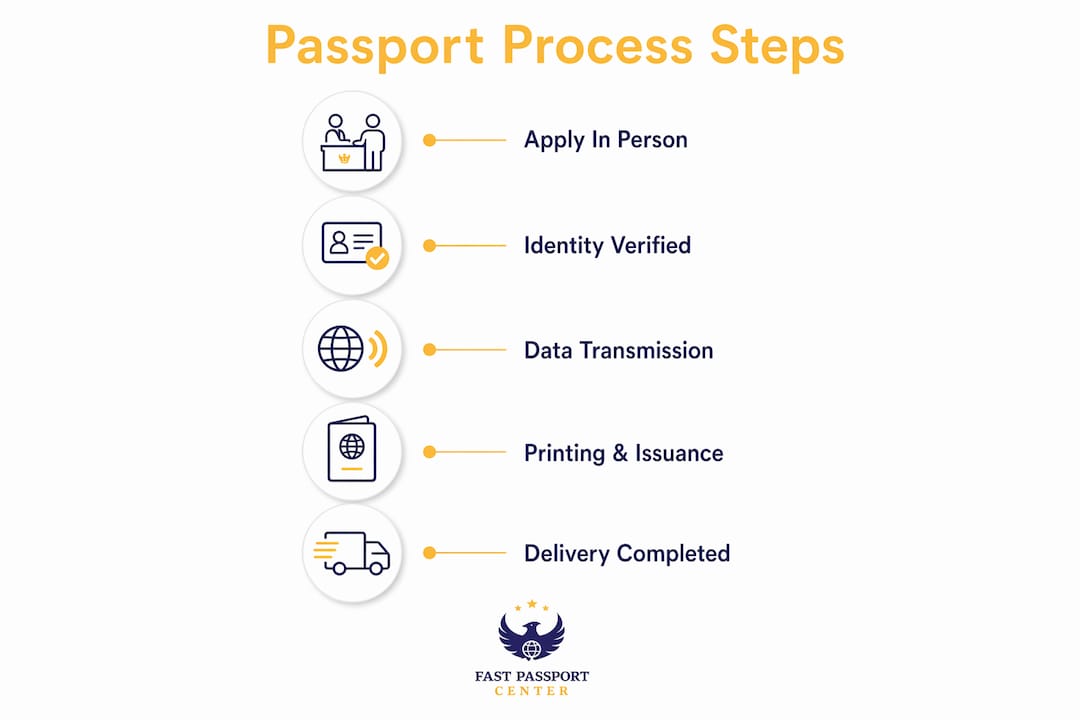
At acceptance facilities, agents play a legally required role. They verify your identity documents, administer a sworn oath, and witness your signature. Acceptance agents must complete this process correctly or your application will be rejected before it ever reaches the Department. This is not a formality. It is the first line of identity verification in the entire process.
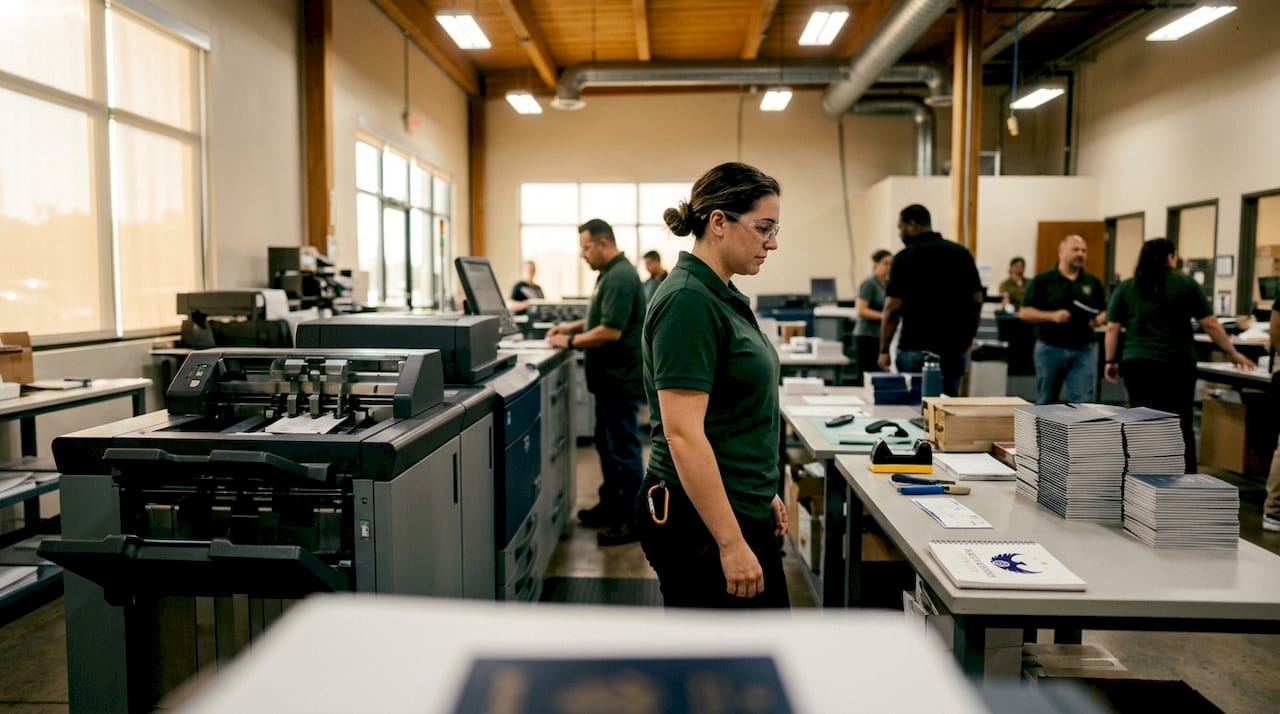
After your application is accepted, the Department transmits your data electronically to one of two passport print centers, located in Hot Springs, Arkansas and Tucson, Arizona. Your booklet is printed there and mailed directly to you. The process is more centralized than most applicants realize, which is why errors at the acceptance stage create delays that are hard to recover from.
Pro Tip: Bring certified copies of every supporting document to your acceptance facility appointment. Agents cannot accept photocopies for identity documents, and missing paperwork means starting over.
Regional passport agencies operate separately from acceptance facilities and focus exclusively on urgent cases. These agencies require an appointment, and eligibility depends on your travel timeline. If your trip is within three days or involves a family emergency, an in-person agency appointment is the right path. For travel between two days and four weeks out, a registered courier service is the more practical option for most travelers.
How does the Department of State ensure passport security and integrity?
Passport security starts with the in-person requirement. First-time applicants and minors must apply in person so that acceptance agents can conduct face-to-face identity verification. This requirement exists specifically to prevent fraud. A document as powerful as a U.S. passport cannot be issued based on mailed paperwork alone for new applicants.
The Department’s internal policies are governed by the Foreign Affairs Manual, which is the definitive resource for adjudicating complex or unusual applications. Passport officers use this manual to issue or withhold passports, apply waivers, and manage edge cases. Human oversight remains central to the adjudication process even as the Department pursues modernization.
The Department also distinguishes between two types of travel documents with very different uses:
- The passport booklet is accepted for all international travel, including air travel. It is the document most travelers need.
- The passport card is valid only for land and sea border crossings between the U.S., Canada, Mexico, Bermuda, and the Caribbean. It cannot be used for international air travel.
“Traveler confusion about the passport card’s limitations has caused real travel disruptions at airline security checkpoints. Many applicants choose the card because it is cheaper and more convenient to carry, without realizing it will not get them on an international flight.”
Screening and adjudication happen at passport agencies and print centers after acceptance. Officers review submitted documents, confirm identity data, and flag any inconsistencies before a passport is approved for printing. This layered review process is what gives a U.S. passport its credibility at international borders.
What options are available for urgent passport needs?
When your travel timeline is tight, the Department of State provides two main paths: regional passport agencies and registered expeditor services. Knowing which one fits your situation prevents wasted time and money.
Regional passport agencies handle the most urgent cases. You must have documented travel within 72 hours or a qualifying family emergency to book an appointment. These agencies are located in major cities, which creates a real problem for travelers in cities like Tampa, Charlotte, Sacramento, Nashville, and Louisville who may live two or more hours from the nearest location.
For travelers who cannot easily reach an agency, a registered courier service is the practical alternative for travel within two to four weeks. Couriers registered with the Department of State can submit applications directly on your behalf, cutting processing time significantly compared to standard mail-in methods.
Key considerations when pursuing expedited service:
- Confirm your travel date is documented. Agencies and couriers both require proof of upcoming travel.
- Contact the National Passport Information Center early. Last-minute inquiries reduce your administrative options significantly.
- Gather all required documents before contacting any service. Missing paperwork is the single biggest cause of delays.
- Understand that expedited processing timelines vary and are not guaranteed without a registered courier.
Pro Tip: If you discover your passport is expired within two weeks of travel, skip the post office entirely. Contact a registered expeditor immediately. Every day matters at that point.
| Situation | Recommended path | Typical timeline |
|---|---|---|
| Travel within 72 hours | Regional passport agency (in-person) | Same day to 3 days |
| Travel within 2–4 weeks | Registered courier/expeditor service | 5–10 business days |
| Travel 4+ weeks out | USPS acceptance facility | Routine processing |
| Living 2+ hours from an agency | Registered courier/expeditor service | 5–10 business days |
How do renewals and special circumstances work under the Department of State’s system?
Renewal eligibility depends on your passport’s age and condition. You qualify to use Form DS-82 if your most recent passport was issued when you were 16 or older, was issued within the last 15 years, is undamaged, and is available to submit. If any of those conditions are not met, you must use Form DS-11 and apply in person. Using DS-82 incorrectly is a common mistake that causes processing delays or outright denial.
Validity periods are straightforward. Adult passports are valid for 10 years, while passports issued to children under 16 are valid for five years. Many countries require your passport to be valid for at least six months beyond your travel dates, so renewing early matters more than most travelers realize.
Lost or stolen passports require a different process. You must report the loss to the Department of State and apply using Form DS-11, even if you previously qualified for mail-in renewal. The Department cancels the lost document to prevent fraudulent use. If you are traveling soon, an emergency passport renewal through a regional agency or registered courier is the fastest path forward.
Americans living abroad have access to passport services through U.S. embassies and consulates. Overseas posts handle urgent appointments similarly to domestic agencies, though procedures vary by location. Some posts require all applications in person, while others permit mail renewals for eligible applicants. Checking with your specific embassy before traveling is the only way to confirm what is accepted.
Key Takeaways
The U.S. Department of State controls every stage of passport issuance, from identity verification at acceptance facilities to adjudication, printing, and delivery, making accuracy at each step the single most important factor in getting your passport on time.
| Point | Details |
|---|---|
| Exclusive federal authority | The Department of State is the only agency authorized to issue U.S. passports under the Passport Act of 1926. |
| Form selection is critical | Using DS-11 vs. DS-82 incorrectly causes delays or denial; confirm eligibility before submitting. |
| Passport card limitations | The passport card cannot be used for international air travel, only land and sea border crossings. |
| Urgent travel options | Agency appointments serve 72-hour emergencies; registered couriers serve travelers with 2–4 weeks until departure. |
| Early contact saves time | Reaching the National Passport Information Center early maximizes your options for expedited processing. |
What I’ve learned from watching travelers navigate this system
Andy Irons here. After years of watching travelers work through the passport process, the pattern I see most often is this: people wait too long and then choose the wrong solution. They show up at a post office two weeks before an international trip expecting routine processing to work out. It does not.
The detail that surprises most people is how little margin the system has for error at the acceptance stage. If your acceptance agent makes a procedural mistake, or if you bring the wrong form, the application comes back to you and the clock keeps running. The Department does not pause your timeline while you fix paperwork.
The other thing I would tell any traveler is to take the passport card distinction seriously. I have seen people board a domestic flight with a passport card, land at an international connection, and get turned away. The card looks like a passport. It is not a passport for air travel purposes. That confusion costs real trips.
For travelers living outside major metro areas, the registered courier route is genuinely the better option in most expedited scenarios. You do not need to drive three hours to a passport agency if your travel is two to three weeks out. A courier registered with the Department of State can handle the submission and get you a faster result than you would get standing in line at a facility you drove hours to reach. The modernization plans currently in development, including expanded online renewal eligibility and a mobile communication app, will eventually reduce some of this friction. For now, knowing the system as it exists is what protects your trip.
— Andy Irons
When time is short, Fast Passport Center delivers
Travelers who need a passport fast and cannot easily reach a regional agency have a reliable option. Fast Passport Center is a U.S. Department of State-registered courier with more than 20 years of experience and drop-off offices in 24 cities. Their agents provide personalized document guidance, handle direct submission to the Department, and have earned an A+ rating from the Better Business Bureau along with over 14,000 positive reviews.
Whether you need a passport expediting service for travel within two to four weeks, or you are weighing your options between an agency and a courier, Fast Passport Center gives you a clear path forward. Their team handles the details so you can focus on your trip. Visit FastPassportCenter.com to get started with a service built for travelers who cannot afford to wait.
FAQ
What is the Department of State’s role in issuing passports?
The U.S. Department of State is the sole federal authority authorized to issue U.S. passports, a responsibility mandated by the Passport Act of 1926. It manages the full process from application acceptance and identity verification to printing and delivery.
What forms do I need to apply for or renew a US passport?
First-time applicants and those replacing lost or damaged passports use Form DS-11 and must apply in person. Eligible adults renewing a passport issued within the last 15 years use Form DS-82 and can apply by mail.
Can I use a passport card for international air travel?
No. The passport card is valid only for land and sea border crossings between the U.S., Canada, Mexico, Bermuda, and the Caribbean. International air travel requires a passport booklet.
How long is a US passport valid?
Adult passports issued by the Department of State are valid for 10 years. Passports issued to children under 16 are valid for five years.
What should I do if I need a passport urgently?
If your travel is within 72 hours, book an appointment at a regional passport agency. If your travel is two to four weeks out, a registered courier service like Fast Passport Center is the fastest and most practical option, especially if you live far from an agency.