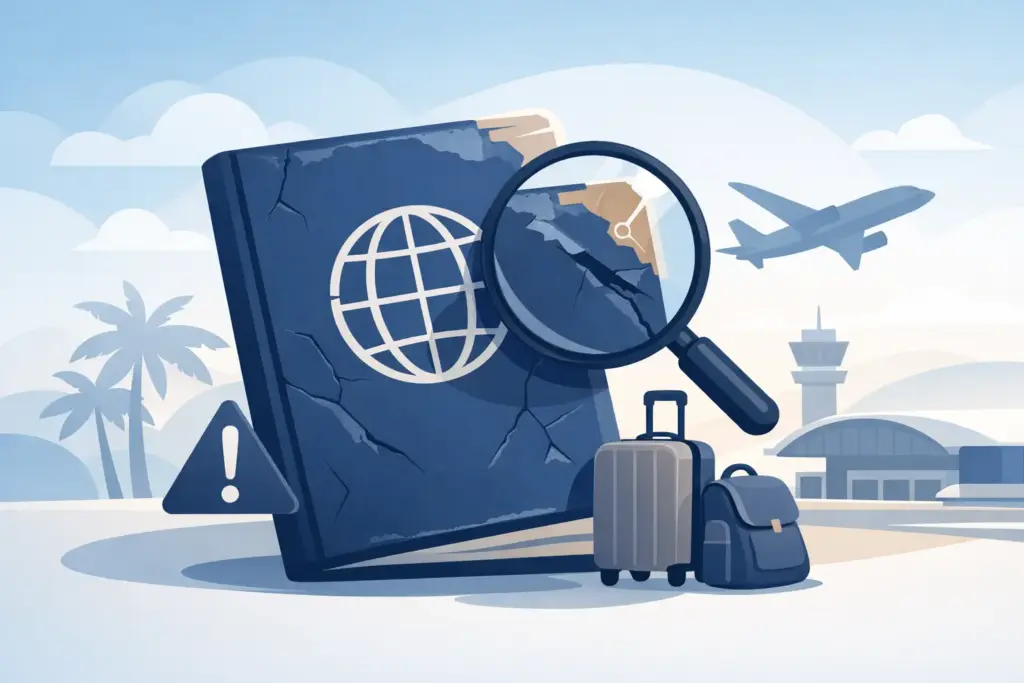
That small tear on the photo page usually gets noticed at the worst possible moment – at check-in, at security, or right before boarding an international flight. If you are asking, can I travel with damaged passport, the safest answer is usually no if the damage is more than minor wear. Airlines and border officials can refuse a passport that looks altered, unreadable, or compromised, even if your identity is clear.
A damaged passport is not judged by one universal airport rulebook. It is assessed by airline staff, foreign border authorities, and U.S. passport standards. That means a passport that got you through one trip might still be rejected on the next one. When travel is close, guessing is risky.
Can I Travel With Damaged Passport if the damage seems minor?
Sometimes travelers confuse normal wear with actual damage. A slightly bent cover, light fanning of the pages, or routine scuffing from years in a carry-on bag may not be a problem. Passports are handled often, and ordinary use shows.
What raises concern is damage that affects the integrity of the document. If the photo page is peeling, the cover is detached, pages are torn, water has warped the paper, ink is smeared, or the chip page looks compromised, your passport may no longer be accepted for travel. The same is true if important details are hard to read or if a page looks like it was altered.
The difficult part is that there is no helpful margin for uncertainty at the airport. Airline agents are trained to avoid boarding passengers whose documents may be rejected at arrival. If they are unsure, they often lean toward caution.
What counts as a damaged passport?
The U.S. government generally treats a passport as damaged when its condition goes beyond normal wear and affects usability, readability, or authenticity. In practical terms, the most common red flags include water damage, ripped pages, a loose or missing cover, unofficial markings, significant stains, or a damaged data page.
The data page matters most because that is where your name, photo, passport number, and other identifying information appear. If that page has a tear, bubbling laminate, fading, or distortion, expect problems. A passport with a damaged RFID chip may also trigger extra scrutiny, even if the book still looks mostly intact.
There is also a difference between cosmetic and structural damage. A small crease is one thing. A tear that crosses printed information is another. Travelers often underestimate this distinction because the passport still looks “mostly fine” in their hands. At a checkpoint, mostly fine may not be good enough.
Signs you should not risk using it
If you can see water warping, peeling laminate, missing visa pages, deep tears, or any damage to your photo page, do not assume you can explain your way through it. Border control is document-driven. The cleaner your paperwork, the fewer opportunities for delay.
You should also be cautious if your passport went through a washing machine, got chewed by a pet, was exposed to mold, or has handwriting that was not placed there by an issuing authority. Those issues can make a passport appear tampered with, even when the damage was accidental.
Why airlines may deny boarding before border control does
Many travelers think the real decision happens only after landing in another country. In reality, the first gatekeeper is often the airline. Carriers face penalties and logistical headaches if they transport someone with unacceptable travel documents, so check-in staff may deny boarding before you ever reach immigration.
This is why damaged passports create so much stress. You are not dealing with one decision-maker. You may face review from airline personnel, TSA document checkers in some scenarios, departure control systems, and the destination country’s entry officials. If any one of them believes the passport is not valid for travel, your trip can stop there.
For urgent travelers, this uncertainty is usually the biggest problem. Even if there is a chance you might get through, the consequences of being wrong are expensive. Missed flights, hotel losses, business disruption, and rebooking costs add up quickly.
Can I travel with damaged passport on a domestic trip?
If you are flying within the United States, a passport is only one form of acceptable ID. So if your passport is damaged, the better question is whether you have another valid TSA-accepted identification document, such as a driver’s license or other compliant ID. If you do, the damaged passport may not matter for that domestic flight.
But that does not solve an international itinerary that starts with a domestic connection. If your final destination is outside the U.S., the passport still has to hold up for the international portion of the trip. A domestic boarding pass does not protect you from being stopped later in the journey.
What to do if your passport is damaged before travel
First, inspect it carefully under good light. Look at the photo page, the cover attachment, the barcode area, and every page with visas or stamps. If there is any doubt about readability or structural damage, treat it as a replacement issue, not a judgment call.
Second, do not try to repair it yourself. Tape, glue, pressed lamination, trimming torn edges, or cleaning marks can make the problem worse. A passport that looks altered may attract more scrutiny than one that is plainly damaged.
Third, move quickly if your travel date is close. Replacing a damaged passport can take time through standard channels, and urgent travel often requires a faster path. This is where professional support can make a real difference, especially when every submission detail has to be correct the first time.
Fast Passport Center helps travelers who need their U.S. passport fast by working through U.S. Department of State registered and authorized passport couriers in the official hand-courier program. That matters when timing is tight, because customers are paying for access to limited authorized passport office submissions, plus expert review that helps reduce mistakes and delays.
Replacing a damaged passport
A damaged passport cannot simply be renewed in the same way as a routine undamaged renewal in many cases. The government may require you to submit the damaged book, a new application, passport photos, and supporting identification. The exact process depends on the condition of the passport and your eligibility.
If the passport is significantly damaged, expect to explain what happened. Water exposure, accidental tearing, pet damage, and child-related mishaps are all common, but the document still has to be formally replaced before reliable international use. Waiting until the week of departure narrows your options.
Timing matters more than most travelers expect
Standard processing windows do not help much when your flight is coming up fast. And when a passport is damaged, errors in the replacement application can cost even more time. Missing documentation, incorrect photos, or a mismatch in forms can trigger setbacks you cannot afford.
That is why urgent travelers often look for hands-on support instead of trying to decode the process alone. Document pre-check and review, live guidance, and real-time status visibility are not just conveniences when the clock is ticking. They reduce avoidable risk.
Should you risk it if the trip is tomorrow?
If the damage is clearly serious, no. Trying anyway may cost you the ticket and whatever plans depend on it. If the damage seems borderline, you are still relying on discretionary decisions from people whose job is to protect compliance, not to give you the benefit of the doubt.
There are situations where a worn passport is accepted without issue. There are also situations where a minor-looking defect leads to denial. That uncertainty is exactly why travelers with urgent international plans should think in terms of replacement, not optimism.
The practical standard is simple: if your passport no longer looks fully intact, fully readable, and unquestionably authentic, it is time to address it before you get to the airport.
The safest next step
Passport problems rarely get better with last-minute hope. They get solved by acting early, using the right process, and making sure your submission is complete. If your passport is damaged and your travel date matters, treat the issue as urgent now rather than arguable later.
A clean, valid passport gives you something every traveler wants when departure is close – fewer surprises between check-in and takeoff.