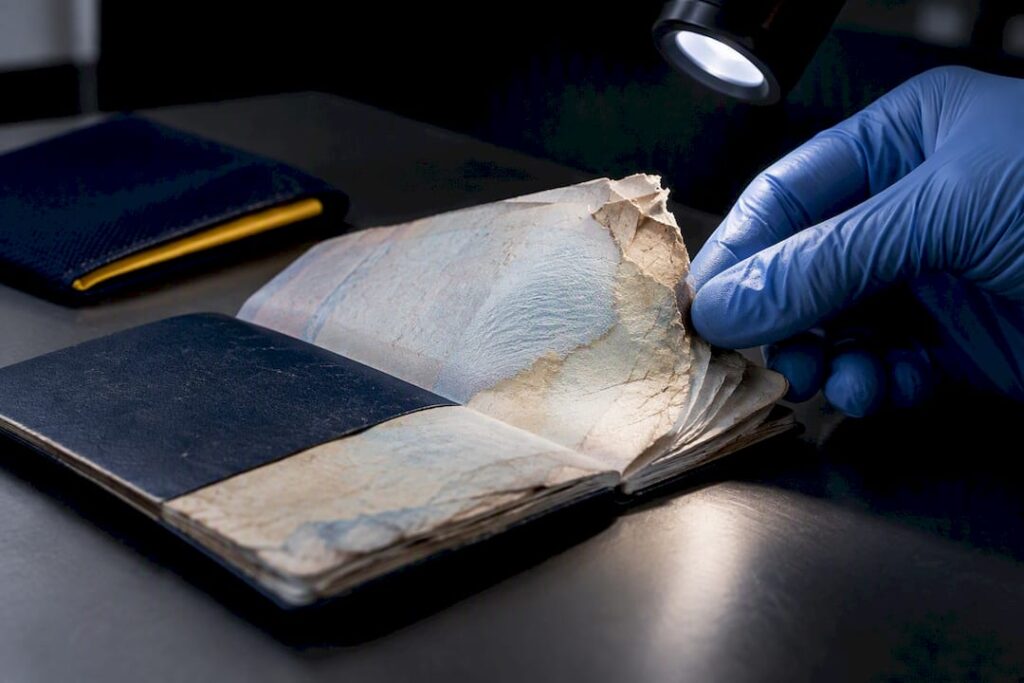
A mutilated or damaged U.S. passport is generally invalid for travel, and airlines or border agents can refuse to honor it at check-in or entry. Skip Form DS-82 entirely, since mail-in renewal is not an option for damaged books. Your real path is an in-person application with Form DS-11, an emergency passport if you are already abroad, or a fast trip through a regional passport agency or a registered courier if travel is close.
TL;DR:
- Travel with a damaged passport is risky mainly if the data page, photo, or machine-readable zone is compromised, often leading to denied boarding or entry.
- Replacing a mutilated passport requires an in-person DS-11 application, a sworn statement of damage, and surrendering the old passport at the time of application.
- Emergency options include regional passport agencies for urgent travel within three days, or embassy services abroad for limited validity, with courier services bridging longer lead times.
- Federal disaster-related fee waivers are available for passports lost or damaged in declared disasters, but only under specific conditions and documented proof.
- Using specialized courier services can expedite processing for those far from regional agencies or with urgent travel plans, often with real-time tracking and higher reliability.
Table of Contents
- What Counts as a Damaged or Mutilated Passport?
- Can I Travel With a Damaged Passport? Here’s the Real Risk
- How Do I Replace a Damaged or Mutilated Passport?
- What Are My Emergency Passport Options?
- Can Disaster-Related Fee Waivers Cover a Damaged Passport?
- What Should I Bring to My Damaged Passport Appointment?
- Why Fast Passport Center Handles Damaged Passport Cases Differently
- Does a Mutilated Passport Affect Visa Eligibility or Entry Abroad?
- What Do I Do With My Old Passport After Getting a Replacement?
- Are There Penalties for Intentionally Damaging a Passport?
- How Are Replacement Rules Different for a Child’s Passport?
- When Should You Choose an Agency, a Courier, or an Embassy?
- Get Expedited Help for Your Damaged Passport
- Sources
- FAQ
What Counts as a Damaged or Mutilated Passport?
The State Department draws a clear line between ordinary wear and actual damage. A passport is considered damaged when it has water damage, mold, stains, significant tears, or missing and torn-out visa pages. Unauthorized markings on the data page and hole punches also disqualify a passport, since they interfere with the document’s security features and machine-readable information.
Normal wear doesn’t trigger replacement. A slightly bent cover, light creasing along the spine, or minor fading on the outer laminate usually passes inspection without issue.
Where travelers get tripped up is the gray zone. Examples of what typically requires replacement:
- Coffee, seawater, or laundry-machine soaking that warps pages or blurs text
- A corner torn off the data page, even if your photo and name remain legible
- A pet chewing through the cover or biographic page
- Stamps, stickers, or ink accidentally applied to the identity page
If you’re staring at your passport wondering which category it falls into, assume the stricter reading. Border officials have discretion here, and a passport that looks “mostly fine” to you may not clear their standard.
Can I Travel With a Damaged Passport? Here’s the Real Risk
Airlines check passports against the same automated systems border agents use, and a damaged machine-readable zone or an unreadable chip can trigger a denied boarding before you ever reach the gate. Immigration officers overseas have refused entry to travelers whose passports had water stains obscuring the photo page or a torn corner near the personal data. Some travelers have been turned back at their destination and forced to arrange emergency travel documents to get home.
Minor cosmetic wear, like a scuffed cover, rarely causes a problem. But when damage touches the data page, the photo, or the machine-readable strip, don’t gamble. Replace it before you fly rather than find out at the counter.
How Do I Replace a Damaged or Mutilated Passport?
Form DS-82, the mail-in renewal option, is off the table for damaged passports. The State Department requires an in-person DS-11 application with a signed statement explaining how the damage happened. There’s no shortcut around this: a damaged passport is treated as a document whose authenticity needs to be reestablished in person, not simply refreshed.
Here’s the process in order:
- Gather your proof of citizenship. Bring your original birth certificate or a previously issued full-validity passport. Photocopies alone won’t work.
- Bring valid photo ID. A driver’s license or government-issued photo ID, plus a photocopy of that ID, is required at the appointment.
- Get a passport photo. You’ll need one standard 2×2 photo meeting current specifications.
- Bring the damaged passport itself. Do not throw it away. It must be surrendered as part of the application.
- Prepare your statement of condition. You’ll need a signed, sworn statement describing exactly how the passport was damaged, submitted alongside the DS-11.
- Schedule your appointment. Each applicant needs a separate appointment, either at a passport acceptance facility or a regional passport agency if travel is urgent.
Expect standard passport book and application fees, and budget extra time if any document is missing or unclear. Acceptance agents have turned applicants away for incomplete paperwork, which is the single biggest cause of delay in this process.
Pro Tip: Don’t sign your DS-11 or your damage statement before you get to the appointment window. Many acceptance agents require you to swear an oath in person before signing, and a pre-signed form can force you to redo the paperwork on the spot.
What Are My Emergency Passport Options?
Your best route depends entirely on how much time you have and where you are standing.
- Regional passport agency: Reserved for travel within 3 days or a documented life-or-death emergency. An appointment is required, and you’ll need to show proof of imminent travel.
- U.S. embassy or consulate abroad: If you discover the damage overseas, consular officers can issue a limited-validity emergency passport to get you home or to your next stop, later exchanged for a full-validity book.
- Registered courier or expedite service: The practical answer when travel is 2 days to 4 weeks out, or when the nearest regional agency is hours away. A service like Fast Passport Center reviews your DS-11 and supporting documents, then hand-delivers the completed application to the agency on your behalf.
- USPS post office: Fine for routine renewals with 4 or more weeks of lead time, but not built for damaged-passport cases that require in-person DS-11 handling.
Turnaround varies by method and location, but the honest expectation is this: regional agencies move fastest for true emergencies, embassies solve the immediate problem abroad, and courier services close the gap for everyone else who can’t drop everything and drive hours to an agency.
Can Disaster-Related Fee Waivers Cover a Damaged Passport?
Yes, but only under narrow conditions. Federal law lets the State Department waive the application fee for up to three years and the file-search fee for 18 months for passports lost or damaged in a federally declared disaster. You’ll need to reference the specific disaster name, date, and location when you apply.
This waiver does not apply if you never held a passport before, if your passport simply expired, or if the loss happened outside a federally listed disaster window. Check the State Department’s disaster list before assuming you qualify.
What Should I Bring to My Damaged Passport Appointment?
A little preparation on the front end saves you a wasted trip. Pack these items before you walk in:
- The damaged passport and a photocopy of its data page
- Original proof of citizenship (birth certificate or prior passport)
- Valid government photo ID plus a photocopy
- An unsigned DS-11 form
- One 2×2 passport photo
- Proof of travel dates if you’re requesting urgent processing
Prepare your written damage statement in advance mentally, but leave it unsigned until the acceptance agent tells you to sign. Take clear photos of the damage on your phone beforehand; if the agent has questions about the extent of the damage, having a visual reference ready speeds the conversation along.
Pro Tip: Double-check every document against the current DS-11 checklist the night before. A missing photocopy or an expired ID is the most common reason applicants get bounced back for a second appointment.
Why Fast Passport Center Handles Damaged Passport Cases Differently
Fast Passport Center is a U.S. Department of State–registered courier with more than 20 years handling urgent passport cases, including damaged and mutilated documents. Its agents review your DS-11 and damage statement before submission, then hand-deliver the completed application directly to the passport agency instead of leaving it to the standard mail queue.
That matters most for travelers who can’t easily get to a regional agency in person. The company holds an A+ rating with the Better Business Bureau and has collected more than 14,000 customer reviews, built on handling exactly the kind of urgent, document-heavy cases a damaged passport creates. Real-time order tracking keeps you updated while the agency processes your file.
Does a Mutilated Passport Affect Visa Eligibility or Entry Abroad?
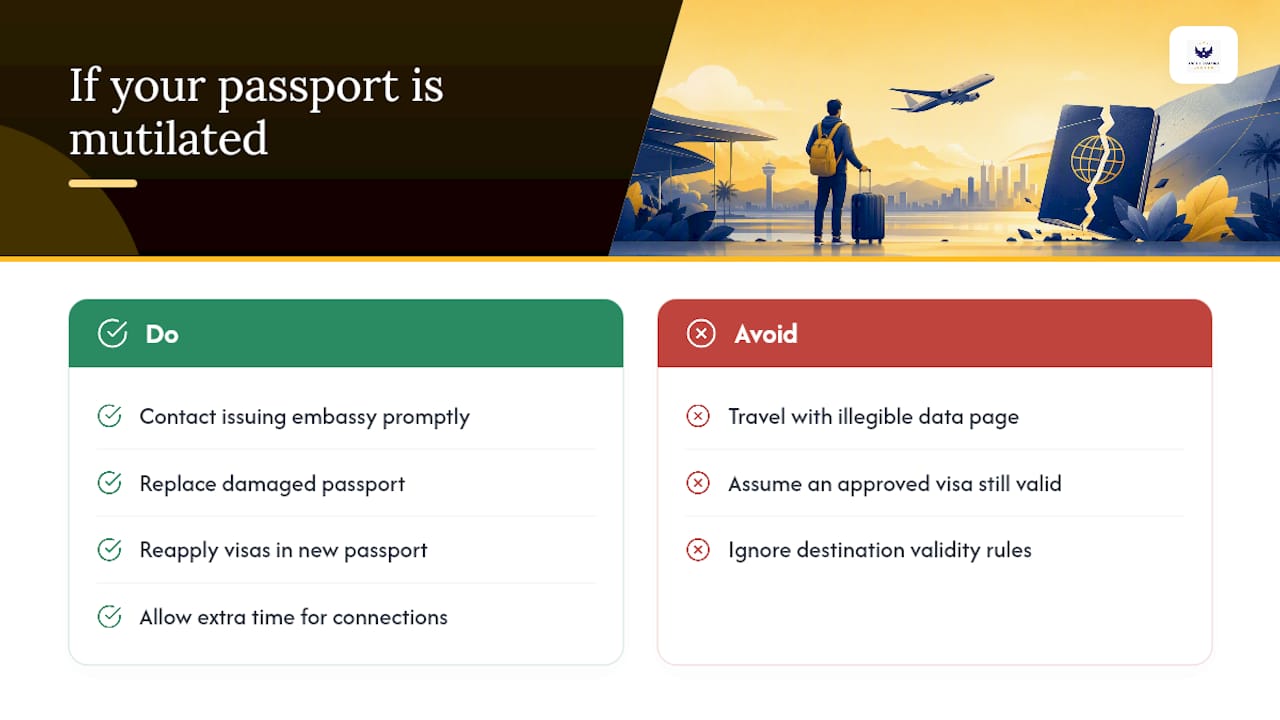
A damaged U.S. passport can complicate more than your flight home. Many countries require your passport to remain physically intact and machine-readable to issue or honor a visa, since consular officers scan the biographic page and machine-readable zone during processing. A torn or stained data page can cause a visa application to stall or get rejected outright, even if the visa itself was already approved before the damage occurred.
Entry officials at your destination apply the same scrutiny. Some countries also enforce validity-period rules, such as requiring six months of remaining validity, and a mutilated passport where the expiration date is illegible or the page is compromised can trigger the same refusal as an expired one. If you hold visas inside a passport that gets damaged, replacing the passport usually means reapplying for those visas in the new document, since a visa is physically tied to the passport it was issued in.
This is where timing matters most. If you’re mid-trip with upcoming connections through multiple countries, a damaged passport doesn’t just risk your next flight. It risks every visa-dependent leg of the itinerary that follows. Travelers heading to countries with stricter document-integrity checks, common across the Gulf states and parts of Asia, should treat any data-page damage as disqualifying rather than borderline. When a visa is already stamped in a passport that later gets damaged, contact the issuing embassy directly, since some allow the visa to be transferred or reissued and others require a fresh application.
What Do I Do With My Old Passport After Getting a Replacement?
When your damaged passport is mutilated beyond normal wear, you generally surrender it as part of the DS-11 application, since the acceptance agent or consular officer collects it during your appointment rather than mailing it back later. This is different from a routine renewal, where some applicants receive their old passport back with a cancellation punch or corner clip.
Because a mutilated passport is submitted alongside your signed damage statement, it becomes part of the case file the State Department uses to verify your explanation. Don’t discard it yourself before your appointment, even if it seems too damaged to matter. Officials sometimes need to physically examine the document to confirm the nature of the damage matches your written statement.
If a previous passport was returned to you canceled, keep it in a safe place. Canceled passports retain sentimental and record-keeping value, particularly for travelers who need proof of past visas or entry stamps for immigration history. Only a currently valid, undamaged passport should ever be presented for travel or identification purposes. If you’re unsure whether your agency will return the canceled document or retain the damaged one permanently, ask the acceptance agent directly at your appointment. That answer varies by case and by how significant the damage is.
Are There Penalties for Intentionally Damaging a Passport?
Passports remain U.S. government property even after they’re issued to you, and deliberately defacing, altering, or destroying one carries real legal exposure. Intentionally altering a passport, forging entries, or mutilating it to conceal information or misrepresent identity can fall under federal statutes covering passport fraud, which carry the possibility of fines and imprisonment depending on intent and circumstances.
This is separate from accidental damage. A passport that goes through the wash or gets chewed by a dog is a replacement case, not a legal one. Signed statements exist specifically to distinguish accidental damage from intentional tampering. Consular officers and acceptance agents are trained to look for signs that a document was deliberately altered, such as clean cuts near the photo, chemical alteration of printed text, or tampering with the security laminate.
If your damage statement raises questions, expect additional scrutiny, possibly including a request for more documentation or a longer processing window while the case is reviewed. Being upfront and specific in your statement, describing exactly what happened and when, is the simplest way to avoid unnecessary delay. Trying to obscure how the damage occurred is far more likely to slow your case down than an honest account of a spilled drink or a curious puppy.
How Are Replacement Rules Different for a Child’s Passport?
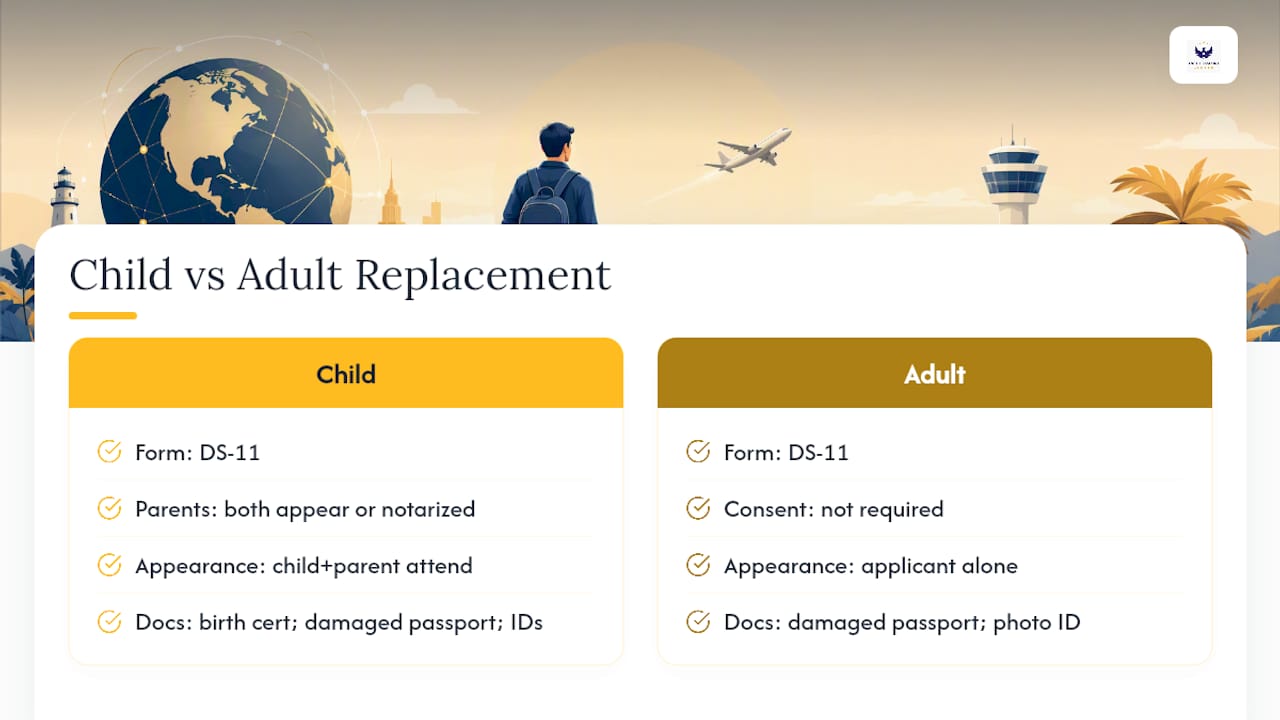
Replacing a damaged passport for a minor follows the same DS-11 requirement as adults, but with extra layers built around parental consent. Both parents or legal guardians typically need to appear in person, or provide notarized consent if one cannot attend, since minors cannot apply independently the way adult applicants can.
Proof of citizenship and identity requirements also extend to the parent or guardian appearing at the appointment, on top of the child’s own documents. That means bringing the child’s original birth certificate, the damaged passport, a current photo, and valid photo ID for both the child and the accompanying parent. Children’s passports carry shorter validity periods than adult books, which means damage discovered near the end of that validity window sometimes makes more sense to treat as a routine renewal conversation with an agent, even though the in-person DS-11 process still applies once damage is confirmed.
Families juggling a damaged child passport alongside urgent travel plans face a tighter logistical squeeze than solo adult travelers, since scheduling two people’s availability around a single appointment slot adds friction. This is precisely the kind of case where expedited support built around child passport requirements can prevent a missed trip, particularly for families living far from the nearest regional agency.
When Should You Choose an Agency, a Courier, or an Embassy?
Replace a questionable passport before you travel. Don’t gamble on a check-in counter catching what you missed at home. If your trip is within 3 days or you’re facing a genuine emergency, a regional passport agency appointment is the right call, full stop. If you’re 2 days to 4 weeks out and hours from the nearest agency, which describes a lot of travelers in Tampa, Charlotte, Sacramento, Nashville, and Louisville, a registered courier service closes that gap without the drive. If you’re already overseas, your embassy or consulate is your only realistic option for an emergency passport.
— Andy Irons
Get Expedited Help for Your Damaged Passport
There are courier services that review your DS-11 and damage statement for errors before submission, then hand-deliver your completed application to the passport agency instead of leaving it to standard channels. Government fees are handled separately and paid directly to the State Department, so what you’re paying for is the expertise and hand-delivery that gets your file in front of an agent faster.
This route makes the most sense if your travel falls 2 days to 4 weeks out, or if you live in one of the many U.S. cities that sit hours from a regional agency. Start by requesting a quote through the damaged passport service page, where an agent will walk you through exactly which documents you need before your appointment.
Sources
- Replace a Passport After a Disaster – Travel – State Department
- Travel
- DS-11 and Statement of Condition – Damaged Passport – U.S. Embassy guidance
- Travel
- Mutilated passports – U.S. Embassy guidance
FAQ
Can I Travel With a Mutilated Passport?
Generally, no. Airlines and border officials can refuse boarding or entry when a passport’s data page or machine-readable zone is damaged, and border agents have discretion to reject passports even when the damage looks minor. Replace it before your trip rather than risk denied boarding.
Can I Still Use My Passport If My Dog Chewed It?
If the chewing reached the data page, photo, or machine-readable strip, the passport is considered damaged and needs replacement through the in-person DS-11 process. If the damage is limited to the outer cover with the biographic page untouched, it may still pass, but border officials make the final call, so replacing it is the safer choice.
How Much Damage to a Passport Is Acceptable?
Normal wear, like small bends or light creasing, doesn’t require replacement. But water damage, mold, significant tears, missing pages, or unauthorized markings on the data page all cross the line into damage requiring an in-person DS-11 replacement.
What Are the Requirements for a Mutilated Passport Replacement?
You’ll need Form DS-11, original proof of citizenship, valid photo ID, a 2×2 photo, the damaged passport itself, and a signed statement explaining how the damage occurred. An in-person appointment is mandatory since mail-in renewal doesn’t apply to damaged passports.
How Fast Can Fast Passport Center Help With a Damaged Passport?
Fast Passport Center specializes in cases where travel falls 2 days to 4 weeks out or the applicant is too far from a regional agency to visit easily. Current pricing and turnaround details are available directly on the damaged passport service page.