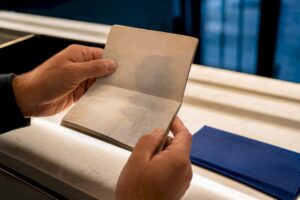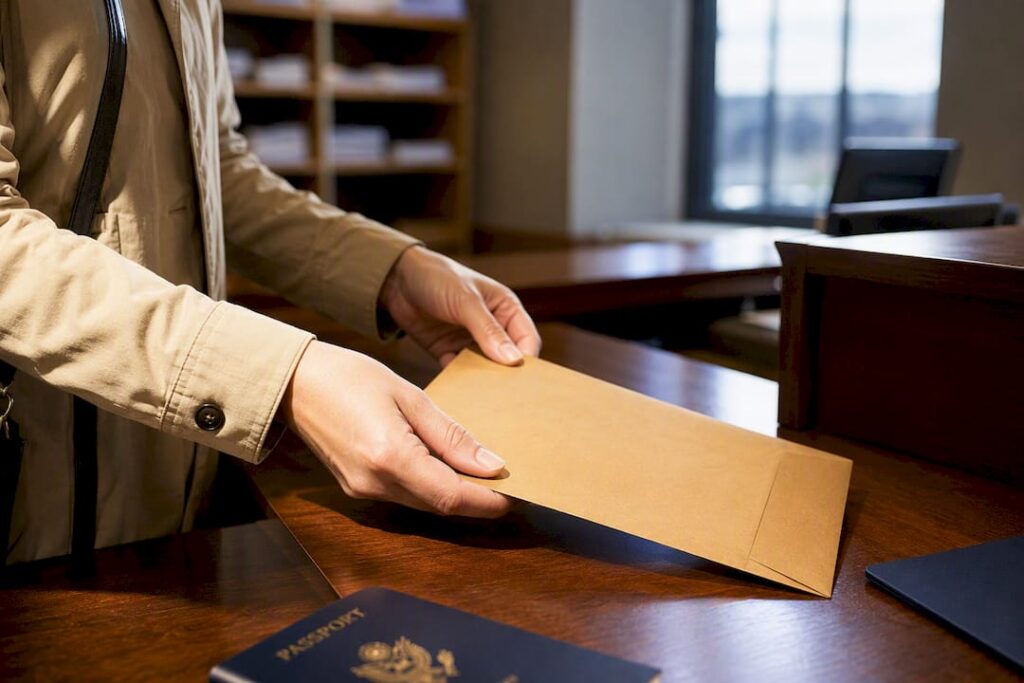
Most divorced applicants correct their passport with Form DS-5504 by mail, but only if the name change happened within a year of when the current passport was issued and the passport itself is undamaged. If you miss that window, you must use Form DS-82 for renewal by mail or Form DS-11 in person. The decisive factor either way is whether your divorce decree explicitly restores your former name. Update your Social Security Administration record first, before you touch any passport paperwork; for more on managing divorce logistics, see Divorce Dynamics – eBook Warehouse.
TL;DR:
- You must verify that your divorce decree explicitly states the restoration of your former name, as vague language can cause application rejections.
- The correct form depends on your timing: DS-5504 for name changes within a year of passport issuance, DS-82 for renewals after a year, and DS-11 for in-person applications when eligibility conditions aren’t met.
- Updating your Social Security record before applying is essential to prevent verification delays, as most agencies cross-check SSA records during processing.
- Certified documents with explicit language are required; if your decree is silent, consider additional court certificates or public records paired with Form DS-60.
- Using a courier service that reviews and hand-delivers your application can directly prevent processing issues when traveling within four weeks or living far from regional agencies.
Table of Contents
- Which Form Handles Your Passport Name Change After Divorce?
- What Documents Does the State Department Accept?
- What Order Should You Update Your Records In?
- How Long Does It Take and What Does It Cost?
- When Should You Use a Courier Instead of Mailing It Yourself?
- Does Your Child’s Name Change Affect Their Passport Too?
- What If You Divorced in a Different State or Country?
- Why I Tell Readers to Verify the Decree Wording First
- How Fast Passport Center Handles Your Name Change
- Sources
- FAQ
Which Form Handles Your Passport Name Change After Divorce?
Picking the right form comes down to two questions: how long ago was your passport issued, and does your divorce decree say what you need it to say?
- Form DS-5504 applies when your name changed within 1 year of your current passport’s issue date. You mail in your current passport, one passport photo, and a certified or original copy of your divorce decree, and there is usually no routine passport fee for this correction.
- Form DS-82 applies when the name change happened more than a year after issuance, and you otherwise meet renewal-by-mail eligibility (your passport was issued when you were an adult, isn’t damaged, and was issued within the last 15 years). Standard renewal fees apply here.
- Form DS-11 is required in person when you don’t qualify for mail renewal at all: your passport was issued before you turned 16, it’s lost, stolen, or damaged, or your certified documentation doesn’t clearly support the name change.
- Form DS-60, an affidavit of name usage, comes into play when you lack court or official records proving you’ve used your restored name and need a sworn alternative.
If you’re unsure which category fits, a side-by-side look at DS-11 versus DS-82 eligibility rules can save you a wasted mailing.
What Documents Does the State Department Accept?
The cleanest path is a certified original divorce decree that says, in plain language, that you are restoring your former name. Vague phrasing like “may resume use of a maiden name” often isn’t specific enough. 8 FAM 403.1 guidance makes clear that name-usage authority in the decree needs to be explicit, not implied.
If your decree is silent on the matter, you have three realistic options: request a name-only certificate or certified abstract from the court clerk, file a post-judgment motion to formally restore the name, or, if applying via DS-11, assemble public-use records like older IDs or bills showing consistent use of the restored name alongside a DS-60 affidavit.
- Certified original divorce decree with explicit restoration language
- Certified abstract or name-change certificate (protects privacy by omitting marital details)
- Court order from a post-judgment name-restoration filing
Pro Tip: Order two certified copies of whatever document you use. The State Department keeps one, and you’ll want a spare on hand for the Social Security Administration, your bank, and your state’s motor vehicle office.
Many state courts, including California, issue these abbreviated certificates specifically so applicants don’t have to hand over a full decree to every agency that asks. For a full rundown of what qualifies, Fast Passport Center’s supporting documents checklist breaks it down by form type.
What Order Should You Update Your Records In?
Skipping the sequence below is the single most common reason name-change passport applications get flagged for extra verification.
- File Form SS-5 with the Social Security Administration first. Many federal agencies, including the State Department, cross-reference SSA records to confirm your legal name. Filing here first, and confirming it’s processed, is what prevents delays down the line.
- Update your state driver’s license or ID once your SSA record reflects the new name. Some passport applications ask you to list a current ID that matches.
- Assemble your passport packet: the correct form (DS-5504, DS-82, or DS-11), your current passport, your certified name-change document, a recent passport photo, and any required fee.
- Check the mailing method. If you’re using a PO box address for DS-82 or DS-5504 submissions, USPS is required; other carriers can’t deliver to those addresses.
- If applying in person via DS-11, bring evidence of citizenship, a valid photo ID, your certified name-change document, and photocopies of everything, since the passport agency or acceptance facility won’t make copies for you.
Quick numbers to know: applicants who confirm their SSA update is finalized before mailing a passport request commonly avoid the back-and-forth verification delays that stall applications for weeks. That one step, done in the right order, is worth more than almost anything else on this list.
How Long Does It Take and What Does It Cost?
Standard mail processing and expedited State Department service both carry published time ranges that shift periodically, so check the official change and correction page for current figures before you mail anything.
On fees: DS-5504 applicants who qualify under the 1-year rule typically pay no routine passport fee at all. DS-82 and DS-11 applicants pay standard renewal or new-passport fees, and the current fee tables live on the same State Department site.
You’ll need to apply in person with DS-11 if any of these apply to you:
- Your decree doesn’t clearly restore your former name
- Your current passport was issued when you were under 16
- Your passport is lost, stolen, or damaged
- Your ID doesn’t match the name on your current passport
An regional passport agency, which requires an in-person appointment, is warranted only if you’re traveling within 3 days or facing a genuine life-or-death emergency. For anyone outside that narrow window, there’s a better option.
When Should You Use a Courier Instead of Mailing It Yourself?
Regional agencies exist for true emergencies, same-day or next-few-days departures, and little else. If your trip is 2 to 4 weeks out, or you live hours from the nearest agency, a courier service provides an alternative when mail-in processing and in-person appointments are not viable.
Couriers verify your paperwork before it ever reaches a government office, hand-deliver it, and track it the entire way, which cuts the risk of a rejected application sitting in a mail queue for a week before anyone notices a missing signature.
Before submitting through a courier, have ready:
- Your correct form, filled out and signed
- Certified name-change document and current passport
- A compliant passport photo
- Payment for government and service fees
- A return shipping address you’ll actually be at
Pro Tip: If you live in a city like Tampa, Charlotte, Sacramento, Nashville, or Louisville, where the nearest regional agency is a genuine multi-hour drive, a courier isn’t a convenience upgrade. It’s often the only realistic option that fits a 2 to 4 week travel window.
Does Your Child’s Name Change Affect Their Passport Too?
If your divorce decree also restores or changes a minor child’s surname, that child’s passport needs a separate update, and it follows different rules than yours. Minor passports, valid for 5 years instead of 10, still require the same category of certified documentation: a court order that clearly states the child’s new legal name.
Both parents (or the custodial parent with sole legal authority, per the decree) typically need to be part of the application process, either by appearing together or by providing notarized consent. This is one area where DS-82’s mail-in convenience doesn’t apply. Passports for minors under age 16 require the in-person DS-11 process, regardless of how recently the name changed.
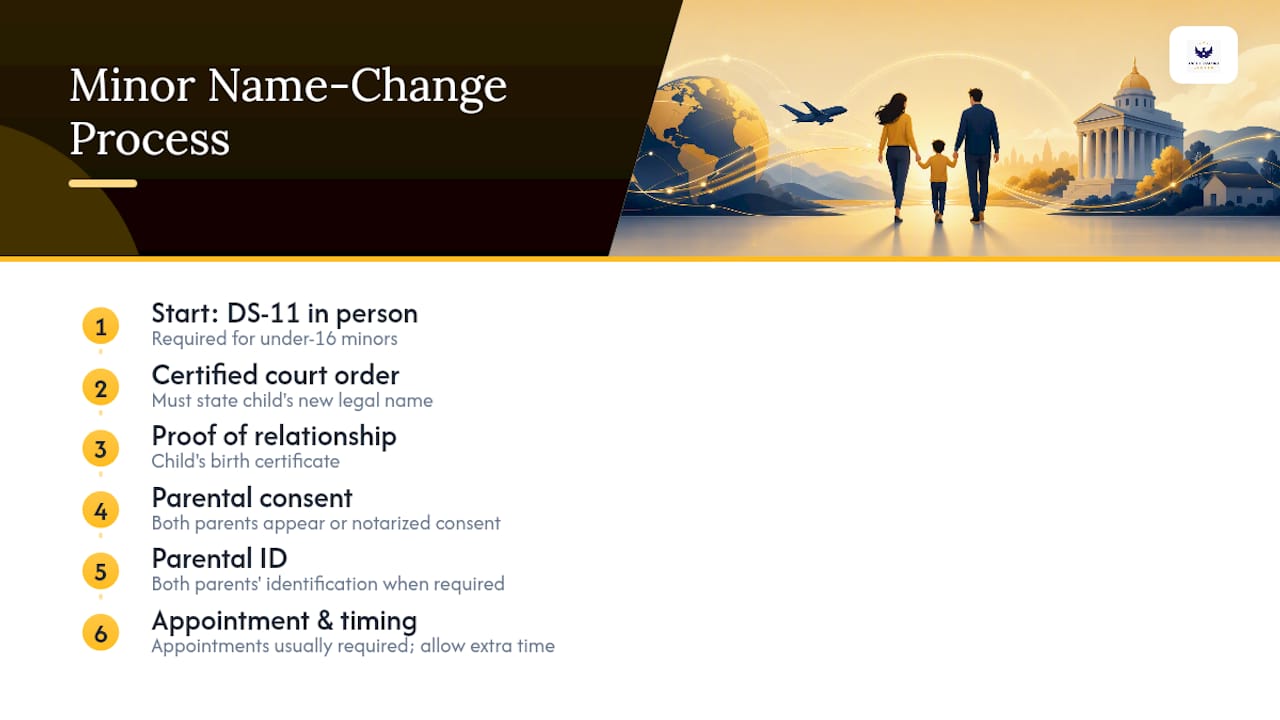
If your child’s passport was issued before the divorce and their name is changing, expect to submit the certified court order alongside proof of your parental relationship: the child’s birth certificate, and both parents’ identification when required. Because these applications almost always require an appointment, timing matters even more here than it does for adults using DS-5504 or DS-82. If travel is coming up in the next few weeks, don’t wait to start gathering documents. A courier that specializes in verifying child-passport paperwork before submission can prevent a rejected application from turning into a missed trip.
What If You Divorced in a Different State or Country?
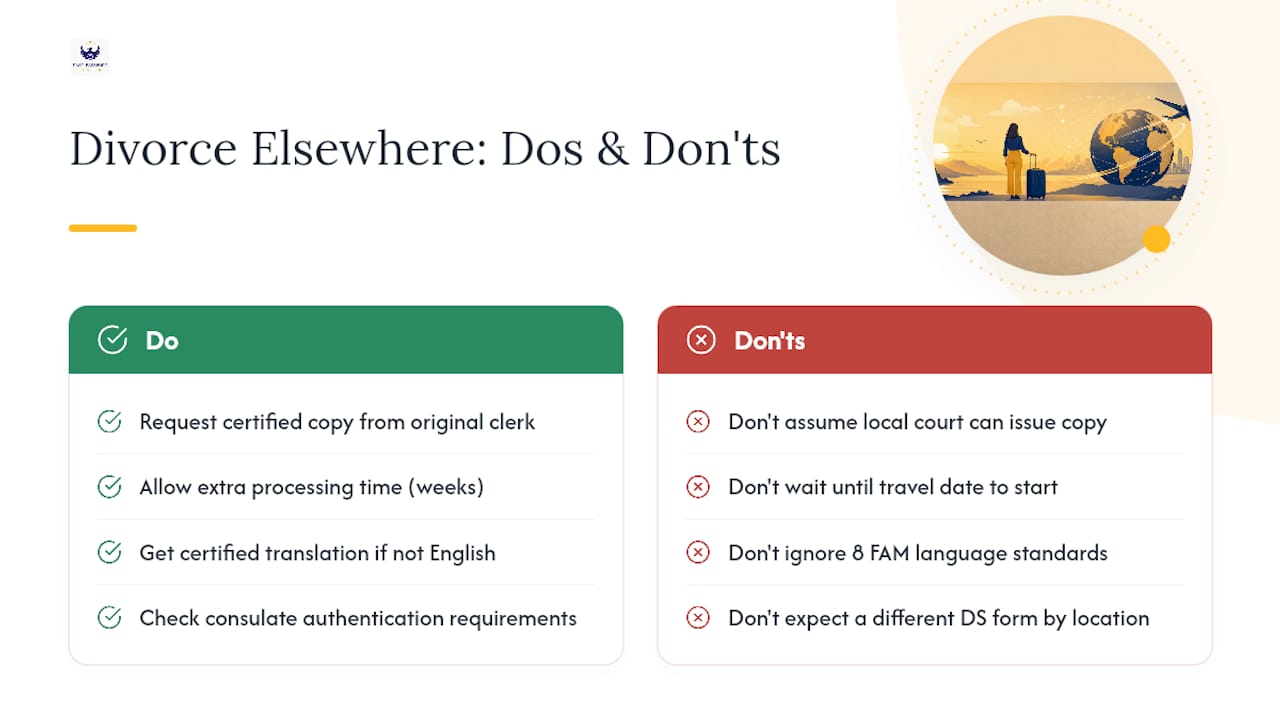
Your decree’s origin doesn’t need to match your current address. The State Department accepts certified divorce decrees and name-restoration orders from any U.S. state court, regardless of where you live now, as long as the document itself meets the language and certification standards outlined in 8 FAM 403.1.
The complication shows up when you need a replacement certified copy. If you divorced in Ohio but now live in Nevada, you’ll likely need to contact the original county clerk’s office where the decree was filed, not a local court near your new home. Many clerks now offer certified copy requests by mail or online, but processing time varies by county and can add a week or more to your timeline.
Divorces finalized outside the United States carry an extra layer: foreign decrees generally need to be accompanied by a certified translation if they’re not in English, and some consular offices require additional authentication before the State Department will accept the name-restoration language. If your decree came from a foreign court, plan for a longer document-gathering phase and start well before your travel date.
Either way, the form you use, DS-5504, DS-82, or DS-11, doesn’t change based on geography. Only the paperwork trail to get your certified document does.
Why I Tell Readers to Verify the Decree Wording First
The name-change cases that go sideways almost never fail because someone picked the wrong form. They fail because the decree said “may resume a former name” instead of naming it outright, and the applicant didn’t catch it until a rejection letter showed up weeks later. I’ve seen last-minute travelers salvage a trip only because a courier flagged that exact gap before submission, not after.
If you take one thing from this: read your decree’s exact language before ordering certified copies, and confirm your Social Security Administration record is fully updated before you mail anything to the State Department.
— Andy Irons
How Fast Passport Center Handles Your Name Change
Fast Passport Center is is the practical alternative to mailing this yourself and hoping nothing gets kicked back. As a State Department registered courier with drop-off offices in 24 cities, we review your certified name-change document and application before it ever leaves our hands, then hand-deliver it directly to a passport agency with real-time tracking, which is the difference between a 2 to 4 week window that actually holds and one that slips because a decree’s wording tripped up a mail-in review.
Start by pulling together your certified divorce decree or name-change certificate, your current passport, and a compliant photo. From there, our passport expediting service walks you through document review and courier hand-delivery, or you can compare it directly against in-person agency visits if you’re still weighing your timeline. If your trip is inside that 2 to 4 week range, or you’re hours from the nearest regional agency, this is the step that keeps your travel dates intact.
This article is general information, not a substitute for advice from a qualified lawyer. Consult a qualified legal professional about your own circumstances before acting on anything here.
Sources
- Change or Correct a Passport – Travel – State Department
- Usa
- 8 FAM 403.1 Name usage and name changes — U.S. Department of State
FAQ
How do I change my passport name after a divorce?
File Form DS-5504 by mail if your name change happened within 1 year of your passport’s issue date, using your certified divorce decree as proof. Outside that window, use DS-82 by mail if eligible or DS-11 in person.
Can I travel on a passport that still shows my married name after divorce?
Yes, a passport remains valid for travel under the name printed in it even after divorce, but airline tickets and IDs need to match that name exactly, so most people update the passport before booking new travel.
What if I got married and my passport still has my maiden name?
The same forms apply in reverse: DS-5504 within 1 year of issuance with a certified marriage certificate, or DS-82 or DS-11 outside that window, following the identical timing rule used for divorce name changes.
Do I need to update Social Security before my passport?
Yes. Update your Social Security Administration record with Form SS-5 first, since the State Department often cross-references SSA data and skipping this step is a common cause of processing delays.
What if my divorce decree doesn’t mention my former name?
You’ll need a name-only certificate from the court clerk, a post-judgment name-restoration filing, or supporting public-use records paired with Form DS-60 if you’re applying in person via DS-11.