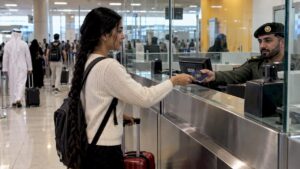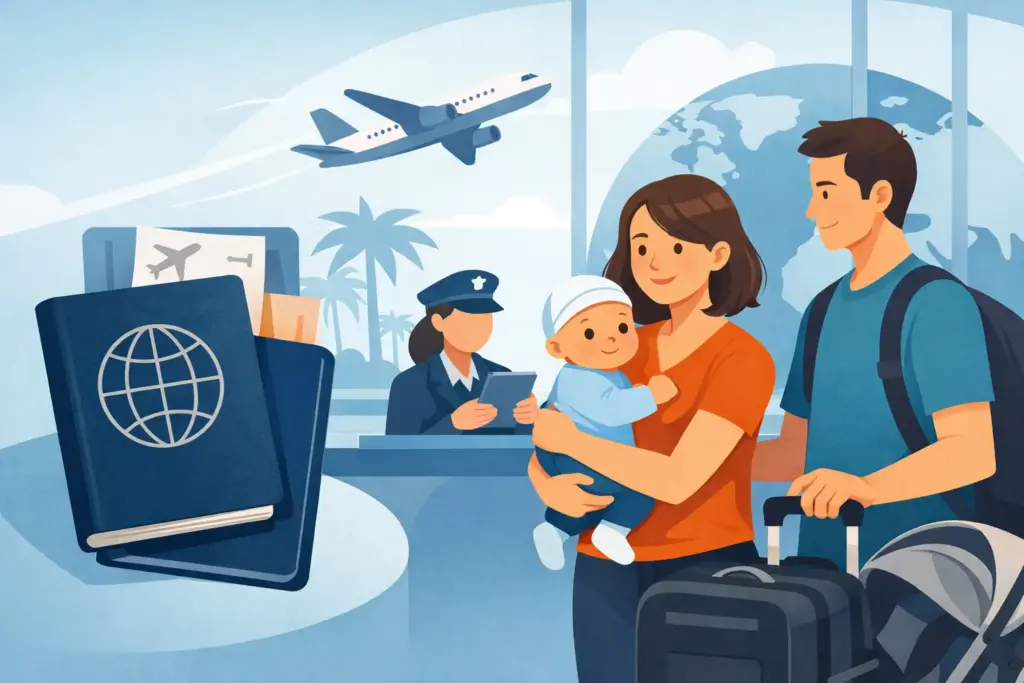
A baby can be packed, fed, and asleep in a carrier – and still be denied boarding if the travel documents are not right. So, do infants need passports abroad? In most cases, yes. Every U.S. citizen, including a newborn, needs their own passport for international air travel. Parents cannot add an infant to an adult passport or use their own passport as proof that the child may travel.
That rule can feel surprising when your child is only a few weeks old. But airlines, border officials, and destination countries treat an infant as a separate traveler. If an overseas trip is approaching, securing your child’s passport deserves the same attention as booking flights and confirming accommodations.
Do Infants Need Passports Abroad for Every Trip?
For international flights, the answer is straightforward: a U.S. infant needs a valid U.S. passport book. This applies whether you are flying to Canada, Mexico, the Caribbean, Europe, or any other foreign destination. Age does not create an exception. A lap infant needs a passport just as a child with a paid seat does.
The passport book is the document used for international air travel. A passport card is less expensive, but it cannot be used to fly internationally. It is limited to certain land and sea entries from Canada, Mexico, Bermuda, and Caribbean countries. Choosing a card when your family is flying can create an expensive, last-minute problem.
There are narrow exceptions for some travel by land or sea. U.S. citizen children under age 16 may generally enter the United States from Canada, Mexico, Bermuda, or many Caribbean locations with proof of citizenship, such as an original or certified copy of a birth certificate. Children traveling with organized groups may have separate rules in limited circumstances.
Those exceptions do not mean a passport is unnecessary for the whole trip. The country you are visiting, your airline, a cruise line, or a connecting airport may require a passport. A closed-loop cruise that begins and ends at the same U.S. port can have different documentation rules, but an unexpected medical emergency or a missed sailing could require your family to fly home. For that reason, a passport book is often the wiser choice even when another document may technically be accepted.
What Parents Need for an Infant Passport Application
An infant receives a first passport through Form DS-11. Unlike many adult renewals, this application must be submitted in person. Your baby must attend the appointment, even if they are too young to sit up or look at the camera for long.
Parents should gather the paperwork before scheduling or submitting anything. A missing original document, an unacceptable photo, or an unsigned form can delay an application when every day matters. In most situations, you will need the following:
- Evidence of the child’s U.S. citizenship, usually an original or certified birth certificate showing the parents’ names
- Proof of the parents’ relationship to the child, often established by the same birth certificate
- Valid identification for each parent, plus photocopies as required
- One compliant passport photo of the infant
- A completed but unsigned DS-11 application
- Payment for government passport fees and any selected expedited service
Do not sign the DS-11 until instructed to do so by the authorized acceptance agent. Signing too early can require you to complete a new form.
Both Parents Usually Need to Appear
For a child under 16, both parents or legal guardians generally appear in person to show consent. This requirement is designed to protect children from international parental abduction. When one parent cannot appear, the attending parent may need a notarized consent form from the absent parent along with a copy of that parent’s ID.
Some families have different circumstances, including sole legal custody, a deceased parent, or an inability to locate the other parent. The documents needed in these situations depend on the facts. Court orders, custody documents, death certificates, and specialized consent forms may be necessary. Do not assume a hospital record, a marriage certificate, or a verbal agreement will replace the required evidence.
Infant Passport Photos Have Their Own Challenges
A newborn photo does not need a perfect smile. It does need to meet passport photo standards. The infant should face the camera with their face visible against a plain white or off-white background. Hats, headbands that cover the face, hands in the image, shadows, and a visible car seat or adult’s arm can cause rejection.
For very young babies, parents often place the child flat on a clean white sheet and take the image from above. This can work if the background is smooth and the baby’s face is clear. Because photo problems are common, review the image carefully before submitting it. A document pre-check can catch issues that are easy to miss when you are operating on very little sleep.
How Long Does an Infant Passport Take?
Processing times change, and the time stated by the government begins after the application is received and accepted, not when you first start gathering documents. Mailing time, appointment availability, corrections, and photo rejection can all add days or weeks.
If your departure date is close, act immediately. An expedited government service may be available, and travelers with urgent international travel can sometimes qualify for faster options depending on the date of departure and appointment availability. Evidence of travel is commonly required for urgent cases.
Parents who need help managing a time-sensitive application can work with Fast Passport Center. The service includes guided forms, document and photo review, and access to submissions through U.S. Department of State registered and authorized passport couriers participating in the Passport Agency hand-courier program. That is official courier access with limited daily in-person submission privileges, not simply someone waiting in line.
Expedited handling can reduce uncertainty, but it cannot fix incorrect citizenship evidence or missing parental consent. The fastest path is a complete, accurate application delivered through the appropriate channel as early as possible.
Common Mistakes That Delay a Baby’s Passport
The most stressful passport delays are often preventable. Parents may bring a photocopy of a birth certificate instead of an original or certified copy, forget that both parents must participate, or assume an older sibling’s documents prove the infant’s citizenship. None of these substitutes will work.
Another common issue is waiting for a Social Security card before starting. A child’s Social Security number is requested on the application, but families should follow the application instructions if one has not yet been issued. Do not delay solely because you are waiting for the card without confirming what your specific application requires.
Travelers also sometimes overlook the passport’s validity period. Passports issued to children under 16 are valid for five years, not 10. They also cannot be renewed by mail using the standard adult renewal process. When the passport expires, changes significantly, or is lost, plan for another in-person child passport application.
Before You Leave for the Airport
Once the passport arrives, compare every detail with the child’s birth certificate and your flight reservation. Check the spelling of the name, date of birth, passport number, and expiration date. Keep the passport in a protected, easy-to-reach place, not in checked luggage.
Also review destination-specific entry rules. Some countries require a passport to remain valid for a certain period after arrival or departure. If only one parent is traveling with the infant, a notarized letter of consent from the non-traveling parent may be strongly recommended or required by the destination, even though it is separate from the U.S. passport application.
A baby’s first international trip should begin with excitement, not a document surprise at the gate. Start the passport process as soon as travel becomes likely, verify the requirements for your exact itinerary, and give yourself room to solve problems before departure.