Yes, U.S. citizens need a visa to enter Vietnam, and the fastest official route is the Vietnam e-visa portal, which typically processes applications in 3 to 5 working days. If your trip is more than four weeks out, apply yourself online. If it’s within two to four weeks, or your passport has a problem, expedited courier support through a service like Fast Passport Center can help you avoid a missed flight.
TL;DR:
- The Vietnam e-visa application process takes 3 to 5 working days, with weekends and holidays potentially extending processing time.
- U.S. travelers should ensure their passports have at least six months of validity and a blank page before applying.
- Only official portals should be used for application to avoid inflated fees and security risks; third-party services cannot speed up government processing.
- Short-term travelers flying directly into Phu Quoc Island for 30 days or less do not need a visa, but other entry points require a valid e-visa.
- Expedited passport services are recommended if your passport is near expiration, damaged, or if you need to travel within two weeks.
Table of Contents
- Vietnam E-Visa Requirements for USA Travelers: Basics, Validity, and Fees
- Who Doesn’t Need a Vietnam E-Visa, and What U.S. Passport Holders Should Watch For
- How to Apply for a Vietnam E-Visa From the United States
- Vietnam E-Visa Processing Time: What 3 to 5 Working Days Actually Means
- Can You Expedite a Vietnam E-Visa? Realistic Options for Urgent Travel
- Vietnam Arrival Checklist: What Immigration Will Check
- What to Do If Your Vietnam E-Visa Is Rejected, Pending, or Wrong
- Fast Passport Center: A Practical Option When Your Passport or Timeline Is the Real Problem
- Official Vietnam Visa Resources for U.S. Applicants
- An Editorial Take on the Vietnam E-Visa Process
- Get Your Passport Ready Before Your E-Visa Trip
- Sources
- FAQ
Vietnam E-Visa Requirements for USA Travelers: Basics, Validity, and Fees
Every U.S. passport holder traveling to Vietnam for tourism, business, or transit needs an entry visa, and the Vietnam e-visa is the standard way to get one without a trip to a consulate. Vietnam expanded e-visa eligibility to travelers from all countries and extended the maximum stay to a longer duration, effective in 2023, according to the Vietnamese Embassy in the United States. Before that update, many nationalities faced a shorter 30 day cap, so the current 90 day window is a genuine improvement for anyone planning an extended stay, a multi-city itinerary, or a work trip that might run long.
You’ll choose between two entry types when you apply, and the choice matters for your budget and your itinerary:
- Single-entry e-visa: a fee for single-entry e-visas, allowing one entry into Vietnam within the visa’s validity period.
- Multiple-entry e-visa: a fee for multiple-entry e-visas, permitting multiple entries and exits during the visa’s validity period, useful if you’re combining Vietnam with a side trip to Cambodia or Laos.
Both fees are paid online, in U.S. dollars, at the time you submit your application through the official portal. Vietnam’s Immigration Department accepts these payments by credit or debit card directly on the national e-visa system, and you should never route payment through a third-party site that isn’t clearly identified as a government portal.
Your approved e-visa is accepted at designated international airports, seaports, and land border crossings across the country. The U.S. Embassy in Vietnam notes the immigration system lists 42 designated international border gates, covering everywhere from Noi Bai Airport in Hanoi to land crossings near the Cambodian border. Whichever gate you select during the application becomes your official port of entry, a detail worth remembering before you move on to the application steps.
One caution bears repeating here: apply only through evisa.gov.vn or evisa.xuatnhapcanh.gov.vn. Search results and social media ads sometimes surface lookalike sites that charge inflated “service fees” for a form you could fill out yourself for $25 or $50. If a site’s URL doesn’t match one of those two addresses, close the tab.
Who Doesn’t Need a Vietnam E-Visa, and What U.S. Passport Holders Should Watch For
Not every U.S. traveler headed to Vietnam needs the standard e-visa. Visitors flying directly into Phu Quoc Island for a stay of 30 days or less are generally exempt from the visa requirement, an exception Vietnam maintains to boost tourism on that island specifically. Fly into any other airport, or extend your stay beyond Phu Quoc, and the standard e-visa rules apply again.
Passport type creates a less obvious but more common snag. If you’re traveling on a limited-validity emergency passport, the kind the State Department issues in 12-page format for urgent situations, Vietnam may not accept it for e-visa purposes. The State Department’s own travel advisory flags this directly, so anyone relying on an emergency passport should contact the Vietnamese Embassy before booking a flight, not after.
A few passport basics apply to every U.S. traveler regardless of passport type:
- Your passport should be valid for at least six months beyond your arrival date in Vietnam.
- You need at least one blank visa page for immigration to stamp on entry.
- The passport number on your e-visa application must exactly match the passport you’ll actually travel with.
If your passport is close to expiring or already has just one or two blank pages left, address that before you touch the e-visa application. A same-day or expedited passport renewal solves the underlying problem instead of leaving you to discover it at the airport counter.
How to Apply for a Vietnam E-Visa From the United States
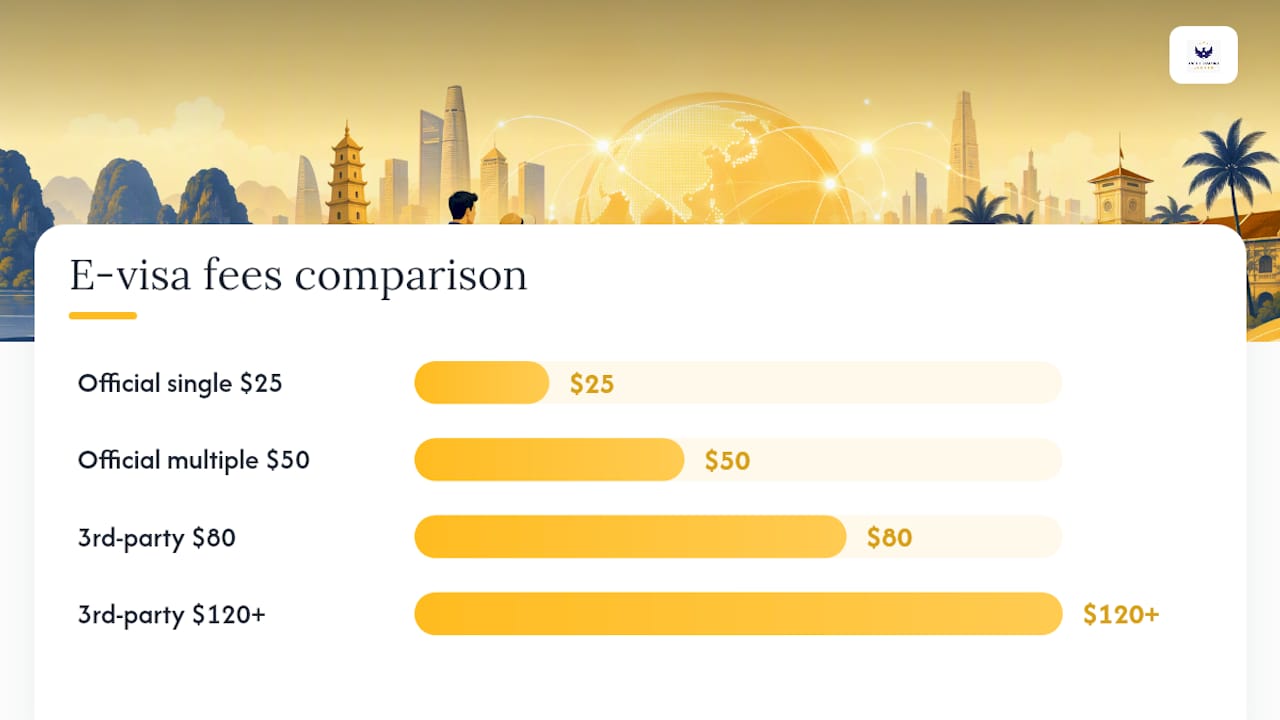
The Vietnam Immigration Department runs the only official e-visa application channel, and it’s the one channel you should use. Third-party sites that charge $80, $120, or more to “process” your e-visa are often just relaying your information to the same government portal you could access directly, only with a markup attached.
Before you sit down at the portal, gather these items:
- A digital photo of your passport’s data page, clear enough that every character is legible.
- A passport-style photo of your face against a plain background, meeting standard visa photo dimensions.
- A decision on your port of entry, since Vietnam binds your e-visa to the specific airport or border gate you select during the application.
- Your travel dates, so you can choose single or multiple entry accurately.
With those ready, the application itself moves through a predictable sequence:
- Go to evisa.gov.vn and select the standard e-visa application option, not any linked third-party service.
- Enter your passport details exactly as they appear on your passport’s data page, including your full name in the same order it’s printed.
- Upload your passport photo page and personal photo, following the file size and format specs shown on screen.
- Select your entry and exit ports. This is the single most consequential field on the form, because Vietnam treats your chosen port of entry as binding. Arrive somewhere else, even with an otherwise valid, approved e-visa, and you risk denied entry.
- Choose single-entry or multiple-entry and confirm the dates match your actual itinerary.
- Pay the $25 or $50 fee by card through the portal’s secure payment page.
- Save your registration code. You’ll need it to check your application status later.
- Wait for processing, typically 3 to 5 working days, then return to the portal to download your approved e-visa as a PDF.
- Print it. Vietnamese immigration officers expect a physical printed copy at the border, not a phone screenshot.
Pro Tip: The most common rejection reason isn’t a missing document. It’s a name mismatch, usually because an applicant entered their middle name in the wrong field or typed a passport number with one digit off. Read your passport data page character by character before you submit, rather than trusting autofill or memory.
Vietnam E-Visa Processing Time: What 3 to 5 Working Days Actually Means
The Vietnam e-visa’s standard processing window is 3 to 5 working days, and that phrase, “working days,” is doing more work than most applicants realize. Weekends don’t count, and neither do Vietnamese public holidays, so an application submitted on a Thursday afternoon might not clear until the following Wednesday once you factor in a weekend and a holiday closure.
A useful number to hold onto: 3 to 5 working days is the typical window, not a guaranteed ceiling. Several factors commonly push processing past that range:
- Vietnamese national holidays, particularly Tet (Lunar New Year), when government offices close for an extended stretch.
- Seasonal application surges, especially in the months leading into peak travel windows.
- Incomplete or mismatched documentation that triggers manual review.
- Technical issues on the applicant’s end, like a blurry uploaded photo that needs resubmission.
You can check your application’s progress anytime using the registration code you saved, through the same official portal or the related immigration status lookup page. A status of “pending” simply means it’s still in the government’s queue, not that anything has gone wrong.
One thing worth knowing before you call anyone in a panic: the U.S. Embassy and its consulates cannot accelerate or influence e-visa processing in any way. That authority sits entirely with Vietnam’s Immigration Department. If your application is stuck, the embassy can offer guidance, but it has no lever to pull on Vietnam’s side of the system.
Can You Expedite a Vietnam E-Visa? Realistic Options for Urgent Travel
Here’s the honest answer: Vietnam’s government doesn’t publish or offer any official “rush fee” or emergency e-visa tier. The $25 and $50 fees are flat, and processing moves through the same 3 to 5 working day queue for everyone. What exists instead is a market of private services that charge a separate fee to handle the paperwork, catch input errors before submission, and follow up on your behalf, all without being able to force the Vietnamese government to move faster.
That distinction matters when you’re deciding whether paying for help makes sense. It tends to make sense in a few specific situations:
- You’re already within a week or two of departure and haven’t started the application yet.
- You submitted an application, it’s still pending, and your flight is close enough that you’re worried.
- Your passport has an issue, damage, low page count, or looming expiration, that’s tangled up with your visa timeline.
- You’ve made an input error and aren’t confident correcting and resubmitting it yourself under time pressure.
A private expediting service can review your form for the kind of name and passport number errors that cause rejections, help you resubmit quickly if something bounces back, and act as a liaison who understands the portal’s quirks. What it cannot do is change Vietnam’s processing queue or guarantee an approval date. Our guide on travisa.com alternatives walks through how these third-party services typically operate and what realistic expectations look like.
Pro Tip: Before paying anyone for expedited e-visa help, run through this checklist: how many days do you actually have left, is your passport in good enough shape to travel on, and is your application already submitted or still sitting on your to-do list? The answers determine whether you need help at all, or just fifteen focused minutes at the official portal.
Vietnam Arrival Checklist: What Immigration Will Check
Getting your e-visa approved is only half the job. What you carry to the immigration counter in Vietnam determines whether that approval actually gets you through the door.
Bring the printed, approved e-visa along with the exact same passport you used on the application, since immigration officers cross-check the passport number on your e-visa against the one in your hand. Your passport still needs to meet the six-month validity and blank-page rules covered earlier, and those don’t relax just because your e-visa is already approved.
A short arrival packing list that covers what officers commonly ask for:
- Printed approved e-visa (a phone screenshot is not a reliable substitute).
- The passport whose number matches the e-visa exactly.
- Proof of onward travel, like a return flight confirmation, in case an officer requests it.
- Proof of accommodation for at least the first few nights of your stay.
- Your payment confirmation or receipt from the e-visa portal, kept as a backup record.
Name formatting trips up more travelers than you’d expect. If your passport lists your name as “Smith, John Robert” but you entered “John Robert Smith” on the e-visa form, that’s usually fine, but any actual spelling discrepancy or dropped middle name can cause a delay at the counter. Double-check this before you print anything.
Traveling with children or planning to enter and exit on different passports (common for dual nationals) adds another layer. Each traveler, including minors, needs their own approved e-visa tied to their own passport number, and the passport used to exit Vietnam should generally match the one used to enter. If your situation involves a lost or damaged passport while abroad, you’ll need both a replacement passport and a matching replacement visa or exit permit before you can leave the country, a process the State Department notes can take real time to sort out.
What to Do If Your Vietnam E-Visa Is Rejected, Pending, or Wrong
Applications don’t always go smoothly, and how you respond in the first few hours often determines whether a problem becomes a minor delay or a missed flight.
- If your application was rejected, read the stated reason carefully. Most rejections trace back to a name mismatch, an incorrect passport number, or a photo that didn’t meet upload specs. Correct the exact field flagged, then reapply. Expect the new application to run through the full 3 to 5 working day window again, so don’t wait until the last possible moment to check your status.
- If your application is still pending and your flight is close, don’t assume it will clear in time. Contact the Vietnamese Embassy or Consulate for guidance, and consider private expediting help to review your submission for hidden errors that might be quietly holding up review.
- If you realize you selected the wrong port of entry, don’t simply change your flight plans and hope. Vietnam treats the port of entry as binding, so arriving somewhere other than what’s listed on your approved e-visa risks denial even with valid paperwork. Contact immigration through the official portal for guidance, or reapply with the correct port if time allows.
- If you arrive without a valid e-visa, expect to be denied boarding by your airline before you even reach Vietnamese soil, since carriers check visa status against passenger manifests. Vietnam’s e-visa system also offers limited options for extending an e-visa once you’re already in-country, so treat the visa as something to finalize before departure, not something to fix mid-trip.
Fast Passport Center: A Practical Option When Your Passport or Timeline Is the Real Problem
An e-visa is only useful if the passport behind it is valid, undamaged, and has enough blank pages left, and that’s where Fast Passport Center fits into this picture. As a U.S. Department of State registered courier with over 20 years handling passport and visa logistics, Fast Passport Center exists for the traveler whose visa plans are solid but whose passport situation isn’t.
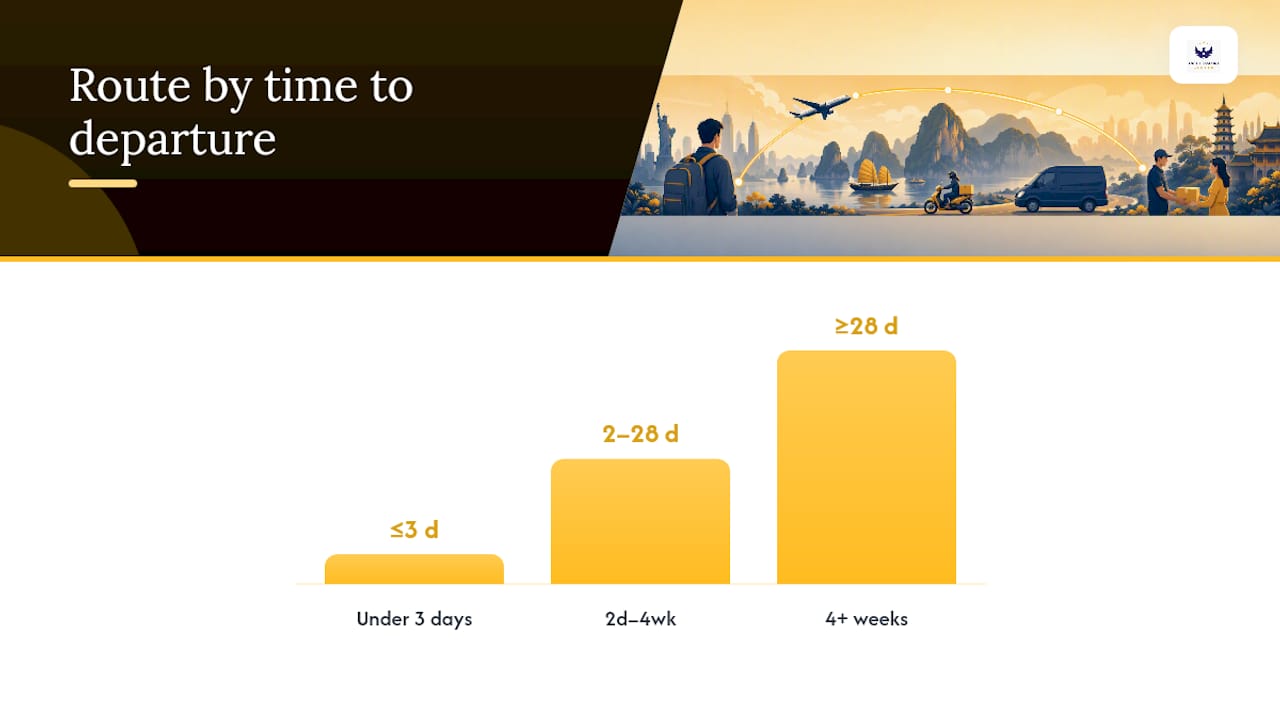
The right move depends entirely on your calendar. If your trip is under three days away or you’re facing a genuine family emergency, an in-person regional passport agency visit is still the correct call. If you’re somewhere between two days and four weeks out, a courier and expediting service is the more realistic path, especially if you live two or more hours from the nearest regional agency, a real constraint for travelers in Tampa, Charlotte, Sacramento, Nashville, and Louisville. If your trip is more than four weeks away, standard USPS processing is usually all you need.
| Timeline to departure | Recommended route |
|---|---|
| Within 3 days, or family emergency | Regional passport agency (in-person) |
| 2 days to 4 weeks | Courier/expediting service |
| 4+ weeks | Standard USPS processing |
Fast Passport Center operates drop-off offices in 24 cities nationwide, offering document review from experienced agents, secure courier hand-delivery, and real-time tracking so you’re never guessing where your application stands. The company holds an A+ rating with the Better Business Bureau and has collected more than 14,000 positive customer reviews, a track record that matters when your travel date isn’t negotiable.
Before choosing between doing it yourself and using a courier, ask yourself three questions: how many days do you actually have, is your current passport eligible for renewal by mail or does it need in-person handling, and would a delay at any single step derail your trip entirely. Those three answers usually make the decision for you.
Official Vietnam Visa Resources for U.S. Applicants
Bookmark these before you start your application, not after something goes wrong.
- Vietnam National Electronic Visa system for the application itself and status checks.
- U.S. Department of State’s Vietnam travel advisory for entry rules and safety updates.
- U.S. Embassy & Consulate in Vietnam for embassy-specific guidance and contact information.
- CDC’s Vietnam travel health page for vaccination and health prep recommendations.
An Editorial Take on the Vietnam E-Visa Process
The advice you’ll find scattered across forums and travel blogs tends to treat the Vietnam e-visa as either trivially easy or a bureaucratic minefield, and neither framing is honest. It’s a well-designed system that runs on a predictable 3 to 5 working day clock, and the overwhelming majority of problems travelers report trace back to something they controlled: a mismatched name, a passport with too few blank pages, a port of entry chosen without thinking it through.
Where conventional advice really falls short is in pretending speed is something you can buy from the Vietnamese government. It isn’t. What you can buy is expert review of your own paperwork, and that’s a meaningfully different service than a fictional government rush lane. The travelers who get burned aren’t usually the ones who apply late. They’re the ones who apply correctly but on a passport that was never going to hold up at the border.
If there’s one thing worth prioritizing above the e-visa form itself, it’s confirming your passport is actually fit to travel on before you fill out anything else. Everything downstream depends on that being true.
— Andy Irons
Get Your Passport Ready Before Your E-Visa Trip
A rejected or delayed Vietnam e-visa is rarely the real emergency. A passport with three months of validity left, a damaged cover, or no blank pages is the actual problem hiding underneath it, and that’s exactly what Fast Passport Center exists to solve fast. Unlike a standalone e-visa expediting service that only touches your Vietnam paperwork, Fast Passport Center handles the passport itself through direct courier coordination with the U.S. Department of State, plus simultaneous visa processing when your trip needs both handled at once.
If you’re two or more hours from a regional passport agency in cities like Tampa, Charlotte, Sacramento, Nashville, or Louisville, and your trip to Vietnam falls somewhere between two days and four weeks out, this is the option built for your exact situation. Start with the expedited passport service page to see current timelines, or head straight to the passport expediting service page to check what your specific renewal or replacement needs and get your documents moving today.
Sources
- Travel
- Vietnamese Visas and Entry/Exit – U.S. Embassy & Consulate in Vietnam
- Vietnam National Electronic Visa system
- New Policy On Electronic Visa And Visa Exemption | Embassy of the Socialist Republic of Vietnam in the United States
FAQ
How do I apply for a Vietnam e-visa from the USA?
Apply directly through the official Vietnam e-visa portal, entering your passport details, uploading a passport photo, selecting your port of entry, and paying the $25 or $50 fee online, all from anywhere in the United States.
Can I get a Vietnam e-visa in one day?
The Vietnamese government’s standard processing window is 3 to 5 working days, with no official same-day or emergency tier; private services can help you avoid errors that cause delays, but they cannot force faster government processing.
Do U.S. citizens need a visa to enter Vietnam?
Yes, U.S. citizens need a visa to enter Vietnam, and the e-visa is the standard route for tourism, business, or transit, apart from a narrow exemption for short stays flying directly into Phu Quoc Island.
How long does it take to get a Vietnam visa from the USA?
Vietnam e-visa applications from the United States typically take 3 to 5 working days to process, though Vietnamese public holidays, application surges, and incomplete documentation can extend that window.
What should I do if my passport won’t have enough validity for my Vietnam trip?
Vietnam recommends at least six months of passport validity beyond your arrival date, so if your passport is close to that line, resolve it through a service like Fast Passport Center’s expedited passport processing before applying for your e-visa.