If both options exist for your destination and you have more than three days before departure, get the eVisa. It moves every uncertainty about your entry off travel day and onto your own schedule, when you still have time to fix a mistake.
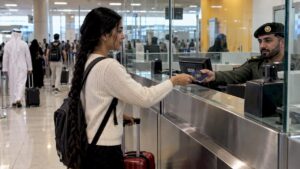
Visa on arrival still has a place. It works when you’re booking a flight in the next 48 hours, your passport ranks among the world’s strongest, and you can gather the paperwork immigration officers ask for at the counter.
- Certainty vs. flexibility: eVisa locks in approval before you fly; VOA leaves the decision to an officer at the border.
- Payment: eVisa uses a card online; VOA often demands cash in a specific currency.
- Refusal risk: eVisa denial happens at home, where you can fix it; VOA denial happens at the airport, where you often can’t.
Key Takeaways
Choosing between an eVisa and a visa on arrival mostly comes down to how many days remain before departure and how much risk you’re willing to carry on travel day itself.
| Point | Details |
|---|---|
| Default to eVisa | Apply for the eVisa whenever you have 3 to 15 days before departure and it’s offered for your destination. |
| Processing time gap | EVisas typically take 24 to 96 hours; VOA counters issue in minutes to about an hour, plus queue time. |
| VOA carries hidden costs | Currency exchange spreads, cash-only counters, and lengthening queues add real cost beyond the visa fee. |
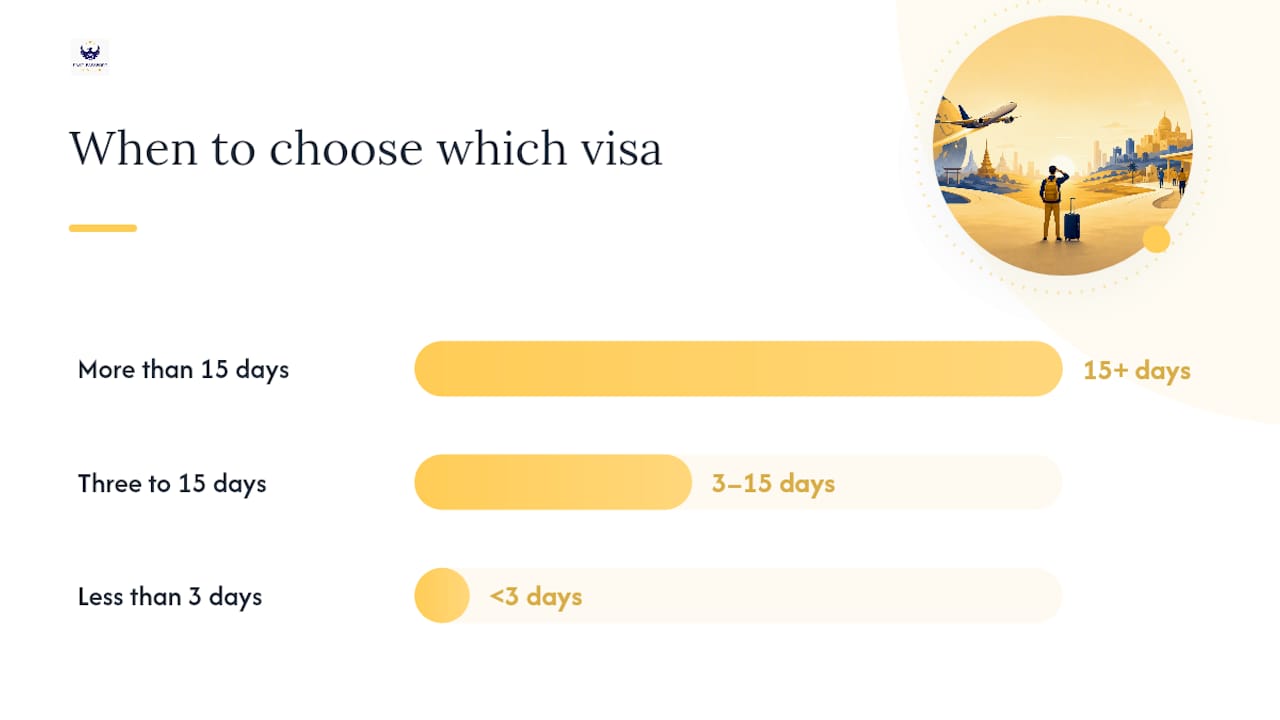
| Use the three-day rule | More than 15 days: embassy visa; 3 to 15 days: eVisa; under 3 days: VOA only with a strong passport. |
| Fix passport problems first | Fast Passport Center’s courier service can restore eligibility for an eVisa application when departure is 2 days to 4 weeks away. |
Where to Verify the Rules Yourself
- Check destination-specific eligibility and fees on the official portal, such as Vietnam’s eVisa system.
- Cross-reference processing times and risk using EntryPolicies’ data-driven comparison.
- For general visa route questions, Fewa Consultancy’s visa guidance covers additional documentation basics.
Table of Contents
- EVisa vs Visa on Arrival: The Core Differences at a Glance
- How an EVisa Application Actually Works
- How Visa on Arrival Issuance Plays Out at the Airport
- Weighing the Trade-Offs by What Matters Most to You
- The Three-Day Rule for Choosing Fast
- What to Check Before You Leave for the Airport
- Fixing a Passport Problem Before It Costs You the Trip
- Sources
- FAQ
EVisa vs Visa on Arrival: The Core Differences at a Glance
The gap between these two channels comes down to when the risk happens, not just how much it costs. An eVisa denial is a bad afternoon at your laptop. A VOA denial is a bad afternoon at a foreign airport, possibly with a connecting flight ticking away.
Processing time is the most concrete difference. EntryPolicies’ comparison of the two channels finds that eVisa approvals typically take a few days, while a visa on arrival is issued at the counter in minutes to about an hour, assuming no line. That’s the trade: eVisa costs you a few days of lead time; VOA costs you queue time you can’t predict.
Fees usually run in similar ranges for the same destination, but VOA carries costs an eVisa doesn’t. Currency exchange spreads at the airport, “expedite” tips some travelers report paying at busy counters, and the chance of a missed connection all belong to what one comparison calls the true cost of a visa, not just the sticker price.
- Pre-departure denial (eVisa): you find out at home, with time to correct an error or rebook.
- Port-of-entry refusal (VOA): you find out after landing, sometimes with no way back except the plane you arrived on.
- Airline checks: carriers rely on Advance Passenger Information systems to confirm visa status before boarding, and a missing eVisa record can trigger denied boarding even if you’re holding an approval email.
How an EVisa Application Actually Works
An eVisa is an authorization you secure entirely online, before you ever reach the airport. Most systems follow the same basic sequence:
- Go to the destination country’s official government portal, not a third-party reseller site.
- Enter passport details exactly as they appear on the photo page.
- Upload a passport-style photo and, for some countries, a scan of your passport bio page.
- Pay online by card, then wait for processing.
- Receive an approval, usually a PDF, by email, tied directly to your passport number.
That last step matters more than most travelers realize. Airlines and immigration systems check your approval against your passport number electronically, so a typo in that field can strand you at check-in even with a valid approval in hand. Save the PDF to your phone and email, and print one paper copy as a backup. Some government systems process eVisas in a few hours; others take the full 24 to 96 hour window EntryPolicies documents, so apply as soon as your travel dates are locked.
How Visa on Arrival Issuance Plays Out at the Airport
VOA replaces the online paperwork with an in-person process at a designated counter, usually before immigration control. The general sequence looks like this:
- Find the visa-on-arrival counter, often separate from the main immigration line.
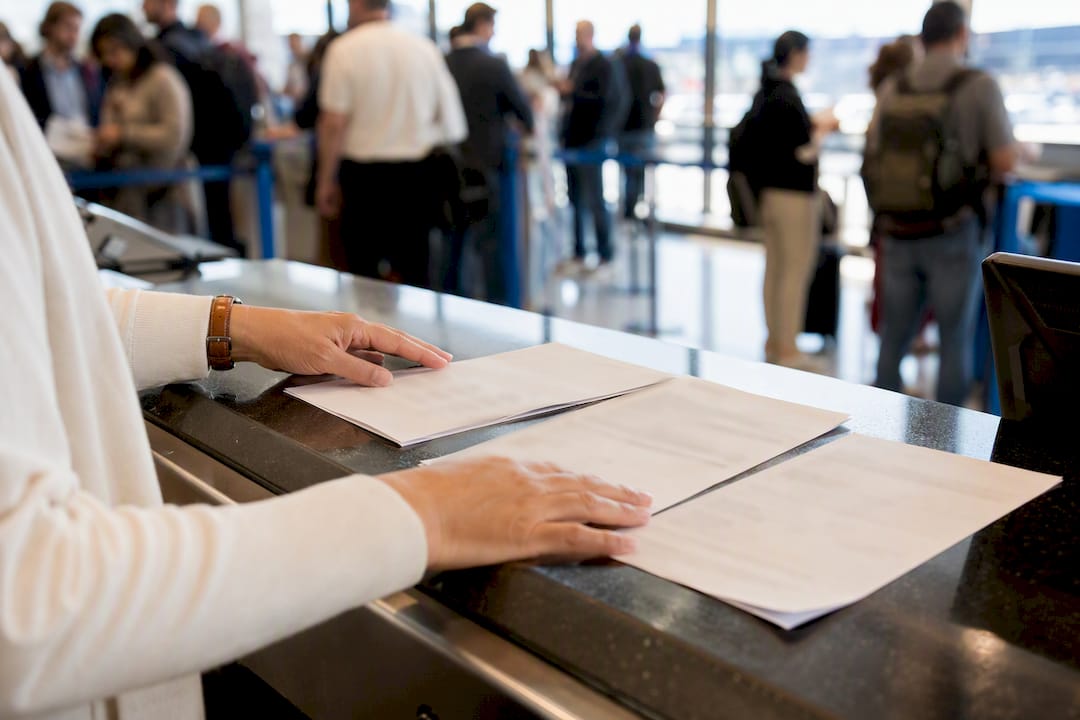
- Fill out a paper arrival form, sometimes requiring a passport photo you brought with you.
- Pay the fee, frequently in cash and in a specific currency, at a payment window.
- Get your passport stamped or your visa sticker applied.
- Proceed to the regular immigration queue for final entry.
Immigration officers at VOA counters can ask for evidence you might not think to carry: an onward or return ticket, a hotel booking, and proof of sufficient funds for your stay. Not every entry point that accepts a visa on arrival is staffed the same hours, and refusal at this stage usually means a return flight, not a second attempt.
Pro Tip: Photograph or photocopy your onward ticket, hotel confirmation, and a bank statement before you leave home. VOA officers ask for these more often than travelers expect, and having paper (not just a phone screen) speeds up the counter significantly.
Weighing the Trade-Offs by What Matters Most to You
Neither channel wins on every measure, so match the choice to what you’re actually optimizing for on this trip.
- Best for certainty: eVisa, because you know your status before you board.
- Best for last-minute bookings: VOA, since there’s no advance processing window to miss.
- Best for tight connections: eVisa, since counter queues for VOA have grown; SimpleVisa cites IATA survey data showing longer post-pandemic wait times that can add 30 to 40 minutes or more at peak periods.
- Best for families with children: eVisa, since a paperwork problem for one traveler at a VOA counter can delay everyone in the group.
- Worst-case downside of VOA: in rare cases, incomplete documentation leads to secondary questioning, denied entry, or being sent back on the next available flight.
Some countries split the difference with a hybrid e-VOA: you apply and pay online in advance, but final issuance still happens at arrival. Indonesia runs a version of this system, and it removes much of VOA’s cash-and-queue friction while keeping its last-minute flexibility, according to Voyasee’s comparison of visa options.
The Three-Day Rule for Choosing Fast
A simple heuristic settles most of the indecision: count the days until departure. EntryPolicies frames it as a decision rule built around three thresholds, and it holds up well in practice.
- More than 15 days out: consider an embassy visa if your destination requires one, or an eVisa if that’s the standard channel.
- Three to 15 days out: apply for the eVisa now. This is the sweet spot where processing time and travel date align comfortably.
- Less than three days out: VOA is your only realistic option, and only if your passport carries strong visa-free or VOA access and your documents are ready.
Pro Tip: Check your passport’s VOA eligibility before you assume it’s an option. Not every nationality qualifies at every entry point, even when VOA exists for that country.
A consultant flying out in five days books the eVisa the same afternoon. A family adding a weekend beach stop three days before their flight, with a strong passport and hotel booking in hand, uses VOA and accepts the counter risk.
What to Check Before You Leave for the Airport
A few minutes of preparation prevents most of the problems travelers run into at check-in or immigration.
- Save your eVisa approval PDF or VOA prepayment confirmation offline, and print a paper copy.
- Keep payment receipts for any visa fee in case a border agent or airline questions it.
- Verify VOA availability, accepted currencies, and accepted payment cards directly on the destination’s official government e-visa portal, not a booking site.
- At airline check-in, show your eVisa approval email or PDF proactively. Staff checking Advance Passenger Information records want to see the same passport number matching your booking.
When a Passport Problem Threatens Your EVisa Timeline
If your passport is expiring, damaged, or missing when you discover your travel dates, no eVisa portal can help until that’s fixed. For departures inside two days, a regional passport agency is often the only in-person option. For trips two days to four weeks out, a registered courier can restore your eligibility fast enough to still apply online.
Fast Passport Center has run as a State Department registered passport courier for over 20 years, holds an A+ Better Business Bureau rating, and has collected more than 14,000 positive customer reviews. That track record exists specifically for travelers whose passport problem is blocking a visa application on a deadline.
Contact an expeditor as soon as you realize the passport issue exists, not after you’ve already lost days trying to fix it yourself.
A Quick Note on How I’d Choose
For a business trip five days out, I’d file the eVisa that afternoon. For a family trip inside three days, I’d only use VOA with a strong passport and paperwork ready. If a damaged or expiring passport is the actual blocker, call an expeditor before you touch the visa portal at all.
Fixing a Passport Problem Before It Costs You the Trip
A visa channel only matters if your passport is actually valid to travel on. Fast Passport Center exists for the exact window where most travelers get stuck: departure two days to four weeks away, with a passport that’s expired, damaged, lost, or simply never been issued for a first-time child traveler.
As a U.S. State Department registered courier with direct hand-delivery access to passport agencies, Fast Passport Center can turn around a new or renewed passport far faster than mailing an application through USPS and waiting in the standard queue. That speed is backed by an A+ Better Business Bureau rating and more than 14,000 customer reviews. If your eVisa application is stalled because your passport won’t be valid in time, or you discovered the problem with weeks (not months) to spare, start with the expedited passport service and get a specific timeline for your situation today.
Sources
- eVisa vs Visa on Arrival vs Embassy Visa: Complete Cost, Processing Time & Risk Comparison (2026) | EntryPolicies
- Visa On Arrival Vs E-Visa: Which One Should You Choose Before You Fly? – Voyasee
- Evisa
FAQ
Are eVisa and Visa on Arrival the Same Thing?
No. An eVisa is approved online before you travel; a visa on arrival is issued in person at the airport after you land.
What Is the Difference Between a Visa and an eVisa?
A traditional visa is often obtained through an embassy in advance, sometimes requiring an in-person interview, while an eVisa is a fully online authorization tied electronically to your passport number.
Can I Travel with Only an eVisa?
Yes, an approved eVisa is a complete entry authorization on its own, but you should carry the approval PDF and confirm your airline can verify it during check-in.
Is an eVisa the Same as a Regular Visa Sticker or Stamp?
Functionally yes, both grant entry permission, but an eVisa exists as a digital record rather than a physical stamp or sticker, so save and print your approval before departure.
When Should I Use a Passport Courier Instead of Applying for a Visa Myself?
If your passport is expired, damaged, or missing and your trip is two days to four weeks away, a registered courier like Fast Passport Center can resolve the passport issue fast enough to still apply for your eVisa on time.