
A passport for multiple trips is a travel document, or set of documents, that allows frequent international travelers to manage multiple visas, entry requirements, and travel restrictions without interruption. The standard tool is a U.S. passport book, but high-frequency travelers often qualify for a second passport book issued by the U.S. Department of State. This second document is not a second citizenship. It is a practical solution for professionals who cannot afford to have their only passport held at an embassy while they need to cross another border. Understanding your options before your next trip saves you time, money, and real stress.
What types of passports can frequent travelers use for multiple trips?
A standard U.S. passport book is the foundation of any frequent traveler’s document set. It is valid for 10 years for adults and accepted for all forms of international travel, including air, land, and sea. Most travelers never need anything beyond this single book.
Frequent travelers with specific logistical constraints can apply for a second U.S. passport book. The U.S. Department of State confirms that second passports are valid for up to 4 years and carry a special endorsement code that distinguishes them from a standard book. That reduced validity period is a deliberate design. The second passport is a working document, not a long-term replacement.
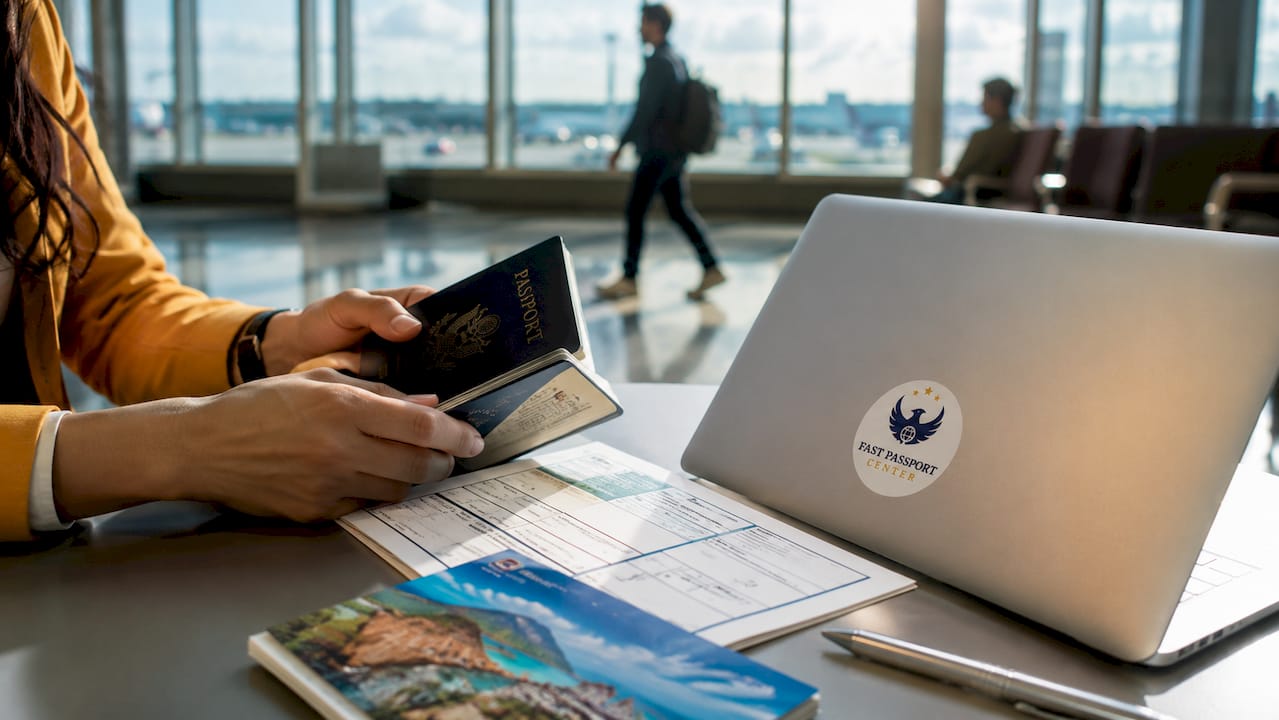
The passport card is a third option, but its role is limited. It works for land and sea travel to Canada, Mexico, the Caribbean, and Bermuda. It does not work for international air travel. For a frequent traveler making multiple international flights, the passport card complements but never replaces a passport book.
Pro Tip: Never carry both your standard and second passport in the same bag. If that bag is lost or stolen, you lose your entire travel document set at once.
Here is a clear breakdown of the three document types:
- Standard passport book: 10-year validity for adults, accepted worldwide for all travel modes, the default document for most travelers.
- Second passport book: Up to 4 years validity, special endorsement code, designed for professionals with concurrent visa and travel needs.
- Passport card: Wallet-sized, valid only for land and sea travel to nearby countries, not accepted for international air travel.
How do passport validity rules affect multiple-trip travel plans?
Passport validity rules vary by destination, and getting them wrong can cost you your boarding pass. Two distinct standards apply to most international travel, and frequent travelers must know both.
The six-month rule is the most common standard. Countries enforcing this rule require your passport to be valid for at least six months beyond your return date. This applies broadly across Asia, the Middle East, and Africa. A passport expiring in four months is technically “valid” but will get you denied at the gate.
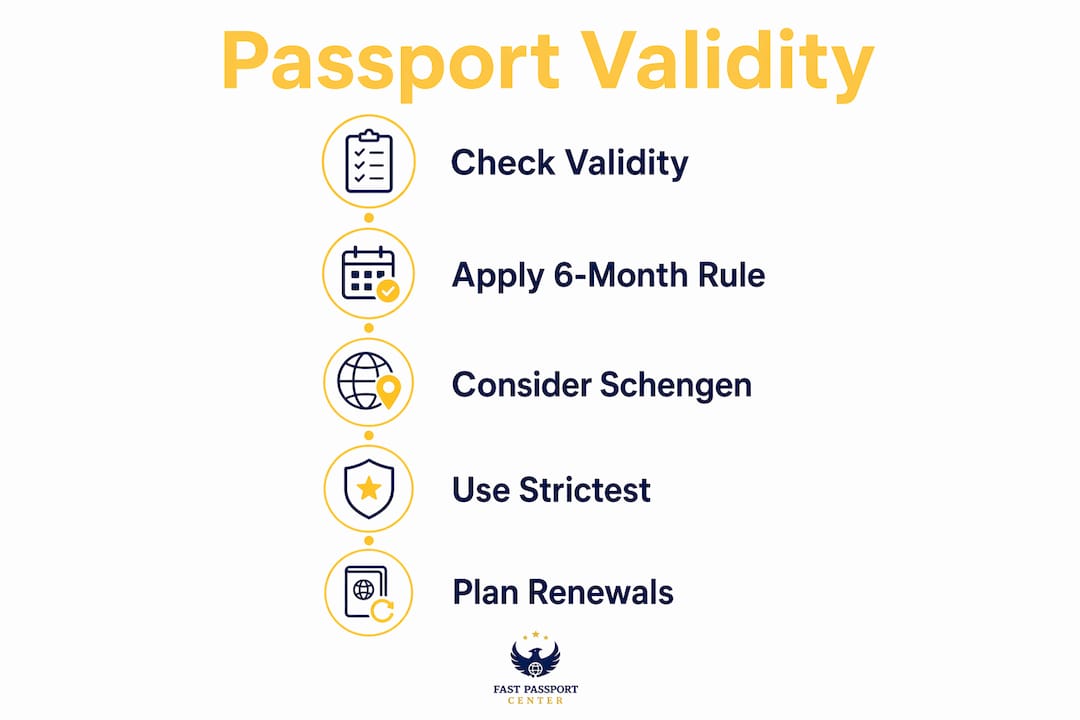
The Schengen Area operates differently. Schengen countries require only three months of validity beyond your departure date, plus the passport must have been issued within the last 10 years. That second condition catches many travelers off guard. A passport issued 11 years ago but technically unexpired fails the Schengen standard.
Pro Tip: When planning a multi-country trip, apply the strictest validity rule of any country on your itinerary to your entire trip. That single standard protects you at every border.
| Destination region | Validity required | Additional condition |
|---|---|---|
| Asia, Middle East, Africa | 6 months beyond return date | None typically |
| Schengen Area (Europe) | 3 months beyond departure | Issued within last 10 years |
| Canada, Mexico | Varies; often full trip validity | Check per entry |
| United States (re-entry) | Must be valid on return | U.S. citizens use U.S. passport |
Managing validity across multiple passports adds another layer. Your second passport has a 4-year validity. If you use it for a visa that requires six months of remaining validity, you need to track that expiration date separately from your standard book.
Who is eligible to apply for a second passport?
The U.S. Department of State is specific about who qualifies. The second passport program targets professionals with genuine logistical travel conflicts, not casual travelers who want a backup document. Airline employees, multinational company executives, and government contractors who travel to countries with conflicting entry requirements are the primary candidates.
The application process follows these steps:
- Confirm eligibility. You must demonstrate a professional need, such as a letter from your employer or evidence of frequent international travel with conflicting visa requirements.
- Complete Form DS-82 or DS-11. The correct form depends on whether you are renewing or applying for the first time. Second passport applications generally require in-person submission at an acceptance facility.
- Submit supporting documentation. This includes your current valid passport, proof of citizenship, a government-issued photo ID, and your eligibility documentation.
- Pay the applicable fees. Standard applications can be expedited for an additional $60 fee, with shipping options that reduce total processing time. Second passport fees follow the same structure.
- Update your Trusted Traveler programs. Programs like Global Entry must be updated with your new passport number. Using the wrong passport number in a Trusted Traveler program causes denied expedited entry at customs.
The second passport carries a special endorsement code printed inside the book. Border agents recognize this code and understand the document’s purpose. You are not trying to hide anything. You are using an officially sanctioned tool designed for exactly your situation.
What are the practical benefits of a passport for multiple trips?
The core benefit is simple: you can be in two places at once, documentarily speaking. Frequent travelers risk serious delays when they submit one passport to multiple embassies for concurrent visa processing. A second passport eliminates that bottleneck entirely.
Here is where the practical value becomes concrete:
- Concurrent visa processing. You submit your standard passport to one embassy for a visa while your second passport remains available for active travel. No waiting. No missed trips.
- Avoiding entry conflicts. Some countries deny entry to travelers with stamps from specific nations. Holding two passports lets you present the document without the conflicting stamps.
- Embassy holds. Some countries physically retain your passport for days or weeks during visa processing. A second passport keeps you mobile during that window.
- Backup for damage or loss. If your primary passport is damaged abroad, your second passport gets you home without an emergency agency visit.
A passport establishes identity and citizenship, but the visa or entry permit is what actually grants you permission to enter a country. Managing both documents correctly across multiple destinations is the real skill. Professionals who travel to Israel and then to several Arab nations, for example, use separate passports to avoid entry refusals based on stamps alone.
What should frequent travelers know about passport cards?
A passport card is valid for land and sea travel to Canada, Mexico, the Caribbean, and Bermuda. It fits in your wallet, costs less than a passport book, and is convenient for travelers who cross the U.S.-Mexico or U.S.-Canada border regularly by car or ferry.
The limitation is firm. A passport card does not work for international air travel. If you fly internationally at all, you need a passport book. The card is a supplement, not a substitute.
For frequent travelers making multiple international trips, the passport card adds value in one specific scenario: you are driving to Mexico or Canada and want to leave your passport book safely at home or in a hotel safe. That is a legitimate use case. It reduces wear on your primary document and keeps your book available for air travel.
Passport cards carry the same 10-year validity as adult passport books. Renewal follows the same process. If you already hold a valid passport book, adding a card is a low-cost way to expand your travel document options without any additional complexity.
Key takeaways
A standard U.S. passport book covers most international travel, but frequent travelers with concurrent visa needs and entry conflicts require a second passport book, valid for up to 4 years, issued by the U.S. Department of State.
| Point | Details |
|---|---|
| Second passport eligibility | Professionals with logistical travel conflicts qualify; casual travelers do not. |
| Validity rules vary by region | The six-month rule applies broadly; Schengen requires only three months plus a 10-year issuance limit. |
| Concurrent visa processing | A second passport lets you submit one book to an embassy while traveling on the other. |
| Trusted Traveler programs | Update Global Entry and similar programs with your active passport number to avoid denied entry. |
| Passport cards are limited | Cards work for land and sea travel to nearby countries only; they do not replace a passport book for air travel. |
Why I think most frequent travelers wait too long to get a second passport
I have worked with hundreds of travelers who discovered the second passport program only after a crisis. They missed a trip because their passport was sitting at a consulate. They got turned away at a gate because their only document had conflicting stamps. These are entirely preventable situations.
The endorsement code on a second passport is something most travelers never think about until it causes a problem at customs. Trusted Traveler programs like Global Entry tie expedited processing to a specific passport number. If you enrolled with your standard book and then travel on your second passport, the system does not recognize you. You lose the benefit you paid for and waited months to receive.
My recommendation: if you travel internationally more than four times per year for work, apply for a second passport before you need it. The 4-year validity means you will renew it regularly, but that is a small price for uninterrupted travel. Time your renewal so both passports do not expire in the same year.
For travelers who live more than two hours from a regional passport agency, cities like Tampa, Charlotte, Nashville, or Sacramento, an expediting service is not a luxury. It is the only realistic option for meeting tight timelines without taking days off work to stand in line. The investment in professional processing pays for itself the first time it saves a trip.
— Andy Irons
Fast Passport Center and passports for frequent travelers
Frequent travelers with tight schedules and complex document needs require a processing partner who understands the stakes. Fast Passport Center is a U.S. Department of State-registered courier with over 20 years of experience and drop-off offices in 24 cities across the country.
Whether you need a second passport processed before a business trip or a renewal completed within a two-to-four-week window, Fast Passport Center handles the details. Their agents provide personalized guidance on forms, fees, and eligibility, so nothing gets rejected on a technicality. With an A+ rating from the Better Business Bureau and over 14,000 positive reviews, their passport expediting service is built for travelers who cannot afford delays. If you are not near a regional agency, this is the practical path forward.
FAQ
What is a passport for multiple trips?
A passport for multiple trips refers to a standard U.S. passport book or a second passport book used by frequent international travelers to manage multiple visas, entry requirements, and travel restrictions across different countries.
Who qualifies for a second U.S. passport book?
The U.S. Department of State issues second passports to professionals with documented logistical travel conflicts, such as airline employees or multinational company workers who need to travel while one passport is held by an embassy.
How long is a second passport valid?
A second U.S. passport book is valid for up to 4 years, compared to the standard 10-year validity for adult passport books. It also carries a special endorsement code that border agents recognize.
Does the six-month passport validity rule apply everywhere?
No. Countries in Asia, the Middle East, and Africa commonly enforce the six-month rule, requiring validity six months beyond your return date. Schengen Area countries require only three months of validity beyond departure, plus the passport must have been issued within the last 10 years.
Can a passport card replace a passport book for multiple international trips?
No. A passport card is valid only for land and sea travel to Canada, Mexico, the Caribbean, and Bermuda. It is not accepted for international air travel and cannot replace a passport book for frequent international travelers.
Recommended
- International Travel Tips for U.S. Passport Holders — Validity Rules, Visa Requirements & Emergency Guide | Fast Passport Center
- Passport Validity for International Travel – Fast Passport Center
- The 3-Month & 6-Month Passport Rule: What U.S. Travelers Must Know (2026) – Fast Passport Center
- Six Month Passport Rule Explained Clearly – Fast Passport Center