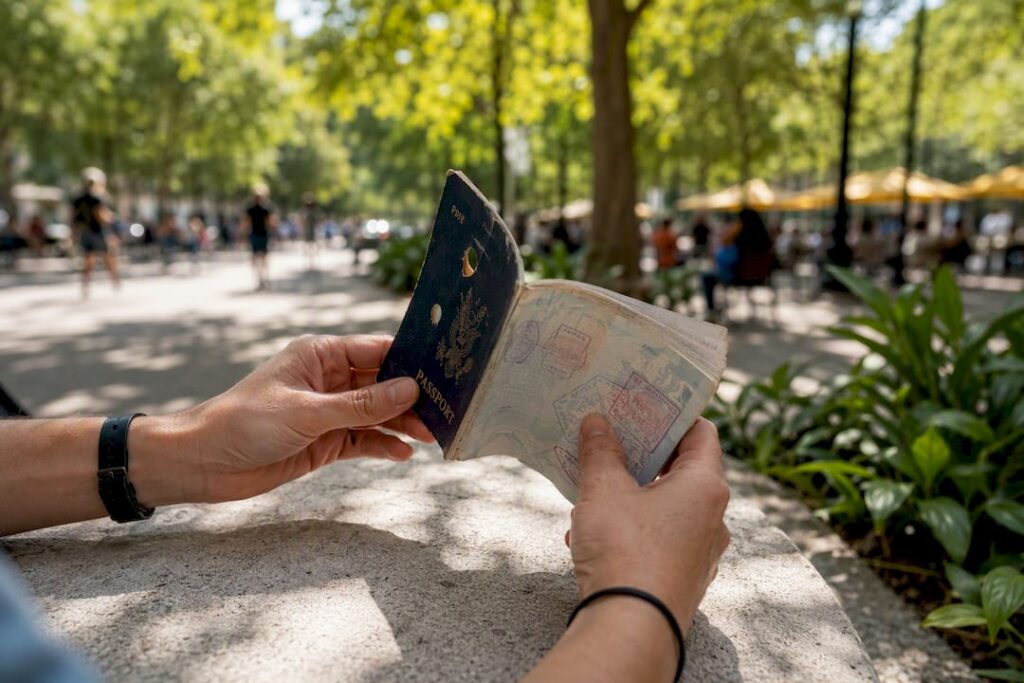
An expired passport cannot get you across a border, but it still carries weight with the U.S. Department of State, the TSA, and even a courier like Fast Passport Center when you’re racing a deadline. It proves who you are, confirms your citizenship, may hold visas that are still valid, and can shave real time off your next renewal.
Here’s what an old passport still does for you:
- Proof of identity and citizenship for renewals, replacements, and some government processes
- Preserves valid visas and entry stamps you’d otherwise lose
- Speeds up your next renewal, especially if it was issued within the last 15 years
- Works as backup ID at TSA checkpoints for up to two years past expiration
- Signals what to do next if you find it days or weeks before a trip
Key Takeaways
An expired passport is never valid for international travel, but it remains one of the most useful documents you own for proving identity, preserving visas, and speeding up your next renewal.
| Point | Details |
|---|---|
| Not valid for travel | An expired passport cannot cross international borders under any circumstance. |
| Proves identity and citizenship | The State Department uses your old passport to verify identity during renewals and replacements. |
| The 15-year rule matters | Mail renewal is only available if your last passport was issued within 15 years. |
| TSA gives a two-year grace period | Expired passports work as domestic ID at TSA checkpoints for up to two years past expiration. |
| Timeline decides your next move | Fast Passport Center’s courier service fits travel 2 days to 4 weeks out, especially for readers far from a regional agency. |
Table of Contents
- Why Expired Passport Documents Still Prove Your Identity
- Can You Still Use Visas and Stamps in an Old Passport?
- How an Old Passport Makes Renewal Faster and Cheaper
- When Does TSA Accept an Expired Passport as ID?
- When to Stop Keeping an Old Passport (and How to Dispose of It)
- If You Discover Your Passport Expired Before an Upcoming Trip
- Carrying an Expired Passport: What Are the Risks?
- Does Every Country Treat Expired Passports the Same Way?
- Getting a Valid Passport Fast When Time Is Short
- Sources
- FAQ
Why Expired Passport Documents Still Prove Your Identity
An expired passport is frequently accepted as documentary proof of U.S. citizenship and identity, even though it won’t get you on an international flight. The State Department specifically advises applicants to hold onto their previous passport, because it’s used to verify identity during renewals and replacements.
That guidance connects directly to a rule that trips up a lot of travelers: you can only renew by mail if your most recent passport was issued within the last 15 years. Miss that window and you’re filling out a full in-person application, often with fingerprinting and a longer wait. Keeping your old book, even years after it expired, keeps that faster mail option on the table.
A few places this pays off directly:
- Renewing by mail instead of applying as a “first-time” applicant
- Replacing a lost or stolen passport, where your old one helps establish identity
- Proving citizenship when a birth certificate is buried in a filing cabinet somewhere
Pro Tip: If you’re applying in person rather than by mail, bring the old passport open to the biographical page and signature page. Agents move faster when they can visually match the photo and signature against your new application.
Worth knowing: when the State Department processes your renewal, it cancels the old passport and returns it to you, usually with a punched hole through the cover. That’s not damage, it’s official practice, and it doesn’t reduce the document’s value as a historical record.
Can You Still Use Visas and Stamps in an Old Passport?
Yes, in many cases. A valid visa inside an expired passport can still let you enter a country, but you’ll need to carry both the old passport (with the visa) and your current one. Border officials match the visa to your identity across both documents.
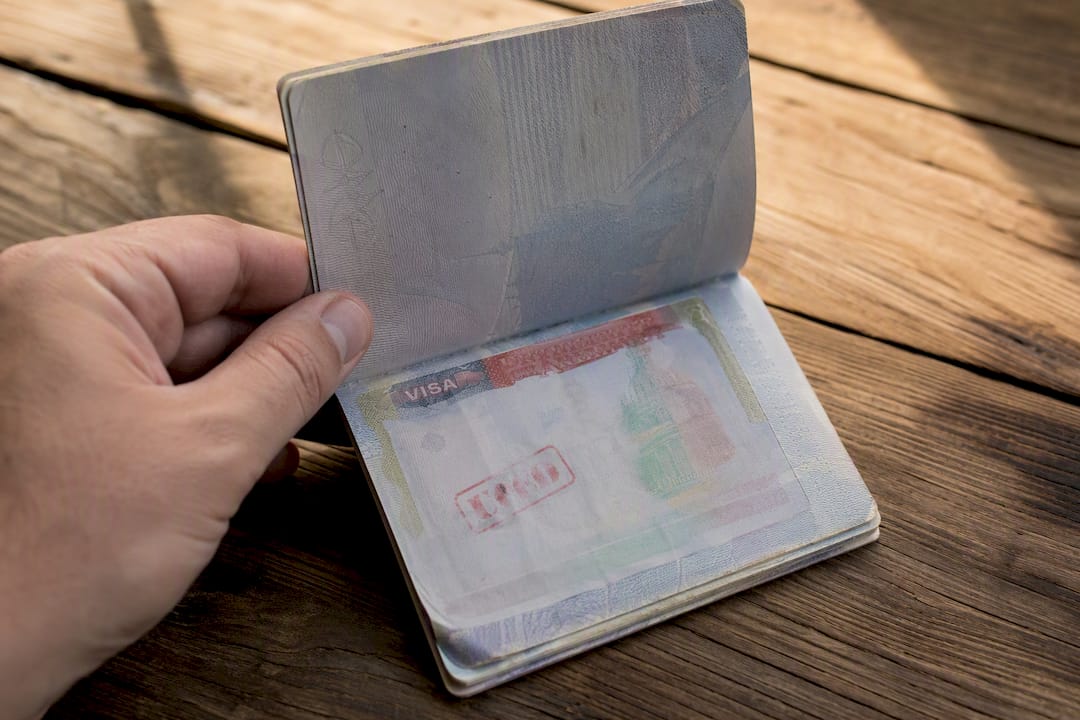
This matters more than people expect. Multi-year visas for countries like India or Brazil often outlast the passport they were issued in, and losing access to that visa page because you tossed the old book means reapplying, paying again, and waiting again. The State Department’s guidance on applying in person confirms that a valid visa in an expired passport generally remains usable when presented with a current one, though verification with the issuing embassy or consulate is smart before you fly.
Before you travel on this setup:
- Contact the visa-issuing embassy or consulate directly to confirm it’s still honored
- Call the airline to make sure their check-in staff will accept two passports
- Bring printed copies of any communication confirming validity, just in case
Old stamps also do quiet work behind the scenes. Immigration officers and future visa applications sometimes ask for travel history, and a stamped page is often the only proof you have.
How an Old Passport Makes Renewal Faster and Cheaper
Keeping your most recent passport usually makes your next renewal cheaper and faster, because it opens the door to mail-in renewal instead of a full in-person application. The eligibility hinges on that same 15-year rule: your prior passport has to have been issued within the last 15 years, and it generally needs to reflect your current name and appearance.
Mail renewal skips the acceptance-facility appointment entirely. In-person applications, by contrast, require scheduling time at a post office or clerk’s office that accepts passport applications, plus photo verification on the spot. If you’re eligible for mail renewal, you’re avoiding that entire step.
A quick before-you-mail checklist:
- Confirm your last passport was issued within 15 years
- Fill out Form DS-82 with current information
- Include a passport photo meeting current specifications
- Track your application at Passportstatus once submitted
One timing detail catches people off guard: your canceled old passport often arrives several weeks after your new one, sometimes close to a four-week gap. If you need that old document for identity verification somewhere in the meantime, plan around that delay rather than assuming it’ll show up right away.
When Does TSA Accept an Expired Passport as ID?
TSA accepts expired identification, including passports, for up to two years past the expiration date at domestic security checkpoints. That’s a real fallback if your driver’s license and passport both happen to be out of date at the same time.
Beyond TSA, acceptance gets inconsistent fast. Some banks will take an expired passport for identity verification on existing accounts; others won’t. Certain government offices accept it for non-travel paperwork. None of that applies to international travel or immigration checkpoints, where an expired passport is simply not a valid travel document, full stop.
Where it typically works:
- TSA checkpoints, within two years of expiration
- Some bank and financial verification processes
- Certain state or local government procedures
Where it typically doesn’t:
- Crossing any international border
- Enrolling in programs with strict current-ID requirements
- Anywhere requiring a currently valid government-issued travel document
Before relying on it anywhere outside a TSA checkpoint, call ahead. A simple “Do you accept an expired U.S. passport for identity verification?” saves you a wasted trip.
Pro Tip: Scan the biographical page of your expired passport and store the file somewhere secure but accessible, like an encrypted cloud folder. It’s useful for remote identity checks without carrying the physical document everywhere.
When to Stop Keeping an Old Passport (and How to Dispose of It)
An expired passport stops being useful once your biographical details have changed (name, appearance, gender marker), the document is badly damaged, or it’s too old to help with anything beyond sentimental value. If none of those apply, keep it.
Quick gut check:
- Keep it if it has valid visas, matches your current legal name, or was issued within 15 years
- Retire it if it’s damaged, decades old, or your name has legally changed
Store any passport you’re keeping in a home safe or lockbox, not your travel wallet. There’s no reason to carry an expired document while traveling with your current one, and it’s one more item to lose.
When you’re ready to dispose of one, don’t just toss it in the trash intact. Cross-cut shred the photo and biographical data page, and if it’s a newer e-passport with an embedded chip, make sure the chip itself is physically destroyed, not just the paper cover.

If You Discover Your Passport Expired Before an Upcoming Trip
The timeline decides everything here. If you’re traveling within 3 days, or facing a genuine family emergency, an in-person visit to a regional passport agency is your only realistic option. If you’ve got 2 days to 4 weeks, a courier or expediting service is usually faster and far less stressful than trying to snag an agency appointment yourself. If you’ve got 4 or more weeks, standard mail renewal through USPS works fine and costs less.
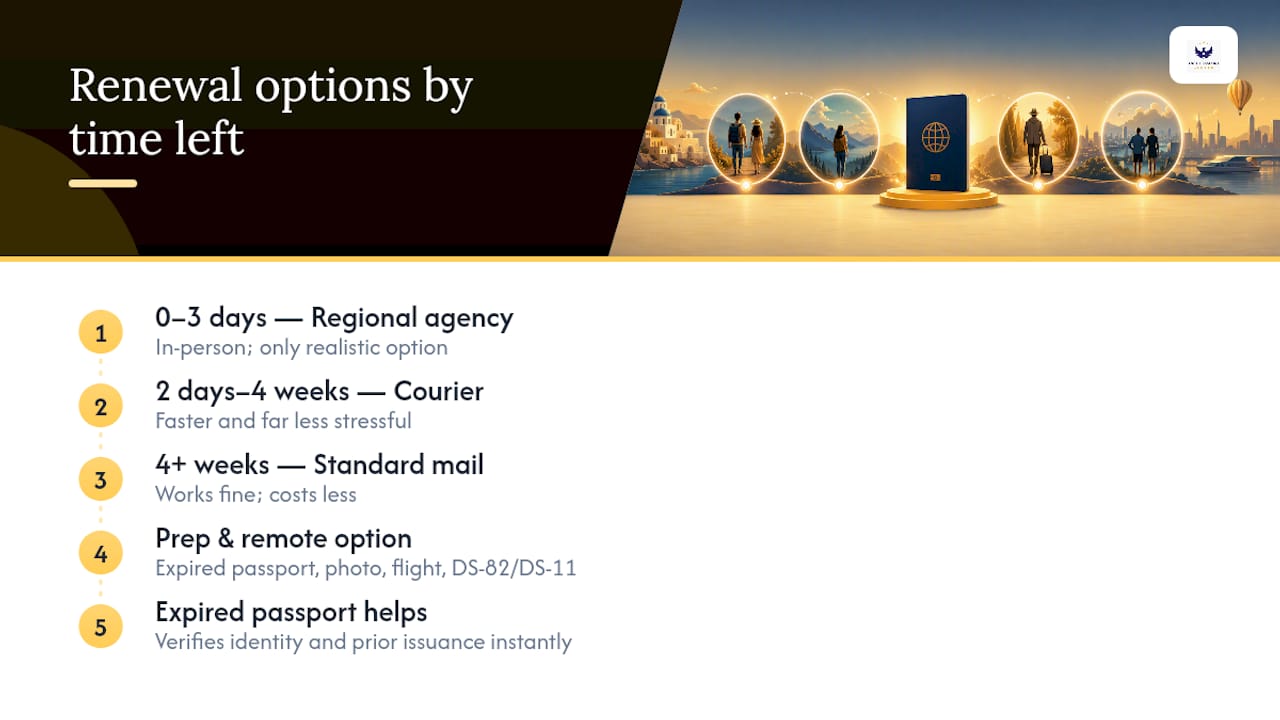
An expired passport actually helps in every one of these scenarios, because it lets agents and couriers verify your identity and prior issuance instantly instead of building a case from scratch.
Pro Tip: Have your expired passport, a passport photo, proof of travel (flight confirmation), and Form DS-82 or DS-11 ready before you contact anyone. It cuts real time off the process.
If you live two or more hours from the nearest regional agency, which is common if you’re in Tampa, Charlotte, Sacramento, Nashville, or Louisville, a Notarised Proof of Address service is often the more practical choice even when an agency visit is technically possible.
Carrying an Expired Passport: What Are the Risks?
Carrying an expired passport isn’t illegal in the United States, but using it as if it were still a valid travel document is where the trouble starts. Presenting it at an international border invites delays, questioning, or denial of entry, since it’s simply not valid documentation once it’s past the expiration date.
There’s also a quieter identity-theft angle worth taking seriously. An expired passport still contains your full legal name, date of birth, passport number, and photo, all of which have value to someone attempting fraud even though the document itself can’t be used to travel. That’s the real argument for secure storage rather than leaving an old passport in a glovebox or a desk drawer at the office.
Mixing up which passport is current also creates friction at TSA checkpoints and in situations where you’re using it alongside a valid visa. Presenting the wrong document, or handing over an expired one when a current one was requested, slows down screening and can raise unnecessary flags. Keep your current and expired passports physically separated, and label them if you’re the type to grab the wrong one in a hurry.
None of this means an expired passport is dangerous to hold onto. It means treating it with the same basic security awareness you’d apply to a Social Security card. It’s official government identification. Store it, don’t discard it carelessly, and never present it as a substitute for a currently valid passport when a border official asks for one.
Does Every Country Treat Expired Passports the Same Way?
No, and this trips up more travelers than you’d think. U.S. rules around identity verification and TSA acceptance don’t automatically apply once you’re dealing with a foreign government’s requirements. Some countries are strict about visa validity tied to expired passports; others are more flexible when a current passport is presented alongside the old one.
Countries that issue long, multi-year visas, think tourist or business visas valid for five or ten years, tend to be more accommodating about honoring that visa in an expired passport, provided you’re also carrying a valid current passport. Countries with shorter visa windows or stricter entry documentation rules may not extend that same courtesy, and some immigration officers will simply deny boarding or entry if there’s any ambiguity.
Domestic identification rules vary by institution rather than by country in the same way. A bank in one state might accept an expired U.S. passport for identity verification; a government office in another might not. There’s no single federal standard governing every non-travel use case, which is exactly why calling ahead before relying on an expired passport for anything outside a TSA checkpoint is worth the five minutes it takes.
The safest approach when international travel or visa questions are involved: contact the specific embassy or consulate handling that country’s entry requirements rather than assuming U.S.-based rules travel with you.
A Practical Take on Keeping Old Passports
I’d rather see someone hang onto an expired passport for a decade too long than shred one they needed six months later for a visa reapplication or a mail renewal. If you’re not sure, keep it. If travel is coming up in the next two to four weeks and you’re nowhere near a regional agency, an expediting courier is the move, not a gamble on an in-person appointment you may not get.
Getting a Valid Passport Fast When Time Is Short
If you’ve just found an expired passport with a trip on the calendar and no regional agency nearby, Fast Passport Center exists precisely for that gap between “too late to mail it in” and “too far to sit in an agency waiting room.” As a State Department-registered courier with drop-off offices in 24 cities, the difference is simple: instead of driving hours to an agency or gambling on a mail timeline that doesn’t fit your trip, a courier hand-delivers your application to the passport agency and tracks it the whole way.

For travel 2 days to 4 weeks out, the expedited courier service is the fit. For renewals where you’re eligible for mail-in but want expert eyes on your paperwork before it ships, the passport renewal help option catches errors before they cost you days. If your situation involves a genuinely urgent window, the emergency passport service is built around exactly that timeline.
Check availability and get a quote based on your travel date, and you’ll know within minutes which service fits your timeline.
Sources
- TSA — Identification at the checkpoint
- Usa
- Renew or replace your passport — U.S. Department of State
FAQ
Is There Any Reason to Keep an Old, Expired Passport?
Yes. It proves citizenship and identity for renewals, may still hold valid visas, and can speed up your next passport application if it was issued within the last 15 years.
Is an Expired Passport Still Good for Anything?
It’s no longer valid for international travel, but it works as backup domestic ID at TSA checkpoints for up to two years past expiration, and it supports identity verification for renewals and replacements.
What Should I Do With Old, Outdated Passports?
Keep them in secure storage, like a home safe, unless your biographical information has changed or the document is badly damaged, in which case shred the data page and destroy any embedded chip before disposal.
What if My Passport Expired More Than 20 Years Ago?
You likely no longer qualify for mail-in renewal under the 15-year rule, so you’ll need to apply in person as a new applicant, though the old passport can still help establish your identity and travel history.
What If I Need a Passport Within a Few Weeks and Live Far From an Agency?
A courier or expediting service is typically your fastest, least stressful option; Fast Passport Center handles exactly this scenario for travelers 2 days to 4 weeks from departure who don’t have easy access to a regional agency.