
U.S. citizens do not need a Schengen visa for tourism or business trips of up to 90 days within any 180-day period, and ETIAS had not yet opened for applications as of 2026. The one thing to check right now is your passport’s expiration date, since it must stay valid for at least three months beyond your planned departure from the Schengen area. Confirm that, then lock in your itinerary and return ticket with the right travel phone protection for every trip to avoid issues at border crossings and visa appointments, as explained in the essential kit for every trip.
TL;DR:
- US citizens can stay up to 90 days within any 180-day period in the Schengen Area without a visa, but their passport must remain valid for at least three months after leaving.
- Overstaying the 90-day limit or engaging in work, studies, or residency requires applying for a Schengen visa through the appropriate embassy before travel.
- ETIAS is not yet active in 2026, but once launched, it will be a digital travel authorization linked to your passport, valid for several years unless you renew your passport.
- Border controls now include biometric checks, meaning travelers must have valid passports and organized documentation, as delays and entry discretion have increased.
- Expedited passport renewal services are recommended for travelers with urgent plans within three to four weeks, especially those in cities far from regional passport agencies.
Table of Contents
- Do US Citizens Need a Schengen Visa for Short Trips?
- What Is ETIAS and When Does It Actually Apply?
- Passport Rules and What Border Officers Actually Check
- When and How to Apply for a Schengen Visa From the US
- When Your Trip Is Close and Your Passport Isn’t Ready
- How ETIAS and EES Change the Way You Should Prepare
- How Fast Passport Center Gets You Travel Ready
- Where to Verify the Latest Schengen and ETIAS Rules
- Sources
- FAQ
Do US Citizens Need a Schengen Visa for Short Trips?
For a short-term stay not exceeding 90 days during any 180-day period, no. This is the same rule that lets you take a two-week trip to Italy in June and another two weeks in Portugal in October without ever touching a visa office, as long as the combined days in the Schengen area stay under 90 during that 180-day stretch.
Here’s how the math actually works in practice:
- Example one: you spend 20 days in France in January, then 40 days touring Germany and Austria in April. You have used part of your allowed stay under the 90-day limit and can still travel freely for another 30 within that same window.
- Example two: you spend 85 days in Spain over the winter, fly home, then try to return six weeks later. You will likely be short on days, since the 180-day clock counts backward from each day of entry, not from a fixed calendar date.
A visa becomes mandatory once you cross that 90-day threshold, take paid work, enroll in a degree program, or apply for residency in a Schengen country. Border officers track entries and exits closely, and an overstay can mean fines, a formal ban on reentry, or complications on your next visa application anywhere in the bloc. If you have made several short Schengen trips already this year, tally the days before you book another one.
What Is ETIAS and When Does It Actually Apply?
ETIAS is not a visa. It is a digital travel authorization tied to your passport, similar in spirit to the ESTA system Americans use for U.S. entry, and Americans still get to skip the traditional visa process because of it, not instead of it. As of 2026, the official ETIAS system had not opened for applications, so you cannot apply yet, and you should not pay any third-party site claiming otherwise.
Once it does launch, here is what to expect:
- You will apply directly through the official ETIAS website or app, never through a broker charging a markup for something that has a cost of about twenty euros.
- The authorization will be valid for up to several years or until your passport expires, whichever comes first.
- Your ETIAS will be electronically linked to the exact passport number you used to apply.
- If you renew or replace that passport for any reason, you will need to apply for a new ETIAS to match it.
That last point matters more than it sounds. A mismatch between your travel authorization and your current passport can mean a denied boarding at the airport, not a minor paperwork hiccup you sort out at the gate.
Passport Rules and What Border Officers Actually Check
Every border agent checks the same basic thing first: is this passport valid for at least three months beyond your planned departure from the Schengen area as required by official guidance, as State Department guidance requires? A passport expiring five weeks after your return flight sounds fine on paper and still gets travelers turned away at check-in counters every year.
Beyond the passport itself, carry these on you or in an easily accessible folder:
- A return or onward ticket that matches your stated trip length.
- Proof of accommodation for at least the first several nights.
- Evidence of sufficient funds for your stay.
- Any visa or authorization documents relevant to your specific trip.
Pro Tip: Keep a photocopy of your passport’s photo page and your itinerary in a separate bag from the originals. If anything gets lost midtrip, you cut your replacement time significantly.
The Entry/Exit System, or EES, now collects fingerprints and a facial image at many Schengen entry and exit points. This does not change your visa-free status, but it does mean processing at the border takes longer and leaves a digital record of every crossing. Border guards retain final discretion on entry even when your documents are in order, and organized paperwork is what tips that discretion in your favor.
When and How to Apply for a Schengen Visa From the US
You need an actual visa, not just ETIAS, when your trip involves a stay exceeding the visa-free allowed duration, paid employment, an internship, a study program, or a residency application. The rule that determines where you apply is straightforward: file with the embassy or consulate of whichever Schengen country you will spend the majority of your time in, not necessarily your first stop.
The process runs roughly like this:
- Identify the correct embassy, consulate, or designated Visa Application Center for your case and your U.S. residence.
- Complete the online application form and schedule your appointment.
- Attend in person for a biometric appointment, fingerprints and a photo, required for any applicant aged 12 or older.
- Submit your passport, proof of accommodation, travel insurance, financial documentation, and any employer or school letters your visa category requires.
Apply well in advance of travel and allow sufficient time for visa processing; consulate appointment availability varies seasonally and by location.
When Your Trip Is Close and Your Passport Isn’t Ready
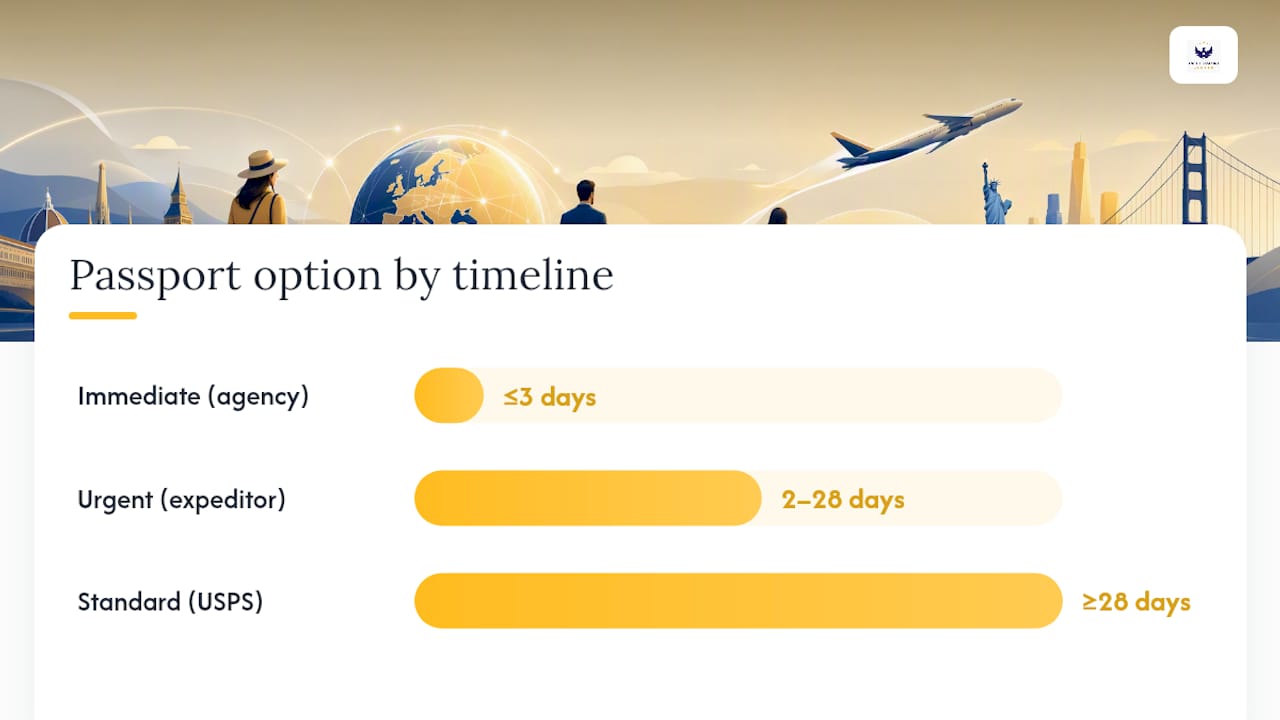
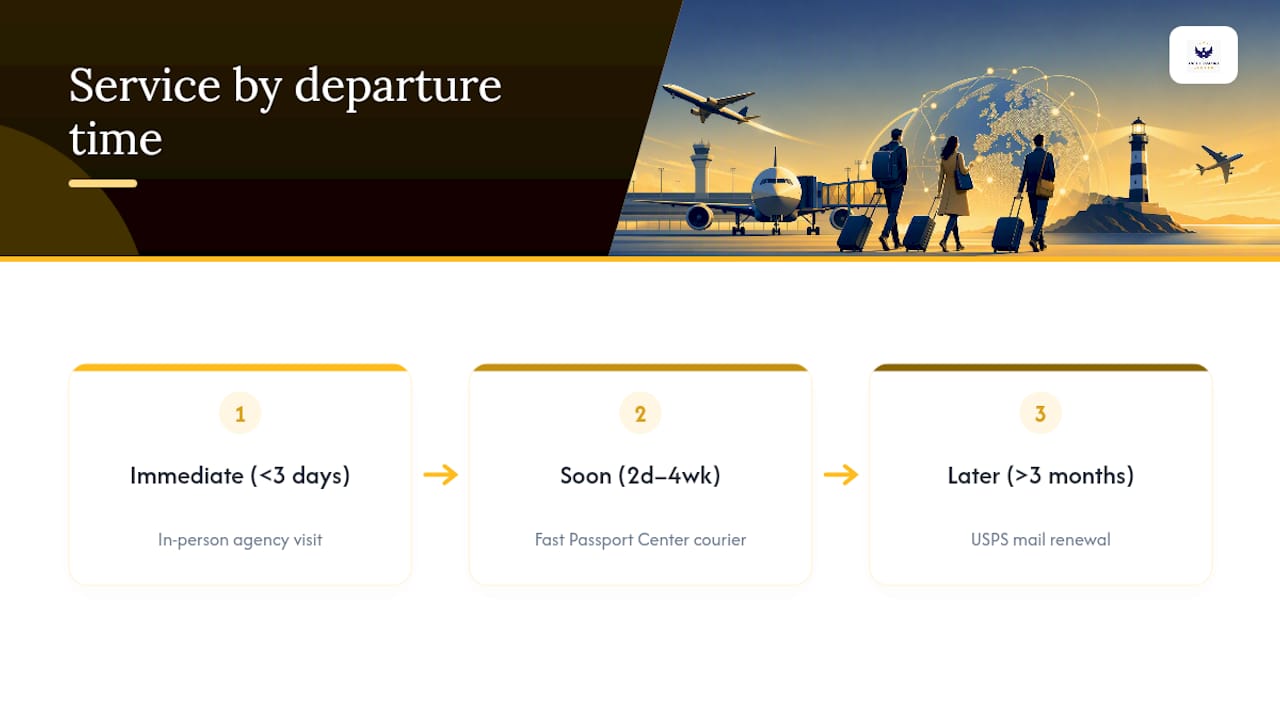
Your timeline decides your move, and the wrong choice here can cost you the trip entirely. If you are traveling within three days or facing a genuine family emergency, an in-person visit to a regional passport agency is your only realistic option. If your departure is anywhere from two days to four weeks out, a courier or expediting service is almost always faster and less stressful than trying to get an agency appointment, especially if you live in a city like Tampa, Charlotte, Sacramento, Nashville, or Louisville, where the nearest agency is hours away. If you have four or more weeks, standard mail renewal through USPS works fine.
For that two-to-four-week window, move through this checklist:
- Confirm your exact expiration date and whether it clears the three-month rule for your return date.
- Pull together your itinerary, proof of onward travel, and any supporting documents your Schengen visa or ETIAS will eventually require.
- Contact an expediting service the same day you spot the problem, not after you have exhausted DIY options.
Pro Tip: If you discover an expired passport while packing for a trip in three weeks, do not head to a regional agency first if you’re hours from one. A passport renewal service built for urgent timelines will usually get you moving faster.
Fast Passport Center is a State Department registered courier with an A+ Better Business Bureau rating and more than 14,000 positive reviews, built specifically for travelers in exactly this bind.
How ETIAS and EES Change the Way You Should Prepare
ETIAS and EES both raise the cost of sloppy paperwork. A biometric border system does not forgive a passport that expired last month, and an authorization tied to the wrong passport number will not get quietly waved through the way a paper stamp sometimes did.
The fix is not complicated. Keep physical and digital copies of your passport, itinerary, and accommodation confirmations organized before you leave, and know exactly which document answers which question at the border. Frequent Schengen travelers should seriously consider a second passport or at minimum a standing renewal plan, so a single expiration date never becomes the reason a trip falls apart.
— Andy Irons
How Fast Passport Center Gets You Travel Ready
Fast Passport Center is the alternative to a slow renewal or a distant agency appointment when your Schengen trip is two days to four weeks away. With more than 20 years in expedited passport processing, and drop-off offices across 24 cities, Fast Passport Center hand-delivers your application directly to the State Department through an authorized courier relationship, cutting out the wait that traps travelers who live far from a regional agency.
If your passport clears the three-month validity window and your trip is further out, USPS mail renewal will serve you fine. If your departure is inside three days or you are dealing with a genuine emergency, an in-person agency visit is the right call. For everyone in between, particularly readers in cities like Tampa, Charlotte, Sacramento, Nashville, or Louisville who cannot easily reach an agency in person, Fast Passport Center’s expedited passport service is built for that exact gap.
Get a processing timeline estimate and see which service level fits your departure date before you spend another day waiting on a form to move through the mail.
Where to Verify the Latest Schengen and ETIAS Rules
Check the State Department’s Europe travel guidance for passport validity and entry rules, the official ETIAS site for launch updates and fees, and the EEAS travel page for EU-side context on EES and ETIAS rollout.
Sources
- U.S. Travelers in Europe – State Department
- What is ETIAS – ETIAS
- Travelling to Europe (ETIAS) – EEAS
- Schengen short term visa (for stay up to 90 days) | Embassy of the Czech Republic in Washington, D.C.
FAQ
Do US citizens need a Schengen visa to visit Europe?
No, not for tourism or business trips up to 90 days within any 180-day period. A visa is required only for longer stays, work, study, or residency purposes.
Is ETIAS required for US citizens in 2026?
ETIAS was not yet accepting applications as of 2026, so no U.S. traveler could apply for one at that point. Once it launches, it will be mandatory for visa-exempt travelers and cost EUR 20.
Can I get a Schengen visa in the USA?
Yes. You apply in person at the embassy, consulate, or designated Visa Application Center responsible for the Schengen country where you will spend most of your trip, and applicants 12 and older complete a biometric appointment.
Are Americans still welcome in Europe in 2026?
Yes. Nothing about ETIAS or the EES biometric rollout changes the underlying visa-free policy for U.S. citizens on short stays, though border checks now take longer and require a valid passport with at least three months remaining. If your passport needs updating before you travel, a passport renewal service can get you there faster than standard mail processing.
Recommended
- New Europe Travel Rules for U.S. Citizens (2026): Passport & Biometric Changes Explained
- International Travel Tips for U.S. Passport Holders — Validity Rules, Visa Requirements & Emergency Guide
- Flying in 14 Days? Fast U.S. Expedited Passport and Visa Routes
- Passport Entry Requirements for International Travel: 2026 Guide