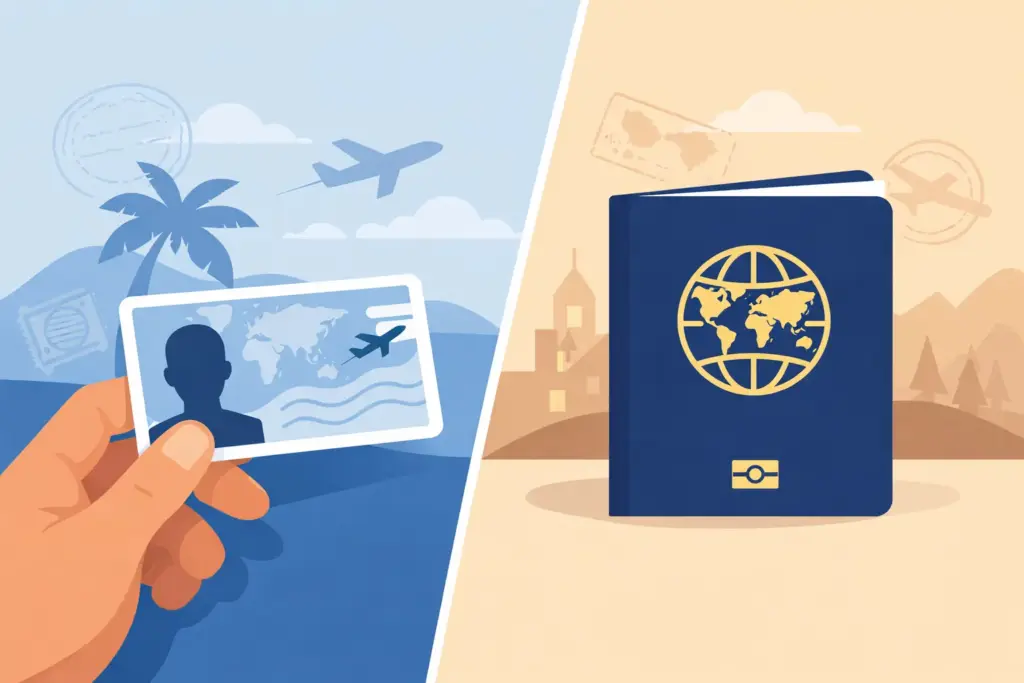
A missed travel requirement can turn an exciting departure into a problem at the airport, cruise terminal, or land border. The passport card vs passport book decision is simple once you know how you travel – but choosing the wrong one can leave you without valid proof of citizenship for your trip.
For most Americans with any possibility of international air travel, a passport book is the dependable choice. A passport card is useful, less expensive, and easy to carry, but it has strict limits. Here is how to choose the document that will actually work for your itinerary.
Passport Card vs Passport Book at a Glance
A U.S. passport book is the familiar blue booklet issued by the U.S. Department of State. It is valid for international travel by air, land, or sea, subject to the entry rules of your destination. It contains visa pages and is the document airlines expect when you fly outside the United States.
A U.S. passport card is a wallet-sized travel document. It proves U.S. citizenship and identity, but it is valid only for certain land and sea travel between the United States and Canada, Mexico, Bermuda, and Caribbean countries. You cannot use it for international air travel, including a flight from the United States to Canada or Mexico.
That one distinction settles the question for many travelers. If you may fly internationally, get the passport book. If you only cross eligible borders by car or return from eligible destinations by sea, the card may meet your needs.
When a Passport Book Is the Right Choice
A passport book provides the broadest flexibility. It is the document to choose for a flight to Europe, an international business meeting, a family vacation abroad, study travel, or an overseas emergency that requires you to fly. It also works for land crossings and cruises, so you do not need to predict every future type of trip.
The book is also necessary if you need a visa. Foreign governments place visas, entry stamps, and other travel endorsements in a passport book. A passport card has no pages for visas or stamps and cannot replace a book where a visa is required.
Choose a passport book if any of the following sounds like you: you have an upcoming international flight, you are unsure where your next trip will take you, you travel for work, or you simply want one document that covers nearly every international travel scenario. The higher government fee is often worthwhile because it prevents the need to apply again when travel plans change.
A book is particularly important for travelers on tight deadlines. It is risky to obtain only a card for a planned cruise or border trip, then discover you need to fly home because of an emergency, a canceled itinerary, or a last-minute change. A passport card cannot be used to board that international flight.
When a Passport Card Makes Sense
The passport card was designed for frequent land and sea travelers in nearby regions. It is a practical option for someone who regularly drives across the Canadian or Mexican border, takes certain closed-loop cruises, or wants a compact citizenship and identity document for eligible crossings.
Because it fits in a wallet, the card can be easier to carry than a passport book during routine border travel. It may also be useful as a backup document for a traveler who already holds a valid passport book. Keeping the book stored securely while carrying the card for an eligible land crossing can reduce the chance of losing the book.
The card can also serve as a Real ID-compliant form of identification for domestic air travel. Still, that should not be the only reason to apply for one. A state-issued Real ID driver’s license or ID card may be more convenient for everyday domestic use, while a passport card is most valuable when you have a genuine land or sea border travel need.
There is an important cruise detail: cruise rules can be more complicated than travelers expect. Some closed-loop cruises may allow U.S. citizens to travel with alternative documents, but those rules do not make a passport card equivalent to a passport book. A passport book remains the safer choice, especially if a medical issue, missed departure, or itinerary change could require you to fly internationally.
Where You Can Use Each Document
A passport book is accepted for international travel by air, land, and sea. Your destination may still require a visa, proof of onward travel, a specific period of passport validity, or other documents. Having a book does not override those country-specific entry requirements.
A passport card can be used only when entering the United States from Canada, Mexico, Bermuda, or the Caribbean at a land border crossing or seaport of entry. It cannot be used for any international flight. It also cannot be used for travel to destinations outside those areas, even if you arrive by ship.
The mode of travel matters as much as the destination. Consider a traveler going from Florida to the Bahamas. A passport book works whether that traveler flies or sails. A passport card may be valid for a qualifying sea return, but not for a flight to or from the Bahamas. If there is any chance air travel will be part of the trip, the book is the correct document.
Cost, Validity, and Application Differences
Passport card government fees are lower than passport book fees, which can make the card appealing for budget-conscious applicants. However, comparing only the initial fee can be misleading. If you later need to fly internationally, you will have to apply for a passport book and pay the applicable fees at that time.
For adults age 16 and older, both documents are generally valid for 10 years. For children under 16, both are generally valid for five years. Children must apply in person with their parents or guardians unless a limited exception applies, and child passports cannot be renewed by mail.
New applicants can apply for a passport book, a passport card, or both. If you already have a valid passport book, you may be able to request a card through the appropriate renewal process. If you hold only a card and now need a book for international flights, do not assume your existing card gives you everything needed for a simple renewal. Review the current application instructions carefully, since eligibility depends on the document you hold and your circumstances.
Government processing times and fees can change. Travelers should verify current requirements before submitting an application, particularly when departure is approaching. A small mistake – an incorrect form, unacceptable photo, missing supporting document, or unsigned application – can create an avoidable delay.
Should You Apply for Both?
For frequent travelers, applying for both can be a sensible option. The passport book covers international air travel and destinations worldwide. The passport card gives you a convenient backup for eligible land and sea crossings and can stay in your wallet while the book is secured at home.
It is not necessary for everyone. If you travel internationally once every few years and generally fly, the book alone is usually enough. If you live near a Canadian or Mexican border and cross regularly by car, both documents may offer more convenience and peace of mind.
Think beyond the itinerary currently on your calendar. A traveler who only expects a road trip this year may receive an unexpected invitation to a destination wedding next year. A business traveler may need to change from a border meeting to an international flight with little notice. The passport book gives you room to say yes.
Get the Right Document Without Costly Delays
The best choice is based on your actual travel method, not just your destination. Select a passport book when you need to fly internationally, may need a visa, or want the widest possible travel access. Select a passport card for qualifying land and sea travel to nearby countries and regions. Apply for both when frequent border travel makes the convenience worthwhile.
If your departure date is close, do not wait until paperwork becomes the reason your plans change. Fast Passport Center can help eligible U.S. travelers prepare the correct passport application, review documents and photo requirements, and use an authorized courier submission process when expedited service is needed. The right document, correctly prepared, gives you far more than identification – it gives you options when travel plans refuse to stay predictable.