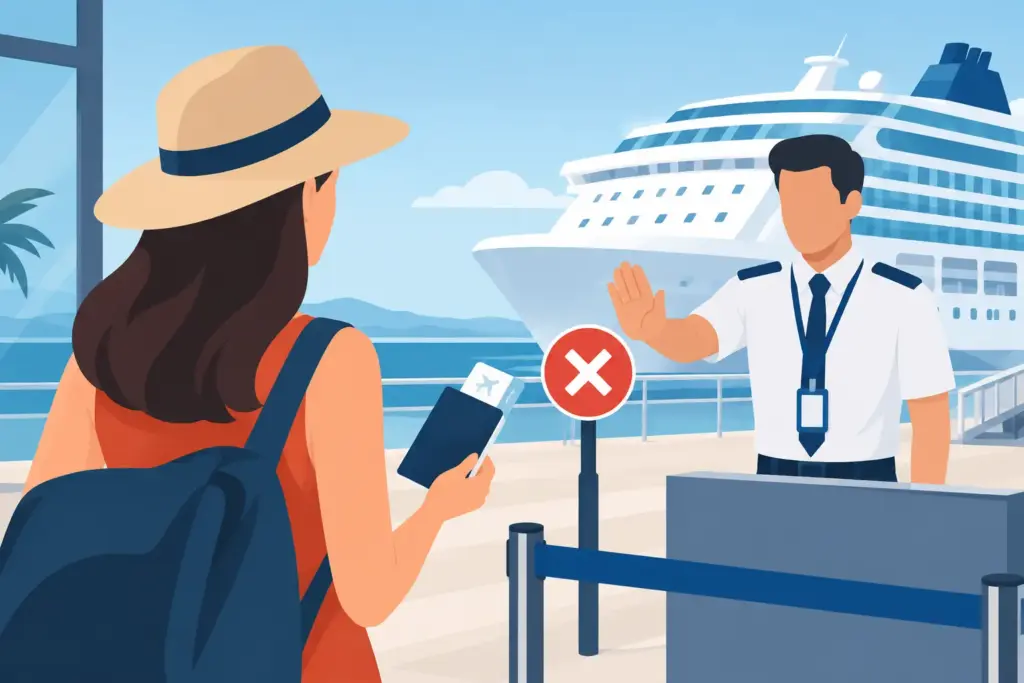
A cruise documentation failure can happen at the terminal, with your luggage checked and sailing time minutes away. A reservation, paid fare, and boarding pass do not override entry rules. If your passport is expired, your name does not match, or a required visa is missing, the cruise line may deny boarding to protect its ability to complete the itinerary.
That is a painful way to discover that cruise documents are more than a travel checklist. Requirements depend on your citizenship, ports of call, cruise route, method of travel, and the rules in place when you travel. The right preparation gives you time to correct a problem before it becomes a missed vacation or business trip.
What Is a Cruise Documentation Failure?
A cruise documentation failure is any issue that prevents a traveler from meeting the cruise line’s boarding requirements or a destination’s entry requirements. It can involve a missing passport, an invalid passport, incorrect personal information, insufficient proof of citizenship, or a visa that was never obtained.
The common mistake is assuming a “closed-loop” cruise means documentation does not matter. A closed-loop sailing generally begins and ends at the same U.S. port, and some U.S. citizens may be permitted to sail with alternative proof of citizenship and a government-issued photo ID. But that limited option is not the same as having a passport, and it may not work for every itinerary or traveler.
A passport book is usually the most flexible document for international cruise travel. It can also be essential if an emergency requires you to fly home from a foreign port. A passport card is useful for certain land and sea border crossings, but it is not valid for international air travel. Before relying on any document other than a passport book, verify the cruise line’s current rules for your exact sailing.
The Documentation Problems That Most Often Stop Boarding
An expired passport or one expiring too soon
Many destinations require a passport to remain valid for a period beyond the date you enter or depart, often several months. Your passport may look current because its printed expiration date falls after your cruise returns, yet still fail a destination’s validity rule.
Do not assume all Caribbean, Mexican, European, or other international ports apply the same standard. Review the rules for every port, including stops you expect to visit for only a few hours. If your passport expiration date is approaching, address it well before your departure date.
A name mismatch across travel documents
Your cruise reservation, passport, airline ticket, and supporting documents should reflect the same legal name. A recent marriage, divorce, or court-ordered name change can create a mismatch that looks minor on paper but raises a serious issue at check-in.
If you booked a cruise under a new name but your passport still shows a former name, contact the cruise line promptly to understand what it will accept. In some circumstances, certified legal name-change documentation may help support your identity. In others, updating the booking or passport before travel is the safer path. Do not wait until embarkation day to ask.
Incorrect or incomplete proof of citizenship
Travelers sometimes bring a photocopy of a birth certificate, a hospital keepsake certificate, or an uncertified record. These may not meet the cruise line’s requirements. If you are using a birth certificate for an eligible closed-loop cruise, the document typically must be an official or certified copy issued by the appropriate government records office.
Naturalized citizens, lawful permanent residents, and travelers with dual citizenship may have different document needs. A resident card, certificate of naturalization, foreign passport, or visa may be relevant depending on the traveler and route. The cruise line can explain its boarding requirements, but travelers remain responsible for carrying the correct original documents.
Missing visas or transit authorization
A visa requirement can apply even when you are not planning an extended stay ashore. Some destinations require visas based on nationality, while others require electronic travel authorization, proof of onward travel, or additional entry records. Requirements can also change with little notice.
This is especially important for travelers who are not U.S. citizens, as well as U.S. citizens sailing itineraries with less common international ports. Check each destination individually. Never assume a visa used for a prior trip remains valid for a new cruise, a different port, or a different number of entries.
Damaged, altered, or unreadable documents
A passport with water damage, torn pages, a detached cover, missing information, or a heavily worn data page can be rejected. A document does not need to be completely destroyed to create concern. If the identity page, machine-readable zone, photo, or security features are compromised, it may no longer be reliable for travel.
Replacing a damaged passport is not the same as a routine renewal. The application process and supporting materials can differ, so give yourself enough time to handle it correctly.
Children and Families Need Extra Attention
Families face a few documentation issues that solo travelers can overlook. Every child, including an infant, needs the documents required for the itinerary. A child cannot travel under a parent’s passport.
When one parent is traveling alone with a child, or when a grandparent, family friend, school group, or other adult is accompanying a minor, the cruise line may request a signed consent letter or additional custody documentation. Requirements vary, particularly when a child has a different last name from the accompanying adult.
Bring original documents when required and keep copies separately as a backup reference. Copies are useful if something is lost, but they are not always accepted in place of the original. Review the cruise line’s minor-travel policy before finalizing transportation to the port.
How to Prevent Cruise Documentation Failure Before Departure
Start with the cruise line’s written requirements for your specific itinerary, not a general social media post or a friend’s experience from another sailing. Confirm what each traveler needs based on citizenship, age, and every port. Then compare those requirements with the physical documents you have in hand.
Pay close attention to dates, spelling, and document condition. Check passport expiration dates, confirm that reservation names match passports, and verify that certificates are certified copies when one is permitted. If international flights are part of your trip, airline rules may be stricter than cruise boarding rules.
Allow time for corrections. A missing passport, name change, lost document, or damaged passport can require an application process that cannot be solved at the terminal. Travelers facing a short deadline may benefit from professional document review and expedited passport support. Fast Passport Center provides guided application assistance, document pre-checks, and access to authorized courier submissions for eligible urgent passport needs.
If You Discover a Problem Close to Sailing
Act the same day. Contact the cruise line to confirm whether the document issue is disqualifying, whether a booking name can be corrected, and whether the itinerary has any exceptions. Be precise about your citizenship, sailing date, ports, and the documents you currently hold.
For passport problems, gather your existing passport if available, proof of citizenship, identification, photo, travel evidence, and any documents related to a name change, loss, theft, or damage. The right solution depends on the issue. A standard renewal may not apply if your passport is damaged or lost, and a child passport follows different rules from an adult renewal.
Avoid relying on last-minute workarounds that have not been confirmed in writing. A photo of a document, an expired passport, or a verbal assurance from an unofficial source can leave you without an option at the port.
Your cruise should begin with check-in, not a document dispute. Reviewing your paperwork early, using a valid passport book whenever practical, and getting expert help when the timeline is tight can protect the trip you have planned and paid for.