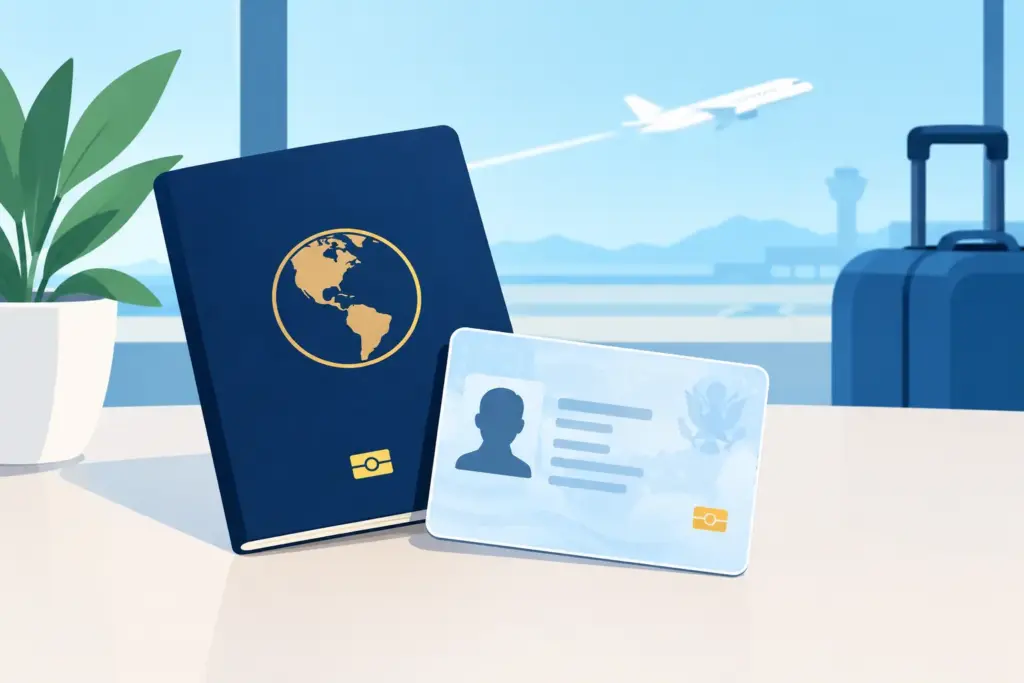
A passport card can be a practical travel document when your plans involve driving across a border, taking a closed-loop cruise, or traveling by sea between the United States and nearby destinations. Knowing how to get passport card service before your departure date helps you avoid a costly mistake: assuming the card works for every international trip.
It does not. A U.S. passport card is valid for entering the United States at land border crossings and seaports from Canada, Mexico, Bermuda, and many Caribbean countries. It cannot be used for international air travel. If there is any chance you may fly home, fly onward, or change your itinerary, you need a passport book instead.
What a Passport Card Is Best For
The passport card is wallet-sized, durable, and convenient for frequent land or sea travel. It is often a smart choice for people who live near the Canadian or Mexican border, cruise passengers on qualifying itineraries, and travelers who want a less bulky form of passport identification.
For international flights, however, the card is not an alternative to a passport book. Airlines require a valid passport book for international air travel, including flights to Canada, Mexico, the Caribbean, and Bermuda. A card may save space in your wallet, but it will not get you through an airport check-in counter for an overseas flight.
Many travelers choose both documents. The passport book provides the broadest travel flexibility, while the card serves as a convenient backup for eligible land and sea crossings. Whether that is worth the added fee depends on how you travel and how often your plans change.
How to Get a Passport Card: Choose the Right Application
The application path depends on whether you are applying for the first time, renewing an eligible passport, replacing a lost document, or applying for a child.
First-time applicants use Form DS-11
You will generally need Form DS-11 if you have never held a U.S. passport, if your prior passport was issued when you were under age 16, if it is more than 15 years past its issue date, or if your previous passport was lost, stolen, or significantly damaged.
First-time applicants must submit the application in person at an authorized passport acceptance facility. Do not sign Form DS-11 until the acceptance agent instructs you to do so. Signing too early can require you to complete a new form and may delay your application.
You can also use DS-11 to request a passport book and card at the same time. For many first-time applicants, this is the simplest way to preserve flexibility for future travel.
Eligible renewals use Form DS-82
You may be eligible to renew by mail with Form DS-82 when your most recent passport meets the renewal requirements. In general, it must be undamaged, issued when you were age 16 or older, issued within the past 15 years, and issued in your current name or supported by legal name-change documentation.
A renewal can be an efficient time to add a passport card if you currently have only a passport book. You will send your current passport with the application, so build enough time into your plans to be without it during processing.
Children need their own application
Every child, including an infant, needs an individual passport card. Child passport applications require additional parental consent documentation. Typically, both parents or legal guardians appear with the child, though there are limited exceptions when one parent cannot attend or has sole legal authority.
Children under 16 receive passports with shorter validity periods than adults. If a family trip is approaching, start early and review each child’s document separately. An adult’s valid passport does not establish a child’s eligibility to travel.
Gather Documents Before You Start
Most delays begin with incomplete, inconsistent, or unacceptable paperwork. Before completing your application, collect the documents that establish U.S. citizenship and identity.
For a first-time passport card, applicants usually need certified proof of citizenship, such as a U.S. birth certificate, a Consular Report of Birth Abroad, a Certificate of Naturalization, or a previously issued full-validity U.S. passport. You will also need acceptable photo identification, such as a valid driver’s license, plus a photocopy of the ID if required by the facility.
You must provide one recent color passport photo that meets current government standards. The photo must be clear, properly sized, and taken against an acceptable background. A casual selfie, heavily edited image, or photo with prohibited eyewear can result in rejection. This is a small requirement with a large impact on timing.
If your name differs from the name shown on your citizenship evidence or previous passport, include an original or certified copy of the legal name-change document, such as a marriage certificate, divorce decree, or court order. Check every name, date of birth, and place of birth for consistency before submission.
Complete the Form Carefully
Fill out the appropriate application fully and truthfully. Use the name you want printed on the card, provided you can support it with the required documentation. List travel plans accurately when the form asks for them, particularly if you are seeking expedited processing because of a close departure date.
Do not guess at information such as a prior passport number or parents’ birth details. If you need to verify an item, take the time to do so before submitting. A missing answer, incorrect signature, unsupported name change, or improperly formatted photo can interrupt processing when time is already tight.
Government fees and service options can change, so confirm the current fee structure and payment instructions before you submit. First-time applications commonly involve separate payments for the passport fee and the acceptance facility execution fee. Renewal applications follow a different payment process.
Submit Through the Correct Channel
First-time applicants submit in person at an authorized acceptance facility. Depending on your location, these may include post offices, clerks of court, public libraries, or other designated facilities. Appointments are often required, and availability can be limited during busy travel periods.
Eligible renewals are usually submitted by mail, following the mailing instructions for the service level selected. Use a traceable delivery method when appropriate and keep copies of everything you send, including your completed form, photo, payment information, and supporting documents.
If you are applying for both a passport book and passport card, make that selection clearly on the form. Ordering only a card and later realizing you need a book for an international flight can create another application, another fee, and another wait.
When Expedited Passport Card Help Makes Sense
Routine government processing times can shift throughout the year. If your trip is near, waiting for standard processing may not be the comfortable option. Expedited service can reduce the government processing timeline, but it does not eliminate the need for accurate forms, acceptable photos, citizenship evidence, and proper submission.
For urgent travel, professional support can be especially valuable when the process feels uncertain or your documents need a careful review. Fast Passport Center provides guided application support, document pre-check and review, and status communication for travelers who need help managing a time-sensitive passport request.
The company works with U.S. Department of State registered and authorized passport couriers that participate in the Passport Agency hand-courier program. These federally vetted couriers follow strict submission requirements and have limited daily in-person drop-off privileges at passport offices. That access is not the same as having someone wait in a public line. It is an official, controlled submission channel designed for eligible expedited cases.
Expedited availability, acceptance, and final issuance remain subject to U.S. Department of State requirements. No legitimate provider should suggest otherwise. What experienced assistance can do is reduce preventable errors, help you select the appropriate service path, and make sure your packet is organized correctly before it enters the process.
Check the Card When It Arrives
When your passport card arrives, inspect it immediately. Confirm that your name, date of birth, sex marker, and other personal information are correct. If you spot an error, address it before travel rather than hoping a border official will overlook it.
Store the card securely, separate from your everyday wallet whenever possible. Because it is small, it is easy to misplace. Take a photo or make a secure record of the card number and issuance details, but do not share those details publicly or send them through unsecured messages.
A passport card is most useful when it matches the trip you are actually taking. If your travel involves a flight, choose a passport book. If your plans are limited to eligible land or sea crossings, apply early, verify every document, and give yourself enough room to handle a surprise without putting your departure at risk.