
Proper travel document management is the single most important factor in avoiding denied boarding, entry refusals, and last-minute travel disasters. For frequent international travelers, the stakes are higher than for occasional tourists. You cross borders repeatedly, face multiple visa regimes, and carry documents with overlapping expiration dates. The 6-month passport validity rule is enforced by airlines and border agents worldwide, meaning a passport expiring too soon will ground you before you even reach the gate. These frequent international travel document tips cover everything from essential paperwork to backup strategies and timing.
1. What are the must-have travel documents for frequent international travelers?
Every frequent traveler needs a core set of documents before departure. Missing even one can result in denied boarding or refusal at the border.
Your passport is the foundation. It must carry adequate validity and blank pages for entry stamps, as many countries require at least two to six blank pages in addition to the six-month validity rule. Beyond the passport, supporting documents like visas, electronic travel authorizations (ETAs), and vaccination proofs are critical for smooth border and airline processing.
The full list of must-have documents includes:
- A valid passport with at least six months of validity beyond your return date
- Required visas or ETAs for each destination country
- Proof of onward or return travel tickets
- Vaccination certificates and health documents, especially for destinations requiring yellow fever or COVID-related proof
- Travel insurance policy with emergency contact information
- Medication prescriptions and a doctor’s letter for any controlled substances
- Parental consent letters and birth certificates when traveling with minors
Pro Tip: If your destination requires a visa on arrival, carry a printed copy of the visa requirements from the official government website. Border agents have accepted printed policy pages as proof when digital systems fail.
2. How to organize and back up your travel documents effectively
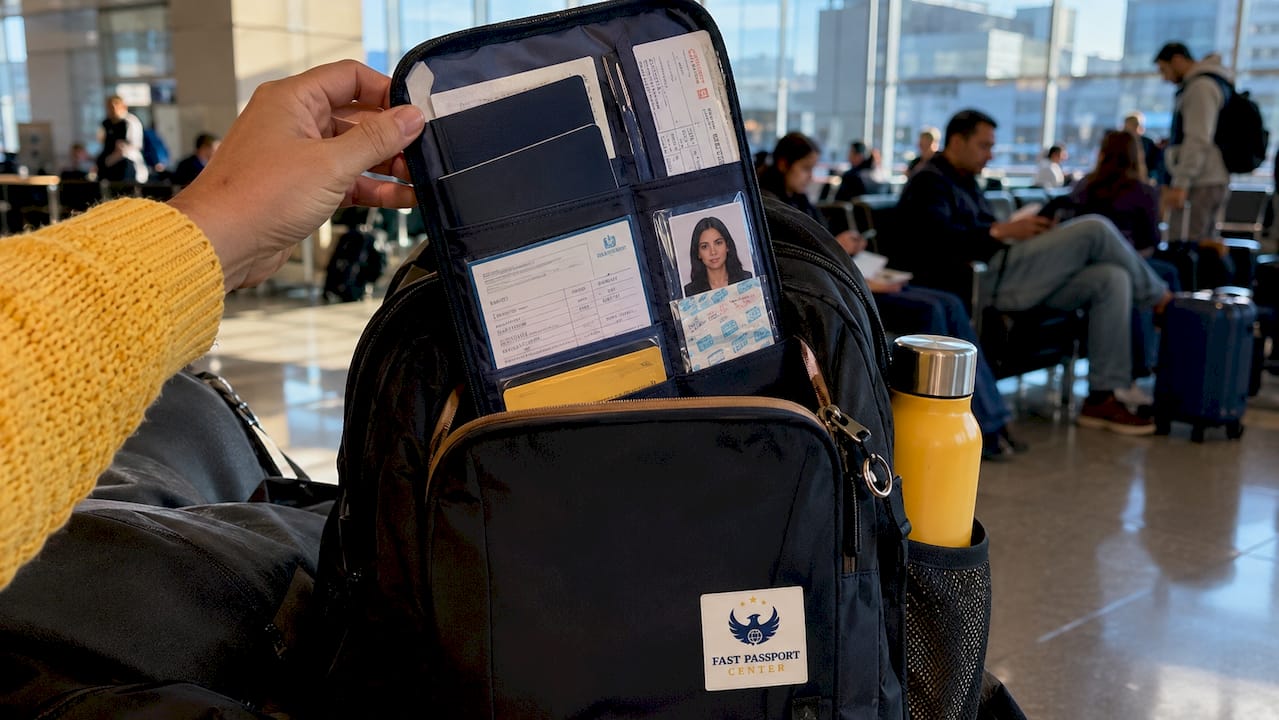
A disorganized document set is as dangerous as a missing one. The professional standard for frequent travelers is a hybrid backup system combining physical copies, offline device storage, and cloud backups to protect against device loss or connectivity failures.
Here is a practical three-layer backup approach:
- Physical copies: Print copies of your passport photo page, visas, travel insurance, and hotel bookings. Store these separately from your originals.
- Offline digital storage: Save scanned PDFs directly to your phone and laptop. This covers you when you have no internet access at a border crossing.
- Cloud backup: Upload all documents to a secure cloud service. This gives you access from any device if your phone and laptop are both lost.
Keeping a bag-ready document pouch that consolidates your passport, vaccination records, bookings, and return tickets is the most effective risk mitigation approach. The pouch stays in your carry-on, never in checked luggage.
Pro Tip: Possessing screenshots of specific policies such as cancellation terms and visa requirements resolves border or airline disputes faster than verbal arguments. Save them before you board.
3. What are the critical timing considerations for passport renewal and visas?
Timing is where most frequent travelers make costly mistakes. Start passport renewals at least 10 weeks before departure for routine service, or 2–3 weeks out if you need expedited processing. Waiting longer than that puts your trip at serious risk.
The full timing framework looks like this:
- 6 weeks before departure: Apply for visas or electronic authorizations. Embassy-based visas often require 4–6 weeks for processing, while electronic authorizations can be approved in as little as 24 hours.
- 4–8 weeks before departure: Schedule medical and vaccine consultations. Multi-dose vaccines require time between doses, so starting late is not an option.
- 2 weeks before departure: Confirm all bookings, insurance, and document copies are current.
- 48 hours before departure: Complete your final offline digital backup and verify all documents against your destination’s current entry rules.
One critical detail most travelers overlook: renewing your passport requires re-applying for any long-term visas or authorizations linked to your old passport number. Systems do not update automatically. Traveling with a new passport and a visa authorization tied to your expired passport number causes denied boarding.
U.S. citizens should also enroll in STEP, the Smart Traveler Enrollment Program. STEP provides emergency assistance and safety alerts from U.S. embassies abroad.
4. What special medication and document rules should frequent travelers know?
Medication rules vary dramatically by country, and frequent travelers who carry prescriptions face real legal risk. Some medications that are legal in the United States, including certain narcotics, ADHD medications, and sleep aids, are controlled or outright illegal in other countries.
The rules for carrying medication abroad are clear:
- Always carry medication in its original labeled bottle, not a weekly pill organizer
- Carry a copy of the prescription and a signed doctor’s letter on official letterhead
- Verify legality in your destination country before departure, and plan medical consultations at least 4–8 weeks ahead
- Never pack critical medication or travel documents in checked luggage
For travelers crossing multiple borders on a single trip, the safest approach is to research each country individually. A medication that clears customs in one country may be flagged at the next.
Pro Tip: If your medication requires refrigeration, carry a letter from your doctor explaining the medical necessity. Airlines and border agents respond better to documented medical need than to verbal explanations.
5. What practical strategies reduce document stress for frequent flyers?
The Two-Set Strategy is the professional standard for reducing the risk of total document loss. Keep your original documents secured on your person, and carry a separate set of copies in your day bag. If your day bag is lost or stolen, you still hold your primary proofs and can access embassy assistance.
Beyond the Two-Set approach, these strategies make a measurable difference for frequent flyers:
- Keep a travel document pouch organized and bag-ready at all times, not just when a trip is imminent
- Follow a strict document preparation timeline: handle long-lead items 6 weeks out, confirmations 2 weeks out, and final backups 48 hours before departure
- Verify all documents against updated destination and airline rules before booking, not after
- For urgent passport needs, use an expedited courier service rather than waiting on routine processing
“The travelers who never miss a flight over document issues are not lucky. They follow a system. The Two-Set Strategy, a bag-ready pouch, and a fixed preparation timeline eliminate the variables that cause last-minute panic.”
For travelers living more than two hours from a regional passport agency, cities like Tampa, Charlotte, Nashville, Sacramento, and Louisville, getting to an agency in time for urgent renewals is often not realistic. An expedited courier service fills that gap directly. Fast Passport Center works as a U.S. State Department-registered authorized courier, handling urgent passport needs for travelers with travel dates 2 days to 4 weeks out.
When a visa application requires certified document translation, working with a professional service that understands the immigration document translation process prevents rejections caused by improperly translated paperwork.
Key takeaways
Frequent international travelers who follow a fixed document preparation system avoid the vast majority of boarding denials, entry refusals, and last-minute passport crises.
| Point | Details |
|---|---|
| Six-month validity rule | Your passport must be valid for at least six months beyond your return date or airlines will deny boarding. |
| Two-Set Strategy | Carry originals on your person and a separate copy set in your day bag to survive theft or loss. |
| Hybrid backup system | Combine physical copies, offline device storage, and cloud backups for full redundancy. |
| Timing matters | Start passport renewals 10 weeks out; apply for visas 4–6 weeks out; finalize backups 48 hours before departure. |
| Passport renewal triggers visa updates | Renewing your passport requires re-applying for any authorizations linked to the old passport number. |
What I’ve learned from years of watching travelers get this wrong
The most common mistake I see is treating document preparation as a one-time task rather than an ongoing system. Frequent travelers check their passport once, assume it’s fine, and then discover six months before a major trip that it expires in seven months. That’s technically valid, but it fails the six-month rule for many destinations.
The second mistake is digital overconfidence. Travelers save everything to their phone and consider themselves prepared. Then the phone dies at a border crossing with no charging port in sight. A printed copy of your passport photo page costs nothing and has saved more trips than any app.
What actually works is building a travel document rhythm. After every trip, I update my document pouch, check expiration dates, and flag anything expiring within 12 months. That 10-minute habit after landing has prevented more problems than any last-minute scramble ever could.
For travelers far from a regional passport agency, the calculus is simple. Driving four hours round trip to an agency, waiting in line, and hoping your appointment slot is available is not a reliable plan when you have a flight in two weeks. An expedited courier service like Fast Passport Center removes that uncertainty entirely. Their agents review your application before submission, which means errors get caught before they cause delays.
The travelers who travel most frequently are also the ones with the tightest systems. That is not a coincidence.
— Andy Irons
Fast Passport Center: expedited help when your timeline is tight
Frequent travelers with upcoming departures in the next 2–4 weeks do not have the luxury of waiting on routine passport processing.
Fast Passport Center is a U.S. State Department-registered authorized courier with over 20 years of experience and drop-off offices in 24 cities nationwide. Their agents provide personalized document review to catch errors before submission, and their direct courier collaboration with the U.S. Department of State delivers faster turnaround than standard mail-in methods. With an A+ rating from the Better Business Bureau and over 14,000 positive reviews, Fast Passport Center is the practical solution for travelers who cannot afford delays. If your travel date is approaching and your passport is expired, expiring soon, or simply not ready, their passport expediting service is built for exactly this situation.
FAQ
How far in advance should I renew my passport for international travel?
Start passport renewal at least 10 weeks before departure for routine service, or 2–3 weeks out if you use an expedited service. Waiting until the last minute risks missing your departure date.
What is the six-month passport validity rule?
Most countries and airlines require your passport to remain valid for at least six months beyond your planned return date. A passport that expires sooner will result in denied boarding even if the trip itself falls within the validity window.
Does renewing my passport cancel my existing visas?
Renewing your passport does not cancel physical visas stamped in the old book, but authorizations linked to your old passport number do not transfer automatically. You must re-apply for any electronic authorizations tied to the expired passport.
What is the Two-Set Strategy for travel documents?
The Two-Set Strategy means keeping your original documents secured on your person and a separate set of copies in your day bag. If your bag is stolen, you still hold your primary documents and can access embassy assistance.
Are digital copies of travel documents enough?
Digital copies alone are not sufficient. Phone failures and connectivity issues make physical copies and offline storage necessary. Use a hybrid system with paper copies, offline device storage, and cloud backups for full protection.