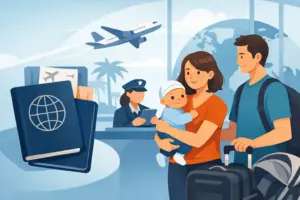
An emergency travel document is a government-issued, temporary travel document used when a passport is lost, stolen, or unavailable under urgent circumstances. Formally called an Emergency Travel Document (ETD), it is limited to a single journey or valid for up to 15 days, and typically issued as a 4–8 page booklet. Consulates, embassies, and designated government agencies issue these documents to their citizens abroad. The U.S. Department of State, the UK Home Office, and EU member state consular services all operate under their own ETD frameworks, but the core purpose is identical: get you home or to your destination when your regular passport cannot.
What is an emergency travel document and who qualifies?
Eligibility for an ETD is not automatic. You must demonstrate a genuine, time-sensitive need that standard passport processing cannot meet. Issuance is not guaranteed and every application goes through a formal verification process.
The most common qualifying circumstances include:
- Your passport was lost, stolen, or destroyed while you were abroad
- You have confirmed travel within days and cannot wait for a standard or fast-track passport
- A family emergency, such as a death or serious illness, requires immediate international travel
- Your passport was damaged to the point that it is no longer machine-readable
- You are a minor traveling without a full passport, with parental presence and written consent required
Countries like the UK and the Netherlands restrict ETD eligibility further. Applicants must show proof that they already attempted fast-track ordinary passport services and were unsuccessful. This is not a document you can request as a convenience. It is a last resort after exhausting standard options.
Pro Tip: If you anticipate any passport issues before traveling, apply for a renewal or replacement well in advance. Emergency travel documents are truly a last resort, and acting early gives you far better options.

How to apply for an emergency travel document abroad
The application process runs through your nearest embassy or consulate. There is no online self-service portal. You must appear in person, and in most cases, so must any minor applicant.
The standard steps are:
- Report the loss or theft. File a police report immediately if your passport was stolen. This document is required by most issuing authorities and protects you from identity fraud.
- Contact your embassy or consulate. Call ahead to confirm appointment availability and current processing times. Walk-in access is limited at many locations.
- Gather your documentation. You will need proof of identity (a driver’s license, national ID card, or certified copy of your birth certificate), evidence of your emergency such as a flight booking confirmation, the police report if applicable, and passport photos meeting the issuing country’s specifications.
- Submit your application and pay the fee. The UK, for example, raised its ETD fee to £125 as of april 2025, up from prior rates of £100 and £75. U.S. fees vary by location and service type.
- Wait for identity verification. Verification can take up to 7 working days, though consulates with lighter caseloads may process faster.
Government agencies increasingly require digital evidence of emergencies, including electronic flight bookings and scanned police reports. Bring both printed and digital copies of every document.
Pro Tip: Take photos of every document you submit at the consulate window. If anything gets misplaced during processing, your photos serve as proof of submission.
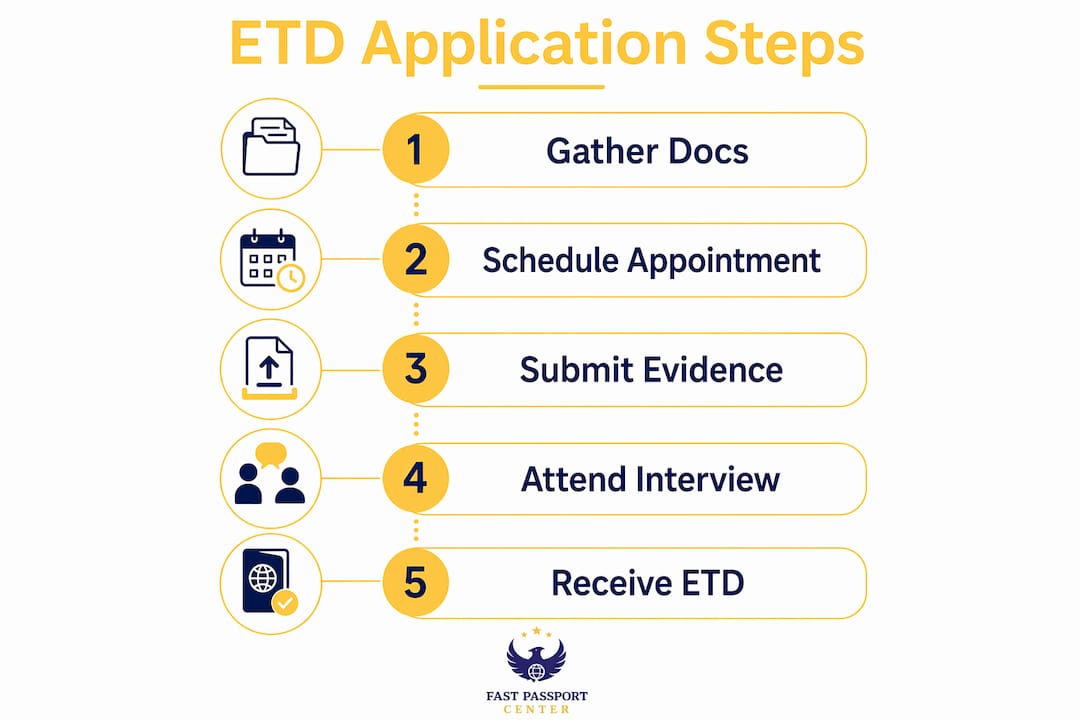
Preparation is the single biggest factor in a successful application. Incomplete documentation is the leading reason embassies deny ETD requests. Organize everything before your appointment, not during it.
What are the limitations of emergency travel documents?
An ETD is not a passport substitute. Its restrictions are significant, and misunderstanding them causes real travel disruptions.
The core limitations every traveler must know:
- Single journey scope. Most ETDs authorize one trip only, typically to your home country or the destination where your emergency occurred.
- Surrender on arrival. ETDs are surrendered at border control upon reaching your final destination. You cannot keep or reuse them.
- Airline and country acceptance varies. Not all airlines and transit countries accept ETDs the same way they accept full passports. Mislabeling document types has resulted in denied boarding.
- Visa complications. If your destination requires a visa, an ETD may not satisfy the visa entry requirement. Confirm with the destination country’s embassy before you travel.
- No long-term identity use. An ETD does not replace your passport for future travel, banking, or any other identity purpose.
Emergency travel document vs. emergency passport vs. temporary passport
These three terms are not interchangeable, and confusing them creates problems at borders. An emergency travel document is the most restricted: single journey, surrendered on arrival, issued only in genuine crises. An emergency passport is a full-format passport issued quickly, often valid for one to two years, and accepted more broadly. A temporary passport is a short-validity passport issued domestically when a full passport cannot be produced in time. Terminology varies by country, so always use your own government’s official terms when communicating with airlines and border officials.
Always confirm ETD acceptance with every airline and transit country on your itinerary before you depart. One rejected transit point can strand you mid-journey.
Best practices for managing an emergency travel document situation
Speed and accuracy matter equally when you are dealing with a lost or stolen passport abroad. Moving fast with incomplete paperwork wastes time. Moving carefully with a full document package gets results.
Follow these practices to protect yourself:
- Document everything immediately. File the police report within hours of discovering the loss, not the next day. Timestamps on reports matter to consular officers.
- Contact your embassy first, not a travel agent. Consular officers give you the authoritative guidance on permitted travel routes and required documentation. Follow their advice precisely.
- Keep multiple copies of all documents. Store digital copies in a secure cloud folder and carry physical copies separately from your originals. This applies before you travel, not just after a crisis.
- Confirm your full itinerary with the ETD. Check acceptance with every airline, transit country, and final destination before booking or confirming travel.
- Use a courier or expediting service when you are back home. Expedited passport processing through a registered courier can significantly reduce the time needed to replace your full passport after returning.
Pro Tip: Follow consular advice on travel routes exactly. Deviating from the approved itinerary on an ETD can result in denial of entry at transit points.
Urgent travel document best practices have evolved in 2026 to include digital evidence submission at many consulates. Prepare scanned copies of every document before your appointment.
Key Takeaways
An emergency travel document is a strictly limited, single-journey document that requires thorough preparation, consular verification, and immediate follow-up with a full passport replacement.
| Point | Details |
|---|---|
| Definition and scope | An ETD is a temporary, limited-use document valid for one journey or up to 15 days. |
| Eligibility is not automatic | You must prove urgency and, in many countries, show that fast-track passport options failed. |
| Documentation is critical | Incomplete applications are the leading cause of ETD denials at embassies and consulates. |
| Acceptance varies widely | Confirm ETD acceptance with every airline and transit country before you travel. |
| Replace your passport promptly | ETDs are surrendered on arrival; get a full passport replacement as soon as you return home. |
What I have learned from watching travelers navigate passport crises
The travelers who handle ETD situations best are not the ones who move fastest. They are the ones who stop, organize, and then move with purpose. I have seen people rush to a consulate with half their documents, wait hours, and leave with nothing. I have also seen travelers arrive with a printed folder containing their police report, flight confirmation, identity documents, and passport photos, and walk out with an ETD the same day.
The bureaucratic reality is that consular officers have limited discretion. They follow checklists. If your file is complete, the process moves. If it is not, you go to the back of the queue. That is not cruelty. That is how high-volume government processing works, and understanding it changes how you prepare.
The other thing most articles miss: an ETD gets you home, but it does not solve your problem. The moment you land, your clock starts on getting a full passport replacement. Travelers who treat the ETD as the finish line end up scrambling again weeks later. Treat it as a bridge to your next step, which is a properly expedited passport through a registered courier service.
For travelers living in cities like Tampa, Nashville, or Sacramento, two or more hours from a regional passport agency, a courier service is not a luxury. It is the practical path. Regional agencies serve travelers with travel within three days. For everyone else with a two to four week window, a registered courier handles the process without requiring you to take a day off and drive across the state.
Act quickly, prepare thoroughly, and know exactly what comes next.
— Andy Irons
Fast Passport Center: expedited help when time is short
When your passport is lost abroad or you return home needing an urgent replacement, the clock does not stop.
Fast Passport Center is a U.S. Department of State registered passport courier with over 20 years of experience and drop-off offices in 24 cities. Whether you need an emergency passport service within 24 hours or an expedited replacement over the next two to four weeks, Fast Passport Center matches your timeline to the right service tier. With an A+ Better Business Bureau rating and over 14,000 positive reviews, the team provides personalized guidance so your application is complete and correct the first time. Visit Fast Passport Center to get started with a passport expediting service built for urgent situations.
FAQ
What is an emergency travel document used for?
An emergency travel document is a temporary, government-issued document that allows a citizen to travel home or to an urgent destination when their passport is lost, stolen, or unavailable. It is valid for a single journey or up to 15 days and is surrendered at the final destination.
How long does it take to get an emergency travel document?
Identity verification alone can take up to seven working days, though some consulates process faster depending on caseload and documentation completeness. Arriving with a full, organized document package is the single most effective way to reduce your wait time.
Can I use an emergency travel document to enter any country?
No. Acceptance varies by airline and country, and some transit nations do not accept ETDs the same way they accept full passports. Always confirm acceptance with every airline and transit or destination country before you travel.
What documents do I need to apply for an emergency travel document?
You typically need proof of identity, evidence of your emergency such as a confirmed flight booking, a police report if your passport was stolen, and passport photos. Minors also require parental presence and written consent at most consulates.
Do I need a new passport after using an emergency travel document?
Yes. An ETD is surrendered at border control upon arrival at your final destination and cannot be used again. You must apply for a full replacement passport as soon as possible after returning home.