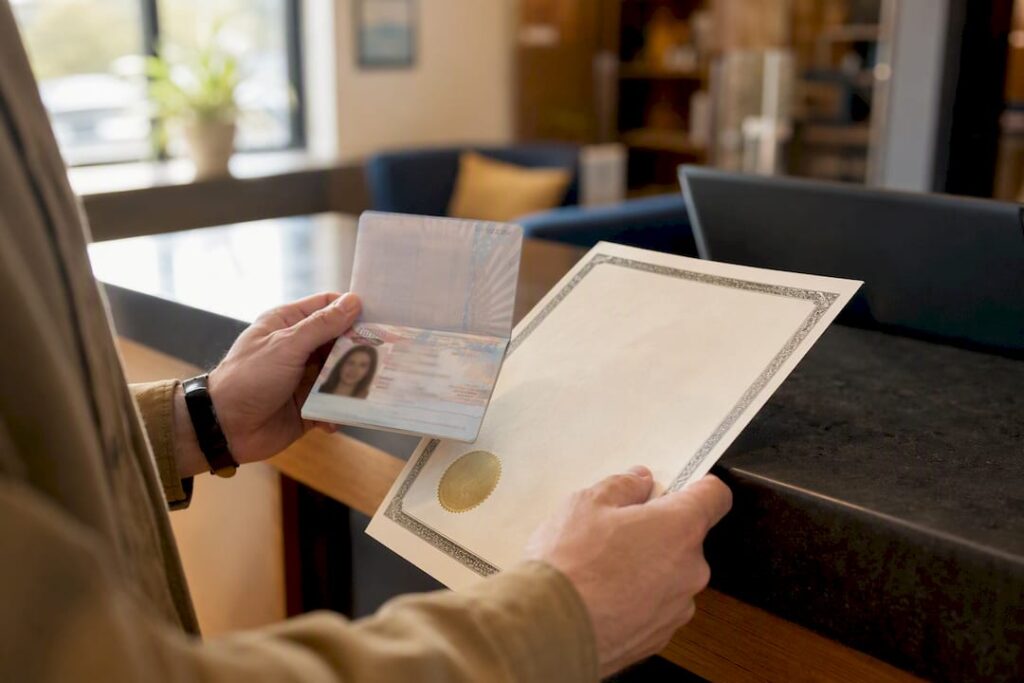
A name mismatch triggers a flag at the border because automated systems compare your passport’s machine-readable zone against multiple databases in real time, and any inconsistency forces a manual review. It does not mean CBP suspects you of fraud. It means a computer found a data point that a human now has to verify.
If you are standing at a checkpoint right now, here is what to do:
- Stay calm. A secondary inspection referral is routine, not an accusation.
- Present your primary passport along with proof of the name change (marriage certificate, court order, or prior passport).
- If the wait feels unreasonable or the officer seems unfamiliar with your situation, politely ask to speak with a supervisor or visit the CBP Customer Service window.
Pro Tip: Keep certified copies of your name-change documents and a valid photo ID in your carry-on or a jacket pocket, never checked luggage. You cannot dig through a suitcase in front of an inspection line.
Key Takeaways
A flagged name discrepancy is almost always a database mismatch requiring manual verification, not evidence of wrongdoing, and it resolves fastest when travelers carry certified proof of any legal name change.
| Point | Details |
|---|---|
| Flags are system-driven | Automated checks compare your MRZ, ESTA/APIS entries, and law enforcement databases, sending mismatches to a human for review. |
| Material changes need proof | Legal name changes require certified documents like a marriage certificate or court order; typos usually don’t. |
| Secondary inspection is routine | Most cases clear in 30 to 90 minutes through document checks and biometric verification. |
| Fix records in order | Update Social Security first with Form SS-5, then your DMV, then your passport or green card. |
| Match your timeline to the right service | Use a regional agency within 3 days, Fast Passport Center’s courier service for 2 days to 4 weeks, or USPS mail beyond that. |
Table of Contents
- Why Legal Name Discrepancy Flagged at Border Situations Happen
- Is Your Name Discrepancy Material or Immaterial?
- What Happens During a Secondary Inspection?
- What to Show and Say When You’re Flagged
- How to Permanently Fix a Mismatched Name Record
- How to Avoid a Name-Discrepancy Flag Before You Travel
- When to Use an Expedited Passport Courier Service
- Sources
- FAQ
Why Legal Name Discrepancy Flagged at Border Situations Happen
Names get checked against a web of linked systems: the passport’s machine-readable zone (MRZ), the Electronic System for Travel Authorization (ESTA) or Advance Passenger Information System (APIS) records airlines submit, your airline reservation, and CBP’s internal law enforcement databases. CBP has explained that officers and automated systems work together, and a mismatch anywhere in that chain routes your file to a person for a closer look.
The most common triggers include:
- MRZ text that doesn’t match the photo-page name exactly, often because of a suffix, middle name, or spelling variant.
- ESTA or APIS entries typed with a different name than the one printed in the MRZ.
- A name that happens to match, or partially match, a watchlist or law enforcement record.
- Cross-agency background checks surfacing an old name variant you forgot you’d used on a prior application.
A woman traveling under her married name while her passport still shows her maiden name is a textbook case. So is a traveler whose passport MRZ strips accents and hyphens from a name like “José García Muñoz,” while their driver’s license spells it differently. Airlines catch some of these mismatches before you ever reach a CBP officer, since APIS matching often happens at check in.
Is Your Name Discrepancy Material or Immaterial?
Not every mismatch carries the same weight. An immaterial discrepancy is a small formatting or spelling issue, something like a missing accent mark, a dropped middle name, or a shortened nickname that clearly maps back to your legal identity. A material discrepancy is a legal name change, a different surname entirely, or an unexplained variation that isn’t obviously the same person on paper.
Immaterial examples:
- A missing hyphen or accent stripped by the MRZ.
- A middle name present on one document, absent on another.
- Minor transliteration differences from a non-English alphabet.
Material examples:
- A legal name change from marriage, divorce, or court order.
- A surname that doesn’t match any prior document on file.
- A previous legal name that was never disclosed on a travel or immigration form.
8 FAM 403.1 directs consular officers to request acceptable identification or correct the application when a name discrepancy is not adequately explained by the documentation on hand.
If your situation falls into the material category, bring certified evidence such as your marriage certificate, court order, prior passport, or green card. A photocopy usually won’t satisfy an officer who needs to verify a legal change.
What Happens During a Secondary Inspection?
Most name-flag cases end with a trip to secondary inspection for manual verification, not detention. CBP’s process is designed to resolve a data mismatch, not punish the traveler carrying it.
The typical flow looks like this:
- An officer asks initial questions about your travel and identity.
- Your documents get scanned and compared against the systems that flagged you.
- Biometrics, usually fingerprints, confirm you match the identity on file.
- A database cross-check clears (or escalates) the discrepancy.
- The officer either admits you, admits you with a note in your file, or refers you to a supervisor.
Most straightforward cases clear within a typical timeframe of under two hours. Genuine mistaken-identity situations, where your name closely resembles someone flagged on a watchlist, can stretch into several hours while biometric and documentary checks run their course. Outcomes almost always land in one of three places: released and admitted, admitted with a file note, or, in rare cases involving unresolved identity questions, held for further review.
What to Show and Say When You’re Flagged
Lead with your original documents, presented calmly and in order. Fumbling through a phone full of photos looks worse than handing over paper.
Documents to keep accessible:
- Passport photo page and, if you have it, a printed view of the MRZ line.
- Any previous passports showing prior names.
- Birth certificate.
- Marriage certificate or court-ordered name change document.
- Social Security card.
- Green card and visa stamp, if applicable.
- Prior ESTA or visa printouts showing the name you traveled under before.
For a script, keep it short. If your name change is still processing: “My legal name changed after marriage, and I’m in the process of updating my documents. Here’s my marriage certificate and my previous passport.” If it’s a spelling or transliteration issue: “My name is sometimes spelled differently because of how it’s transliterated. This is the same person. Here’s my birth certificate and driver’s license.”
Pro Tip: Build one folder, physical or digital, with certified copies and a one-line timeline: “Married June 2025, updated Social Security August 2025, passport renewal pending.” Handing an officer a clear timeline resolves confusion faster than answering questions from memory.

How to Permanently Fix a Mismatched Name Record
Fix your identity records in this order for the fastest, cleanest result: Social Security Administration first, then your state DMV, then your passport, and finally USCIS documents if you hold a green card. Records that cascade in this sequence tend to match up faster than fixing them out of order.
- Form SS-5 updates your name with the Social Security Administration and should be your first stop, since SSA verification underpins many other identity checks.
- DMV update brings your state driver’s license or ID into alignment once SSA reflects your new name.
- Form DS-5504 corrects passport data or updates a name within a limited window after issuance, often the fastest passport-specific fix.
- Form DS-82 handles a standard passport renewal by mail when your prior passport is still in good condition.
- Form DS-11 applies for a first-time passport or a renewal that requires an in-person appearance, typically because your prior passport is expired past the renewal window.
- Form I-90 replaces a green card that still carries your old legal name.
For document-specific requirements, Fast Passport Center’s passport name change and DS-5504 page and its supporting documents checklist walk through exactly what each agency wants to see. Undisclosed name variations can also surface as background-check red flags in immigration filings, so consistency matters beyond travel days alone.
Pro Tip: Update SSA before anything else. DMV and passport agencies often cross-check against Social Security records, so starting there prevents a second round of corrections.
How to Avoid a Name-Discrepancy Flag Before You Travel
Confirm that your passport’s MRZ, your ID, and every travel booking use the exact same name string at least two to four weeks before departure. Cross-agency updates, especially SSA to DMV, need that lead time to fully process.
- Check your passport’s MRZ line against your driver’s license and any visa or ESTA record.
- Confirm ESTA or visa entries match the MRZ exactly, including how hyphens and accents get rendered.
- Update SSA and your DMV well ahead of travel, not the week before.
- Carry certified proof of any name change even after records are updated, since some databases lag behind others.
- Reissue or rebook travel authorizations under your current legal name if they were filed under an old one.
For a major legal name change, budget four or more weeks to get SSA, DMV, and passport records aligned. If travel is closer than that, an expediting service or a regional passport agency, depending on your timeline, becomes the more realistic path than waiting on standard mail processing.
When an Expedited Passport Service Makes Sense
Most people I talk to fall into one of three situations: they found an expired passport days before a flight, their legal name change is mid-process, or their passport was lost right before travel. A regional passport agency makes sense only for travel within three days, or for a genuine family emergency. Outside that window, a courier or expediting service handles travel two days to four weeks out, and regular mail through USPS is fine once you’re four or more weeks from departure. Fast Passport Center is registered with the U.S. Department of State and operates drop-off offices in 24 cities, which matters most if you live hours from the nearest regional agency.

When to Use an Expedited Passport Courier Service
A courier service shortens passport processing and hand-delivers your corrected paperwork directly to a passport agency when a name-discrepancy fix can’t wait for standard mail turnaround. If your legal name change is mid-process and you’re traveling in two days to four weeks, that’s the window where an expediting service earns its keep instead of a regional agency appointment or a mailed application.
The decision is straightforward once you know your timeline. Travel within three days, or a family emergency, calls for an in-person regional passport agency visit. Travel two days to four weeks out is exactly where Fast Passport Center’s expedited passport service fits, handling document prep, DS-5504 or DS-82 filing, and secure courier hand-delivery so you’re not driving hours to an agency window yourself. If you have four or more weeks, standard mail through USPS works fine and saves you the service fee. Government fees are always billed separately from service fees. If your name-change paperwork needs review before it’s filed, start with Fast Passport Center’s expediting service and let an agent confirm which form and timeline fit your trip.
Sources
This article is general information, not a substitute for advice from a qualified lawyer. Consult a qualified legal professional about your own circumstances before acting on anything here.
FAQ
How do you know if you’ve been flagged by customs?
You’ll typically find out when you’re directed to secondary inspection instead of being waved through primary screening. An officer will tell you directly that your documents need further review.
Does your passport have to match your legal name exactly?
Yes, your passport must reflect your current legal name, and 8 FAM guidance requires documentary proof when a name doesn’t match your identity records. Minor formatting differences, like a dropped accent, are usually treated as immaterial.
How do I fix a name error on a green card?
File Form I-90 with USCIS to request a replacement green card with corrected name information, and include certified proof of your legal name.
Can I still travel if my name is misspelled on my passport?
Minor misspellings that clearly match your identity often don’t stop travel, but they can trigger extra questions at inspection. If the error is significant, correcting it through Form DS-5504 before your trip avoids the delay entirely.