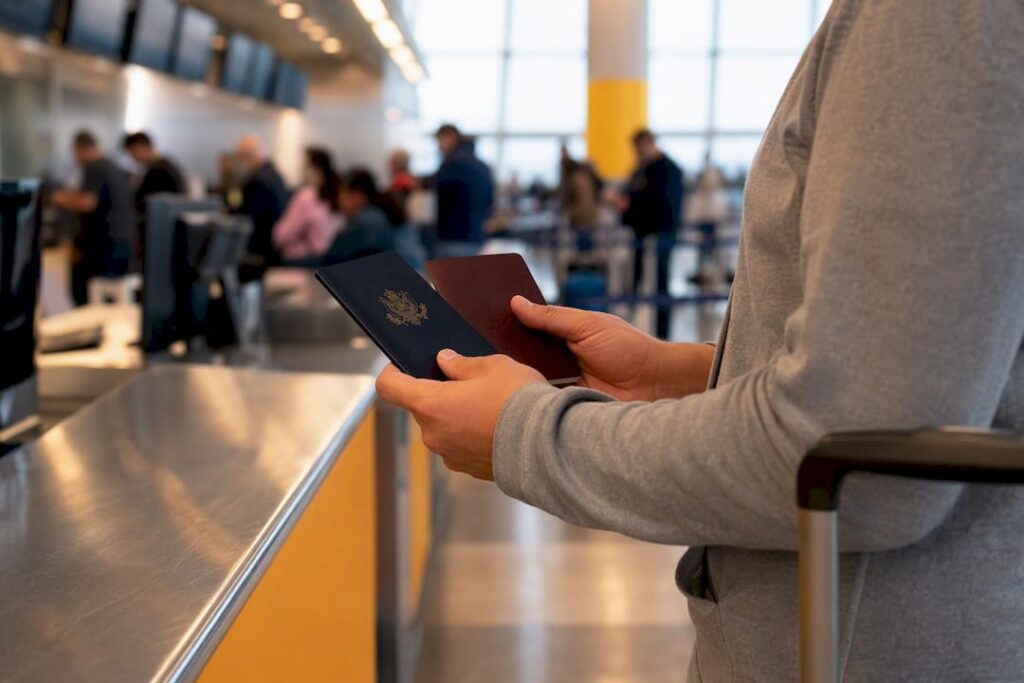
You need a second U.S. passport if you fall into one of four groups: frequent business travelers juggling overlapping visa applications, anyone whose current passport is sitting at a foreign embassy for visa processing, journalists or contractors headed to restricted destinations, or dual nationals whose travel plans get tangled by conflicting entry rules. The State Department grants a second passport book only as an exception, not a routine option, and only to applicants who can document one of those specific needs.
- Business travelers with two visa applications pending at once
- Anyone whose passport is held for weeks by a foreign consulate
- Journalists, diplomats, or contractors traveling to restricted regions
- Dual nationals facing conflicting entry requirements between passports
Key Takeaways
A second U.S. passport is granted only as a documented exception for travelers with genuine scheduling conflicts, not as a general convenience.
| Point | Details |
|---|---|
| Know your traveler profile | Business travelers, embassy-held passport holders, dual nationals, and restricted-travel workers qualify most often. |
| Bring real evidence | Visa confirmations, employer letters, and dated itineraries move applications forward faster than general statements. |
| Never mix booking and entry documents | Book, board, and enter each leg on the same passport number to avoid immigration and kiosk mismatches. |
| Match your channel to your timeline | Use a regional agency inside 3 days, a courier inside 2 to 4 weeks, or standard mail beyond 4 weeks. |
| Fast Passport Center closes the distance gap | Their courier network across multiple cities hand-delivers second-passport applications for travelers far from a regional agency. |
Table of Contents
- Types of Travelers Who Commonly Need a Second Passport
- Eligibility and Official Reasons the State Department Grants a Second Passport
- How to Apply: Forms, Documents, and a Step-by-Step Checklist
- Rules and Common Mistakes With Two U.S. Passports
- Timelines: Regional Agency, Courier, or Mail?
- Using Two Passports Correctly on the Same Trip
- Front-Line Perspective: What Actually Trips People Up
- How Fast Passport Center Handles Second-Passport Timelines
- Sources
- FAQ
Types of Travelers Who Commonly Need a Second Passport
Most people never think about needing two valid U.S. passports until a scheduling conflict forces the issue. Here are the traveler profiles that run into this most often.
-
Frequent business travelers with concurrent visa submissions. If your job sends you to Country A and Country B in the same month, and both consulates require your physical passport for a multi-day visa turnaround, you cannot be in two places with one document. This is the single most common reason companies apply for second passports on behalf of traveling employees.
-
Travelers whose passports get held for extended visa processing. Some countries, including China and India, routinely retain your passport for the full length of visa adjudication, which can run several weeks. If you have travel booked during that window, you are stuck unless you already hold a second book.
-
Dual nationals managing conflicting entry rules. Someone with dual citizenship may need to enter one country on their U.S. passport and exit on a foreign one, or vice versa, depending on which nationality that country recognizes for visa-free entry.
-
Journalists, diplomats, and contractors headed to restricted areas. Certain assignments require passport validation limited to a specific country or region, separate from your standard passport used everywhere else.
-
Families juggling overlapping visa timelines. A parent’s business visa and a child’s school-related travel visa can land on different renewal cycles, creating the same passport-availability conflict on a smaller scale.
-
Ultra-frequent travelers with booking conflicts. If your calendar has you flying out the same week your passport is due back from a consulate, a second passport is often the only fix that does not involve canceling a trip.
Eligibility and Official Reasons the State Department Grants a Second Passport
The State Department accepts a narrow set of justifications for a second passport book, and it expects documentation to back the request, not just a stated preference.
- Concurrent visa processing. You have a real, upcoming need to travel while another visa application ties up your primary passport.
- Special validation for restricted destinations. Your work requires travel to a country or region that demands a passport limited to that specific use.
- Preventing cancellation. Submitting your current passport to a foreign government for visa purposes would otherwise render it unusable for other travel in the meantime.
Reality check: the State Department’s own guidance makes clear this is an exception process, not a default option, and applicants without concrete evidence, like visa appointment confirmations, employer letters, or dated itineraries, are routinely denied. A vague preference for “flexibility” will not clear the bar.
How to Apply: Forms, Documents, and a Step-by-Step Checklist
Getting the paperwork right the first time matters, because a rejected application costs you the one resource you cannot spare: time.
- Start with the standard passport application form used for renewals or new books, plus a written statement explaining your specific need and dates.
- Attach supporting evidence: visa appointment confirmations, an employer letter on company letterhead, or a dated travel itinerary showing the conflict.
- Include two passport photos meeting current specifications and the applicable government fee.
- If applying at a post overseas, check that mission’s local checklist first. The U.S. Embassy in the Netherlands, for example, publishes exact appointment and document requirements that vary from post to post.
- File at a regional passport agency by appointment if your timeline is tight, or route the paperwork through an expediting courier if you cannot get to an agency easily.
Pro Tip: Write your justification statement as if a stranger with no context has to approve it in thirty seconds. Specific dates, named countries, and named employers get approved faster than general explanations.
Rules and Common Mistakes With Two U.S. Passports
Holding two valid U.S. passports comes with real limits, and misunderstanding them causes more travel headaches than not having a second book at all.
A second passport is issued as a limited exception. It may carry a shorter validity period or a restriction tied to the reason you were granted it, and it is not a substitute for your standard passport in general use. Federal law also requires U.S. citizens to use a U.S. passport to depart from and return to the United States, regardless of any other nationality or document you carry.
- Never hand both passports to an immigration officer at the same time. Present only the one relevant to that leg of travel.
- Never book a flight on one passport number and attempt to board or enter using the other. Airline records and immigration systems both check the number you booked with.
Pro Tip: Keep your two passports in separate pouches inside your travel bag so you are never tempted to grab the wrong one in a rush at security.
Timelines: Regional Agency, Courier, or Mail?
Choosing the right channel comes down almost entirely to how much time you have and how far you live from a regional passport agency.
- 0 to 3 days before travel, or a family emergency: a regional passport agency, visited in person by appointment, is the only realistic option.
- 2 days to 4 weeks before travel: a registered courier or expediting service is the practical choice, especially if you live in a city like Tampa, Charlotte, Sacramento, Nashville, or Louisville, where the nearest agency is a genuine flight or a multi-hour drive away.
- 4 or more weeks before travel: routine processing through USPS gives you enough buffer without paying for expedited handling.
This is exactly where Fast Passport Center fits the picture. As a State Department registered courier operating for more than 20 years, with physical drop-off offices in multiple cities, the company hand-delivers applications to passport agencies on your behalf, closing the distance gap for travelers who cannot easily reach an agency themselves within that 2 to 4 week window.
Using Two Passports Correctly on the Same Trip
The travel itself is where most second-passport mistakes actually happen, not the application process.
- Assign one passport to each leg before you pack. Decide which passport handles booking and boarding, and which handles entry and exit at your destination, then write it down.
- Present passports in the right order at each checkpoint. Airline agents typically want the passport tied to your reservation; immigration officers want whichever document matches your declared nationality for that entry.
- Register both passport numbers with Global Entry or TSA PreCheck. CBP recommends linking every valid passport to your known-traveler profile so kiosks do not flag a mismatch.
- Watch for name mismatches on family bookings. If a child’s passport was renewed under a different name spelling, fix it before travel, not at the gate.
Pro Tip: Travel experts recommend a one-page written “travel script” listing which passport goes where, for every leg of a multi-country trip. Reading it once before departure prevents the fumbling that gets you pulled aside at immigration.
Front-Line Perspective: What Actually Trips People Up
The document travelers forget most isn’t a form. It’s proof. A dated itinerary or a signed employer letter turns a vague request into an approvable one. And the travel script isn’t a nicety. It’s the difference between a smooth connection and a confused conversation with a gate agent who has never heard of your situation before.

How Fast Passport Center Handles Second-Passport Timelines
If you have already confirmed you qualify for a second passport, or you are staring down a passport held for visa processing with a trip two weeks out, the paperwork itself becomes the bottleneck, not the eligibility question.
Fast Passport Center exists for exactly that window between “too late to mail it” and “too far to drive to an agency yourself.” As a State Department registered courier with an A+ Better Business Bureau rating and drop-off offices in multiple cities, the team hand-delivers your application directly to a regional agency and handles the form review so a missing signature or wrong photo size does not cost you another week. For readers weighing an ancestry-based path to a second nationality instead of a second U.S. passport, this guide to dual citizenship by ancestry walks through that separate route. But if your need is a second U.S. passport book on a real deadline, start with the second passport service page or the second passport application checklist to see exactly what you will need before you drop off your documents.
Sources
- Apply for a Second Passport Book – Travel – State Department
- Second Passports – U.S. Embassy and Consulate in the Netherlands
- Have dual citizenship? How to use 2 passports when flying – The Points Guy
- Global Entry frequently asked questions – U.S. Customs and Border Protection
FAQ
Why are Americans getting a second passport?
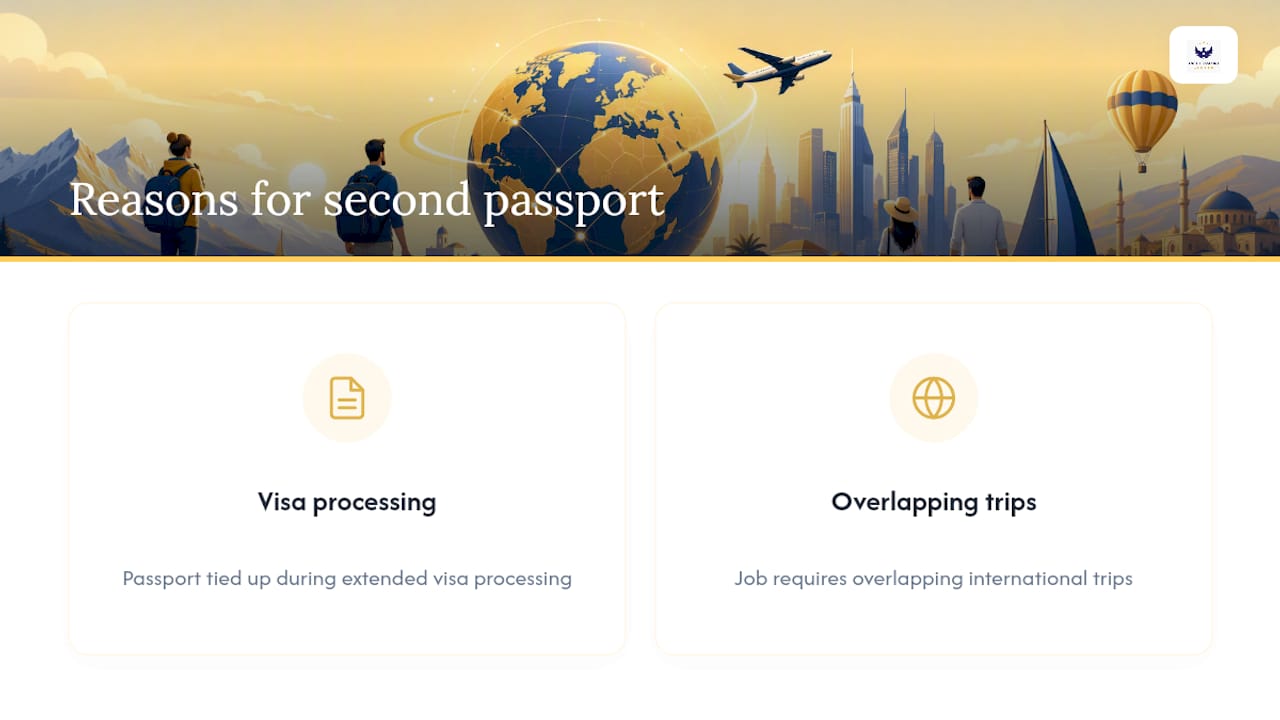
Most applicants need one because a current passport is tied up in extended visa processing, or because their job requires overlapping international trips that a single document cannot cover in time.
Should dual citizens travel with both passports?
Yes, dual citizens should carry both passports on international trips but present only the one appropriate to each stage of travel, using their U.S. passport specifically to depart and re-enter the United States.
Can I leave a country with one passport and enter with another?
In many cases yes, depending on the countries involved and their entry rules for dual nationals, but you must never book a flight under one passport number and attempt to board or clear immigration with a different one.
In what countries can you get a second passport?
A second U.S. passport is issued by the State Department itself, either at a domestic regional passport agency or through a U.S. embassy or consulate abroad, based on documented eligibility rather than location.
How long does a second U.S. passport take to process?
Timelines depend on the channel: regional agencies can handle urgent cases within days by appointment, expediting couriers typically serve the 2 to 4 week window, and standard mail applications fit trips more than a month away.