
Country entry requirements for passports are the legal and procedural rules each government sets to control who crosses its borders. These rules go far beyond simply holding a valid passport. The role of country entry requirements passports play in international travel is decisive: fail to meet them and you face denied boarding, refused entry, or a missed trip. The U.S. State Department, IATA’s Timatic database, and airline check-in systems all enforce these rules at multiple points before you ever reach a border. Understanding them before you book is not optional preparation. It is the foundation of every successful international trip.
What is the role of country entry requirements passports must meet?
Passport entry rules are not uniform. Every country sets its own standards, and those standards apply the moment you check in for your flight, not just when you arrive at the border. Airlines act as the first line of enforcement, and they follow the same compliance database that governments use.
The IATA Travel Centre’s Timatic database consolidates over 1,000 official sources and is used globally by airlines to determine passport, visa, and health requirements. That means the agent scanning your boarding pass is pulling from the same rules as the immigration officer at your destination. If your documents fall short at check-in, you do not board.

Travelers often treat a passport as a single document that either works or does not. The reality is more layered. Your passport must satisfy validity rules, authorization requirements, and sometimes physical condition standards, all at once. Missing any one of these layers triggers the same outcome: you stay home.
What are passport validity rules and why do they vary?
Passport validity requirements define how much time must remain on your passport at the time of travel, and they vary significantly by destination. The most common standard is a 6-month validity rule beyond your planned return date, which the U.S. State Department highlights as a frequent source of denied boarding for American travelers.
The distinction between passport expiration and required validity is one travelers consistently miss. A passport that expires in three months is technically “valid,” but it fails the entry rules for dozens of countries. Airlines enforce these rules at boarding, not just at the border, meaning you can be turned away before you ever leave your home country.
Countries measure validity differently. Some require six months beyond your entry date. Others require three months beyond your planned exit date. The EU’s Schengen Area, for example, requires three months beyond your intended departure from the zone. Canada has no minimum validity rule beyond the trip itself, but airlines serving Canadian routes still apply their own standards.
| Destination | Minimum Validity Required | Measured From |
|---|---|---|
| Schengen Area (EU) | 3 months | Planned exit date |
| United Kingdom | Valid for duration of stay | Entry date |
| United States | 6 months (for most nationalities) | Entry date |
| Canada | Valid for duration of stay | Entry date |
| Australia | Valid for duration of stay | Entry date |
| Many African/Asian nations | 6 months | Entry date |
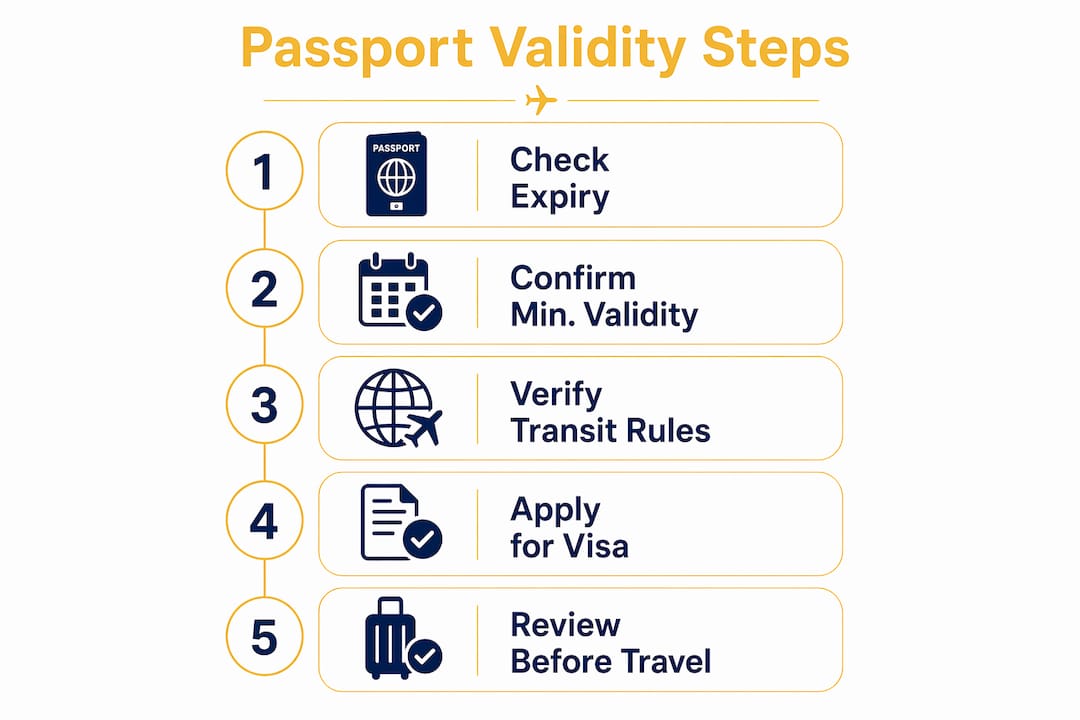
Pro Tip: Check validity requirements for every country on your itinerary, including transit stops, not just your final destination. A layover in a country with a 6-month rule can ground you just as effectively as the destination itself.
How do visas and travel authorizations complement passport requirements?
A passport proves your identity and citizenship. A visa or electronic travel authorization (ETA) proves you have permission to enter. These are separate requirements, and holding one does not satisfy the other. Visa regulations by country range from visa-free access to full embassy applications, and the category you fall into depends entirely on your passport’s nationality.
The UK’s ETA program is the clearest example of how digital authorizations are reshaping international travel requirements. From february 25, 2026, the UK requires all non-visa nationals to hold an ETA before boarding any flight to the UK. The ETA costs £16, lasts two years or until passport expiry, and is digitally linked to your passport number. Airlines block boarding for passengers who lack it.
The passport-linked nature of ETAs creates a trap that catches travelers off guard. ETAs and eVisas become invalid when you renew your passport, because the authorization is tied to the old passport number. Travelers who renew their passport close to a trip must reapply for any linked digital authorization before they travel.
| Authorization Type | Example | Typical Processing Time |
|---|---|---|
| Visa-free access | EU nationals entering Canada | No application required |
| Electronic Travel Authorization (ETA) | UK ETA, Canada eTA | 72 hours (usually minutes) |
| eVisa | India, Turkey, Kenya | 3–7 business days |
| Visa on arrival | Many Southeast Asian destinations | Same day at border |
| Embassy visa | China, Russia, Saudi Arabia | 2–6 weeks |
Pro Tip: Always check authorization requirements for your full itinerary, including connections. A transit through London now requires an ETA even if you never leave the airport. Apply before you book, not the night before departure.
What additional entry requirements do travelers often overlook?
A valid passport and the correct visa category get you to the gate. They do not guarantee entry. Canada’s border services confirm that border officers verify identity, citizenship, and travel authorization status separately. A passport alone is not sufficient if other conditions are unmet.
Country entry guidelines frequently include requirements that have nothing to do with your passport’s validity. Health documentation, proof of onward travel, evidence of sufficient funds, hotel booking confirmations, and vaccination certificates all appear on entry requirement lists for various destinations. These requirements shift based on your travel purpose, whether tourism, business, or transit.
Border officer discretion adds another layer. Officers can refuse entry even when all documents appear correct if they have reason to question your stated purpose of travel. This is why documentation beyond the minimum matters. A printed hotel reservation and return ticket cost nothing but can prevent a lengthy secondary inspection.
The following items are the most commonly overlooked non-passport compliance requirements:
- Proof of onward or return travel (a confirmed ticket out of the country)
- Proof of sufficient funds (bank statements or cash equivalent)
- Accommodation confirmation (hotel booking or host invitation letter)
- Vaccination certificates (yellow fever, COVID-19 where still required)
- Arrival or health declaration forms (required by some countries on landing)
- Travel insurance documentation (mandatory in some Schengen countries)
Pro Tip: Use the IATA Travel Centre or your airline’s official visa information page to pull the full entry requirement list for your destination and every transit point. Government travel advisory sites update slower than airline compliance databases.
How do airlines enforce passport and entry rules at boarding?
Airlines carry legal and financial liability when they transport passengers who are denied entry at the destination. That liability drives strict document checks at check-in and the gate. Cathay Pacific requires passengers to hold valid travel documents covering their entire travel period and directs travelers to verify requirements through IATA Travel Centre guidelines. Most major carriers operate the same way.
Multi-leg itineraries multiply compliance risk. Transit countries impose their own rules, and a gap in any one leg can result in denied boarding at the origin airport. A traveler flying from New York to Bangkok via London needs to satisfy both UK ETA requirements and Thai entry rules. Failing either one stops the trip at JFK.
The most frequently missed requirements that lead to boarding denials include:
- Insufficient passport validity beyond the destination’s minimum rule
- Missing ETA or eVisa for countries that require digital pre-authorization
- Unrenewed authorization after obtaining a new passport
- No blank passport pages (some countries require one or two blank pages for stamps)
- Missing transit visa for a connecting country the traveler did not research
Consequences of non-compliance extend beyond missing a flight. Airlines can face fines for transporting improperly documented passengers. Travelers may be stranded at a foreign airport, placed on the next available return flight at their own expense, or detained for processing. The financial and logistical cost of a single missed requirement far exceeds the time it takes to check requirements in advance.
Pro Tip: Review your passport renewal timing at least six months before any international trip. If your passport expires within 12 months, renew it before booking travel to avoid validity conflicts and the need to reapply for linked ETAs.
Key Takeaways
Passport entry compliance requires valid documents, correct authorizations, and supporting paperwork verified before you reach the airport.
| Point | Details |
|---|---|
| Validity rules vary by country | Check minimum validity requirements for every destination and transit country before booking. |
| Digital authorizations are passport-linked | ETAs and eVisas become invalid after passport renewal; reapply before traveling. |
| Airlines enforce rules at check-in | Boarding can be denied for missing visas, insufficient validity, or absent ETAs. |
| Multi-leg trips multiply risk | Each transit country adds its own passport, visa, and authorization requirements. |
| Supporting documents matter | Proof of onward travel, funds, and accommodation reduce the risk of entry refusal. |
Why travelers underestimate passport compliance more than they should
Travel planning has become so frictionless that most travelers treat documentation as an afterthought. You book a flight in minutes, reserve a hotel in seconds, and assume the passport in your drawer will handle the rest. That assumption fails more often than people expect, and the consequences are severe enough that I think it deserves a harder look.
What I have seen repeatedly is that travelers conflate “my passport is valid” with “I am ready to travel.” Those are two different statements. A passport that expires in four months is valid. It is also insufficient for entry to dozens of countries and will get you denied boarding on most major carriers. The U.S. State Department’s passport validity FAQ addresses this directly, yet the confusion persists because the passport itself shows no warning.
The digitization of travel authorizations has made this more complex, not less. The UK’s ETA rollout in 2026 is a preview of where global travel is heading. More countries will link entry permissions to passport numbers electronically. That means every passport renewal triggers a compliance review of every linked authorization. Travelers who manage this well treat it as a workflow: check validity, check authorizations, check supporting documents, then book.
The travelers who get stranded are not careless people. They are people who checked one layer and assumed the rest was fine. The practical fix is simple: use IATA Timatic or your airline’s official visa tool, check every country on your route, and build in a six-month buffer on passport validity before any international booking. That buffer costs nothing. A missed trip costs everything.
— David
Fastpassportcenter can help you travel without document surprises
Passport compliance problems rarely announce themselves in advance. They surface at check-in, when there is no time to fix them. Fastpassportcenter specializes in expedited passport processing and renewal, working directly with the U.S. Department of State to deliver faster turnaround than standard government channels.
With over 14,000 positive reviews and an A+ rating from the Better Business Bureau, Fastpassportcenter handles the details that trip travelers up: validity gaps, renewal timing, and document accuracy. Their experienced agents review every application before submission, reducing the risk of errors that delay processing. Travelers who need a new or renewed passport before an upcoming trip can also add passport protection services to guard against loss or damage after the documents arrive.
FAQ
What does “6-month passport validity” mean for travelers?
The 6-month rule means your passport must not expire until at least six months after your planned return date. Airlines enforce this at boarding and will deny travel if your passport falls short.
Do I need an ETA if I already have a valid passport for the UK?
Yes. From february 2026, non-visa nationals must hold a UK ETA regardless of passport validity. The ETA is a separate digital authorization linked to your passport number.
What happens to my ETA if I renew my passport?
Your ETA becomes invalid when you get a new passport, because it is tied to the old passport number. You must reapply for a new ETA before traveling.
How do I find the exact entry requirements for my destination?
Use the IATA Travel Centre or your airline’s official visa information page. These tools pull from the same compliance database airlines use at check-in and reflect current rules.
Can I be denied entry even with a valid passport and visa?
Yes. Border officers verify identity, citizenship, and authorization status separately. Officers can refuse entry if supporting documents like proof of funds or onward travel are missing or unconvincing.